Copyright © 2025 by Jorvik Kotsenburg

All rights reserved.

No portion of this book may be reproduced in any form without written permission from the publisher or author, except as permitted by U.S. copyright law.

Contents

  1. Introduction
  2. Part I: Background and Context
    1. 1. Enoch’s Main Themes
    2. 2. Canonical Status and Debates
    3. 3. The Origins and Authorship of Enoch
  3. Part II: Deep Dive into Each Book/Section of Enoch
    1. 4. Book 1 – The Watchers
    2. 5. Book 2 – The Parables (Similitudes)
    3. 6. Book 3 – The Book of Noah
    4. 7. Book 4 – The Kingdom of Heaven (Astronomical Book / Heavenly Luminaries)
    5. 8. Book 5 – The Epistle of Enoch
  4. Part III: Key Doctrines, Themes, and Practical Insights
    1. 9. Angelology and Demonology
    2. 10. Judgment and Eschatology
    3. 11. Nephilim: Giants in the Land
    4. 12. Enoch’s Relevance for Today
  5. Part IV: Summaries, Commentary, and Conclusion
    1. 13. Chapter-by-Chapter Summaries and Commentary
    2. 14. Frequently Asked Questions
    3. 15. Practical Application for Modern Readers
    4. 16. Conclusion & Next Steps
    5. 17. Appendices

Introduction

The Book of Enoch stands as one of the most fascinating—and often misunderstood—ancient writings connected to the broader tapestry of biblical literature. While it is not officially part of most Christian canons and is frequently classified as “apocryphal,” Enoch’s text has had an unmistakable influence on Jewish and Christian thought, particularly in its vivid depictions of angels, demons, the Nephilim, and ultimate judgment. For centuries, readers have been enthralled by its stories of Watchers descending to Earth, of giant offspring roaming the land, and of a righteous man named Enoch who “walked with God” so intimately that he was spared from seeing death in the usual human way. Today, the Book of Enoch continues to spark lively debate and curiosity, serving as a bridge between canonical Scripture and the diverse range of intertestamental or extrabiblical literature.

In this book, Unveiling the Book of Enoch: Biblical commentary, Fallen Angels, Nephilim, and Ancient Secrets Explained, our goal is to guide you through Enoch’s narrative—from its enthralling tales of fallen angels to its heavenly visions—while illuminating the ways in which it resonates with biblical motifs. By offering historical context, careful commentary, and reflections on its spiritual implications, we can begin to understand why the Book of Enoch has continued to matter despite being excluded from many Bibles. By the end of our journey, you will have a deeper appreciation for Enoch’s remarkable message, the faith it inspired, and the warnings and promises it still imparts in the modern day.

The Purpose of This Book

Why the Book of Enoch Still Matters Today
At first glance, the Book of Enoch may appear like a relic of antiquity—an esoteric text brimming with supernatural accounts and archaic language. Modern readers, therefore, sometimes feel it has little to offer beyond historical curiosity. Yet there are compelling reasons why the Book of Enoch continues to matter in contemporary religious and scholarly discussions:

  1. Rich Spiritual Insight
    Enoch’s descriptions of angelic hierarchies, cosmic journeys, and moral imperatives provide a striking window into ancient Jewish thought. Many of the themes found in Enoch—such as divine judgment, the corruption of humanity, and the eventual restoration of righteousness—echo strongly in canonical Scripture. By reading Enoch, we can gain a fuller panorama of the worldview that shaped Second Temple Judaism and, by extension, early Christianity.

  2. Influence on Later Texts
    The imagery of Enochic literature reverberates in the New Testament—particularly in passages discussing fallen angels, final judgment, and the “Son of Man.” While not every scholar agrees on the extent of the Book of Enoch’s direct influence, it is difficult to deny that Enoch’s themes significantly contributed to the cultural and theological environment from which early Christian writings emerged. When we see parallels between Enoch and New Testament descriptions—such as the concept of rebellious angels bound in chains (cf. 2 Peter 2:4, Jude 1:6)—we realize Enoch remains essential reading for those seeking to trace biblical themes to their earliest known articulations.

  3. Conversation on Canon and Apocrypha
    The Book of Enoch calls our attention to the boundary line between “inspired” and “non-inspired” literature—questions that many still wrestle with today. While the Ethiopian Orthodox Church retains the Book of Enoch as canonical, most other Christian traditions consider it apocryphal. Such divergent perspectives urge us to investigate how canons are formed, how communities weigh texts, and what criteria are used to define Scripture. By understanding why Enoch stands on the fringes of the biblical canon, we glean deeper insight into how sacred texts are recognized, revered, or rejected.

  4. Ongoing Relevance for Angelology and Demonology
    Contemporary Christians and spiritual seekers often have questions about angels, demons, and the existence of evil. The Book of Enoch highlights the moral failings of certain angelic beings—called “Watchers”—and vividly depicts the chaos that ensues from their rebellion and forbidden unions with mortal women. Its narrative serves as an early elaboration on the cryptic Genesis 6:1–4 passage. Readers intrigued by the mysterious Nephilim and the broader concept of supernatural evil will find in Enoch a compelling interpretive tradition, sparking fresh discussion on how spiritual realities might intersect with human experience.

A Brief Overview of Its Historical Placement and Apocryphal Status
Though revered by some of the earliest Christian communities, the Book of Enoch did not universally secure a place within the Old Testament or New Testament canons we commonly use today. Early church fathers like Tertullian (second–third century) spoke well of Enoch’s text, noting its significance to understanding fallen angels and the flood narratives. However, as the Western church solidified the shape of Scripture over several centuries, Enoch gradually fell outside the recognized canonical lists. By contrast, the Ethiopian Orthodox Tewahedo Church continued to copy and preserve it in the Ge’ez (Ethiopic) language, ensuring that the text survived in a relatively complete form. Scholars would not “rediscover” the Book of Enoch in Europe until the eighteenth century, when James Bruce brought back manuscripts from Ethiopia.

Despite this sidelining in most other traditions, Enoch’s influence never completely vanished. Aramaic fragments were unearthed at Qumran (part of the Dead Sea Scrolls), confirming that the book circulated among Jewish groups well before the time of Jesus. These discoveries validated the Book of Enoch’s antiquity, pushing its textual roots back to the second century BC or earlier. Yet, because it is not part of the Hebrew Bible, the typical Protestant Old Testament, or the Roman Catholic canon, many Christians were simply unaware of it.

In short, Enoch is labeled “apocryphal”—or sometimes “pseudepigraphical,” meaning written under an assumed name—primarily because it remains outside the normative biblical corpus recognized by Judaism and most branches of Christianity. “Apocryphal” is not necessarily synonymous with “valueless,” however. Readers continue to find deep spiritual and theological significance in its narratives. Our task in this introduction—and indeed throughout this commentary—is to honor both Enoch’s fascinating content and the rightful caution with which faith communities have approached it.

A Short History of Enoch

Who Enoch Is (the Seventh from Adam)
Even apart from the Enochic literature, the canonical Bible introduces us to Enoch in the genealogies of Genesis. Genesis 5:18–24 lists Enoch as the seventh generation from Adam—son of Jared, father of Methuselah, and great-grandfather of Noah. The genealogical records seem straightforward at first, only to depart from their usual refrain when describing Enoch’s end: “Enoch walked with God; then he was no more, because God took him” (Genesis 5:24, NRSV). This cryptic note singles Enoch out from the other patriarchs, who otherwise died in the normal manner. Enoch, by contrast, disappears from the pages of Scripture with little fanfare, leaving behind a hint of something extraordinary.

Jewish tradition and subsequent Christian interpretations puzzled over Enoch’s unusual translation. Some read it as a kind of bodily ascension akin to Elijah’s chariot of fire experience. Others suggested it signified that Enoch was so righteous and close to God that he bypassed the standard penalty of death. This unique detail became fertile ground for speculation. It is no surprise, then, that further writings—like the Book of Enoch—would expand on the idea that Enoch was not only a man taken by God but also a recipient of heavenly visions and angelic revelations.

The Significance of “Walking with God”
In Scripture, the phrase “walked with God” is a powerful idiom, connoting deep intimacy, moral righteousness, and abiding faith. The patriarchs of Genesis, such as Noah and Abraham, are often described as “walking before God” or “walking in His ways,” but Enoch’s direct mention as one who “walked with God” elevates the concept. It signals a fellowship so profound that Enoch appears almost to dwell in a realm bridging heaven and earth. The Book of Enoch builds upon this notion, depicting Enoch as a scribe or mediator who enters God’s presence and participates in divine councils. He is not merely a religious figure but an active agent in revealing heavenly secrets.

To “walk with God” implies more than personal devotion or piety. It suggests companionship, unity of purpose, and a willingness to heed divine instruction. In the context of ancient times—when violence, wickedness, and idolatry threatened to overwhelm communities—a figure like Enoch, marked by spiritual intimacy with God, would have been a beacon of hope. According to the tradition recorded in Enochic literature, that sense of hope extended beyond Enoch’s immediate environment. Enoch receives revelations concerning the entire cosmos, sees how angels have strayed, and warns of impending judgments—both in the pre-Flood world and, symbolically, for future generations. Consequently, his example challenges believers in any era to consider the depth of their own spiritual walk.

Bringing It All Together

Given the Book of Enoch’s storied background, it is easy to see why it has intrigued scholars and lay readers for centuries. Placed outside of official canons yet preserved by an unbroken Ethiopian tradition, Enoch’s text traversed centuries of relative obscurity, only to resurface in modern times as an invaluable window into Second Temple Jewish thought. Simultaneously, the biblical record of Enoch himself is so tantalizingly brief that entire universes of meaning appear to unfold when we step into the Apocryphal expansions.

Yet, as we embark on a detailed exploration, it is crucial to handle the material with both curiosity and discernment. The Book of Enoch’s vivid scenes of heavenly journeys, angelic rebellions, and cosmic upheavals can challenge modern readers conditioned to view scriptural narratives solely through the lens of what is already in the Hebrew Bible or the New Testament. It requires a willingness to engage ancient modes of storytelling—ones that mix theological reflection, visionary imagery, and moral exhortation.

Our emphasis in this commentary is neither to enthrone the Book of Enoch as equal to canonical Scripture in every respect nor to dismiss it as irrelevant folklore. Rather, we aim to highlight its unique perspective, the ways it can illuminate biblical passages, and the moral urgency that underpins its message. Indeed, the Book of Enoch’s dire warnings about unchecked evil and its promises of final restoration continue to resonate deeply in an age grappling with injustice, conflict, and existential anxieties.

When we read Enoch’s pronouncements against the “Watchers” who corrupted humankind, we confront age-old questions about free will, spiritual warfare, and divine justice. When we see Enoch’s enthrallment at the grandeur of God’s creation, we sense an invitation to awe and humility. And when we hear Enoch calling on the righteous to remain steadfast in a world threatened by darkness, we recall the biblical prophet Micah’s exhortation “to do justice, and to love kindness, and to walk humbly with your God” (Micah 6:8). The Book of Enoch thus stands as a clarion call across the ages, urging vigilance, hope, and devotion to God’s eternal purposes.

In the chapters that follow, we will delve into Enoch’s structure—its five distinct “books” or major sections—unpack its themes of judgment and redemption, and compare its teachings with canonical Scripture. We will move chapter by chapter, highlighting the background of the Watchers’ sin, the birth of the Nephilim, Enoch’s travels through the cosmos, the warnings given to a rebellious generation, and the cherished promises reserved for those who persevere in righteousness.

Before plunging into the text itself, let us remember that the figure of Enoch, the seventh from Adam, is not a dusty footnote lost to time. He embodies the remarkable possibility that mortal men and women might walk so closely with God that their very lives become conduits for revelation. Whether one sees the Book of Enoch as wholly literal or partly symbolic, it dares us to believe in a God who intimately engages His creation—a God who pays attention when injustice grows rampant, who holds even celestial beings accountable, and who ultimately offers hope to those longing for His light.

Let us, then, undertake this journey with expectant hearts. As you turn the pages ahead, you will step into a world teeming with ancient wonders—an interplay of angels and humans, cosmic mysteries and moral imperatives. By the end, my prayer is that you will not only grasp the Book of Enoch’s narrative but also sense the enduring resonance of Enoch’s voice across centuries. In a troubled world, his counsel and example—much like that of the biblical prophets—keep calling us back to the fundamental truth: that true life lies in walking hand in hand with the Almighty, watching, listening, and obeying as He reveals His path.

In the next part, we will begin dissecting the major sections of Enoch’s writings, uncovering how they fit into an overarching story and how they have contributed to shaping beliefs about angels, demons, and the destiny of the righteous. It is an adventure of faith, scholarship, and spiritual reflection—a quest that calls us to see beyond the confines of earthly experience, just as Enoch himself once did.

Chapter one

Enoch’s Main Themes

From the earliest scroll fragments discovered at Qumran to the Ethiopian manuscripts that preserve its full text, the Book of Enoch presents a tapestry of grand narratives, theological assertions, and moral exhortations that extend far beyond a cursory reading. When we isolate its key themes, three crucial threads dominate Enoch’s message: (1) the Watchers, Fallen Angels, and the Nephilim, (2) the notions of judgment, redemption, and cosmic order, and (3) the insights on prophecy, eschatology, and spiritual warfare. Although these topics resonate with echoes of biblical lore—particularly Genesis 6, various prophetic works, and New Testament references—Enoch’s handling of them is both singular and expansive. This chapter delves into these themes to help readers see just how central they are to the structure and theology of Enoch’s writings.

I. The Watchers, Fallen Angels, and the Nephilim

1. The Origin and Identity of the Watchers
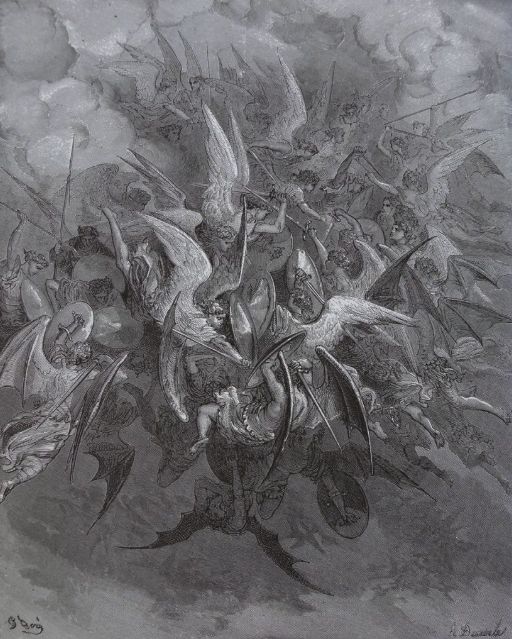
image-placeholder

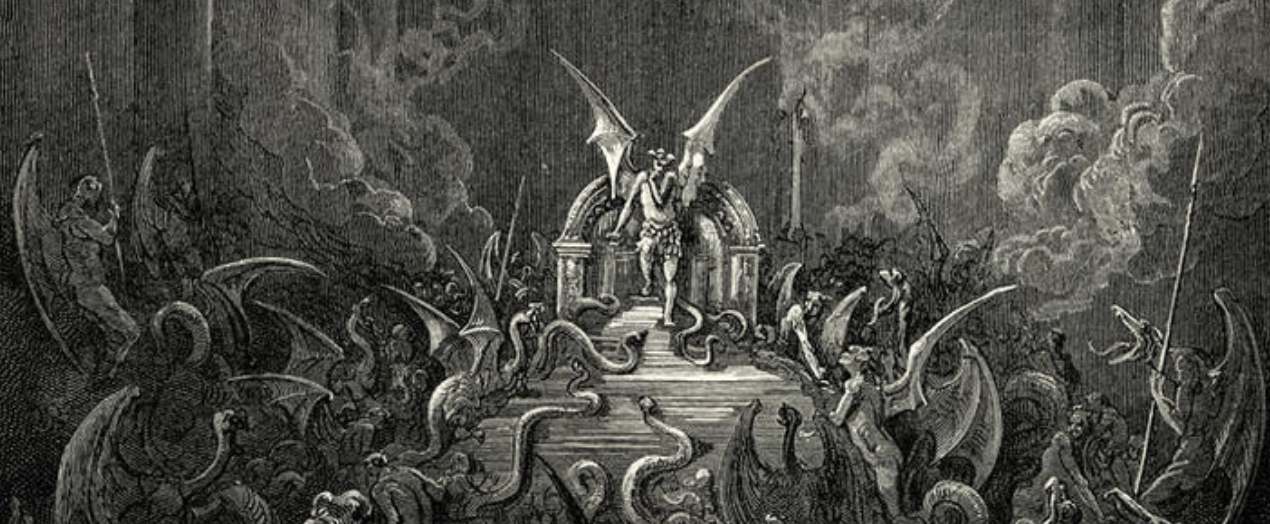
At the heart of the Book of Enoch is the story of the Watchers, described as heavenly beings tasked with overseeing the affairs of humankind. In biblical contexts, the term “watcher” (sometimes found in Daniel 4:13, 23) suggests an angelic presence whose function is to remain vigilant over creation. Enoch expands this idea, portraying a group of angelic entities who at first appear to fulfill a divinely appointed role—to guard and guide the human race. Yet their rebellion and subsequent downfall become a central point of tension.

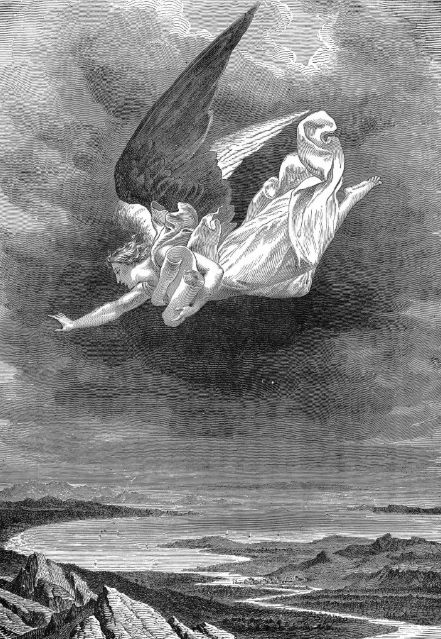
In Book 1: The Watchers, the text narrates how these angels succumb to the all-too-human temptations of lust, pride, and curiosity. They descend on Mount Hermon—an important geographical marker—and swear an oath to undertake forbidden actions together, ensuring collective complicity. By situating them on a high mountain, Enoch emphasizes both their elevated origin (heavenly watchers) and the magnitude of their transgression as they cross the boundary between the divine realm and human society.

2. The Sin of the Fallen Angels

One of the most conspicuous motifs in Enoch is the sin of these angels, often referred to as fallen angels once they deviate from divine law. Their transgression unfolds on two levels:

  1. Union with Human Women: Enoch describes how the Watchers “saw and lusted after” human women (Enoch chapters 6–7). This harkens back to Genesis 6:1–4, where “the sons of God” took wives from among the “daughters of men.” In Enoch’s elaboration, the Watchers’ act of procreation with mortal women results in the birth of hybrid offspring.

  2. Illicit Knowledge: Beyond procreative sin, the fallen angels teach humanity forbidden arts and secret knowledge. Azazel, one of the chief transgressors, instructs humankind in metalworking (leading to advanced weaponry), cosmetics, and ornamentation, fueling violence and moral corruption. Others teach enchantments, astrology, and root-cutting. These revelations—though they appear “useful” or “empowering” at first—ultimately corrupt society.

The Book of Enoch thus interprets the angels’ sin as not merely about crossing a sexual boundary but also polluting the moral order by granting powers that human beings were never intended to wield prematurely. What was to remain a divine or heavenly secret becomes a cause for widespread sinfulness on earth.

3. Birth and Nature of the Nephilim

From the union of the Watchers with mortal women come the Nephilim, a Hebrew term commonly translated as “giants.” Enoch provides a fuller narrative than Genesis 6’s brief mention, revealing that these offspring are superhuman in size and strength yet savage, prone to violence, and destructive to creation. They devour human livelihoods, push humanity into famine, then turn on people themselves.

In Enoch’s logic, the Nephilim embody chaos—a violation of God’s intended boundaries between heaven and earth, angel and human. Their unnatural existence escalates evil on the earth to the point that creation “cries out,” culminating in divine judgment. Later tradition expands on these monstrous beings, linking them to demonology: after the Flood destroys their physical forms, their spirits become malevolent forces—another concept Enoch helps establish.

II. Judgment, Redemption, and Cosmic Order

1. A Grand Scheme of Cosmic Justice
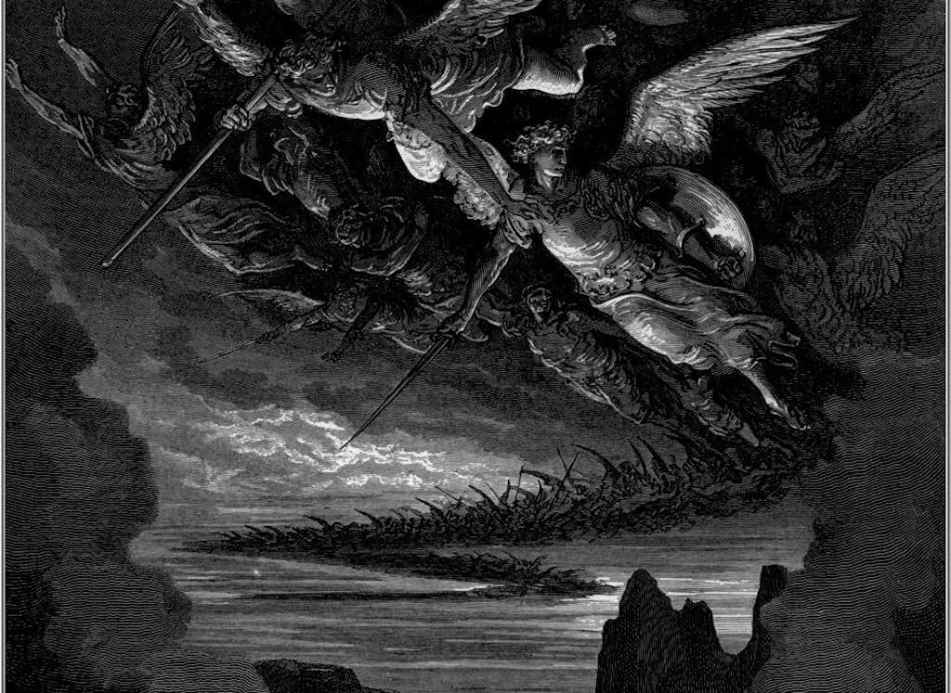
image-placeholder

Though the Watchers’ story enthralls many readers, the text’s overarching framework is that of cosmic justice. Enoch, chosen by God as a righteous witness, foresees how the moral order unraveling in his day will lead to massive judgment. In the Book of Enoch, the Flood narrative becomes one manifestation of that judgement, especially aimed at the corrupt watchers and their violent offspring.

Yet Enoch’s message broadens beyond a single cataclysm: the text envisions an ultimate cosmic reckoning, in which all wickedness—angelic or human—faces divine retribution. The enthroned “Head of Days” or the “Lord of Spirits” sits in majesty, attended by innumerable angels, where sinners and transgressors (including rebellious angels) find no escape from condemnation. This vision underscores an unwavering principle: creation belongs to God, who will not let evil persist indefinitely.

2. The Pattern of Judgment and Hope

Enoch underscores that while God’s judgments are terrifying, they also carry with them the promise of redemption for the righteous. After the destruction of the corrupted world, a purified remnant remains. Noah, for instance, becomes the vehicle through which life is preserved post-Flood. In some of Enoch’s parables (especially in the “Similitudes” or “Parables” section), we glimpse the final vindication of those who remain faithful.

In a theological sense, the Book of Enoch stands out by linking the human quest for righteousness to a cosmic narrative. Judgment is not random; it is consistent with the eternal laws of heaven. Enoch’s numerous visions reveal a structured cosmos, replete with luminaries, winds, and angels operating under divine order. The breakdown of this order by rebellious spirits is the impetus for divine intervention. Yet the cosmic structure itself testifies to the unwavering reliability of God’s moral fabric—just as the sun and moon follow ordained paths, so moral cause and effect persist as well.

3. Restoration of a Proper Cosmic Order

One of Enoch’s abiding concerns is the restoration of balance in creation. Humanity was never intended to be threatened by giants, nor to acquire forbidden knowledge that fosters unbridled violence. Once the Watchers commit their sins, Enoch becomes the intercessor. He “petitions” on behalf of the angels, ironically reversing roles: watchers were supposed to advocate for men, but instead men (like Enoch) end up advocating for the watchers.

The refusal of their petition by the Most High demonstrates a cosmic decree: the watchers’ sin has upset the fundamental equilibrium of creation, and the only remedy is their eventual imprisonment and punishment. In eschatological terms, this removal of evil spiritual forces reinstates the rightful harmony—a cosmos where righteousness prevails and men dwell under divine blessing.

III. Insights on Prophecy, Eschatology, and Spiritual Warfare

1. Enoch as a Prophetic Figure

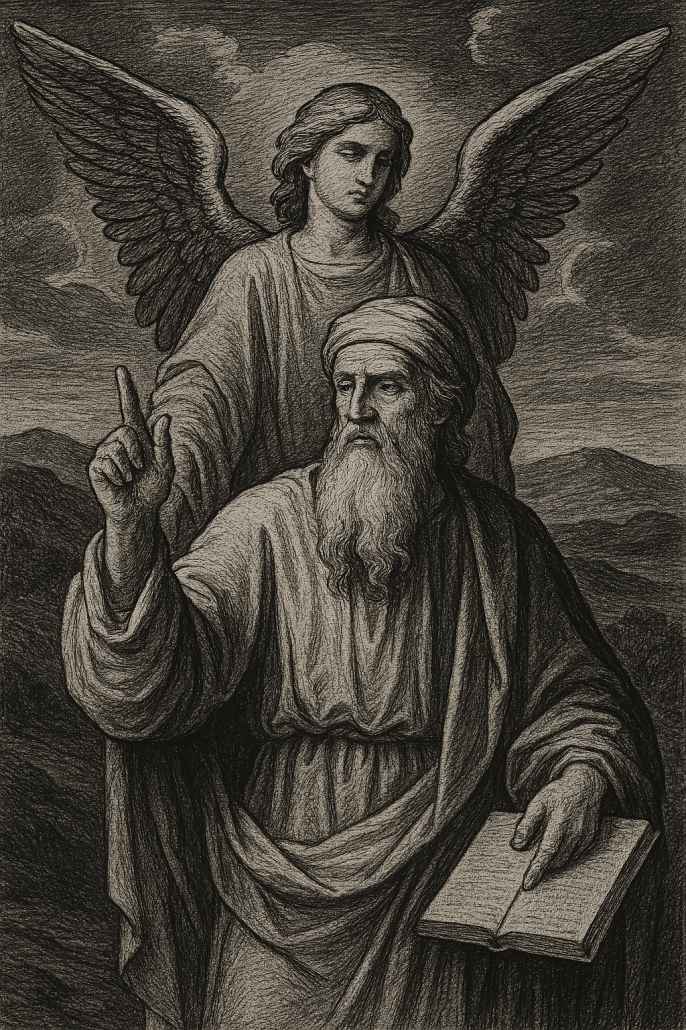
Though Enoch is famously minimal in canonical Genesis (he “walked with God” and was taken), Enoch’s expanded tradition portrays him as a prophet who receives apocalyptic visions. Much like other biblical prophets—Isaiah, Ezekiel, Daniel—he is granted glimpses of heavenly courtrooms, symbolic cosmic phenomena, and end-time judgements. Enoch thereby becomes a messenger for future generations, someone bridging the gap between mortal experience and divine revelation.

The Book of Enoch brims with oracles announcing the destiny of the watchers, the fate of their offspring, and the lot of humankind. Many sections read like apocalyptic prophecies: they reveal hidden truths (the very essence of “apocalypse” meaning revelation) about the nature of the angelic realm, the flow of history, and the ultimate consummation of God’s plan. This dynamic cements Enoch as a cornerstone figure in the development of later Jewish and Christian apocalyptic literature, anticipating themes later found in the Book of Revelation or other intertestamental texts.

2. Eschatological Vision: End Times in Enoch

Enoch’s eschatological framework is more than speculation about a singular cataclysmic event like the Flood. Rather, the text alludes to a final judgement beyond the Flood. In the “Parables” (Book 2) and parts of “The Epistle of Enoch” (Book 5), the language intensifies around a culminating age when the righteous are vindicated, and the powers of darkness are eradicated for all time.

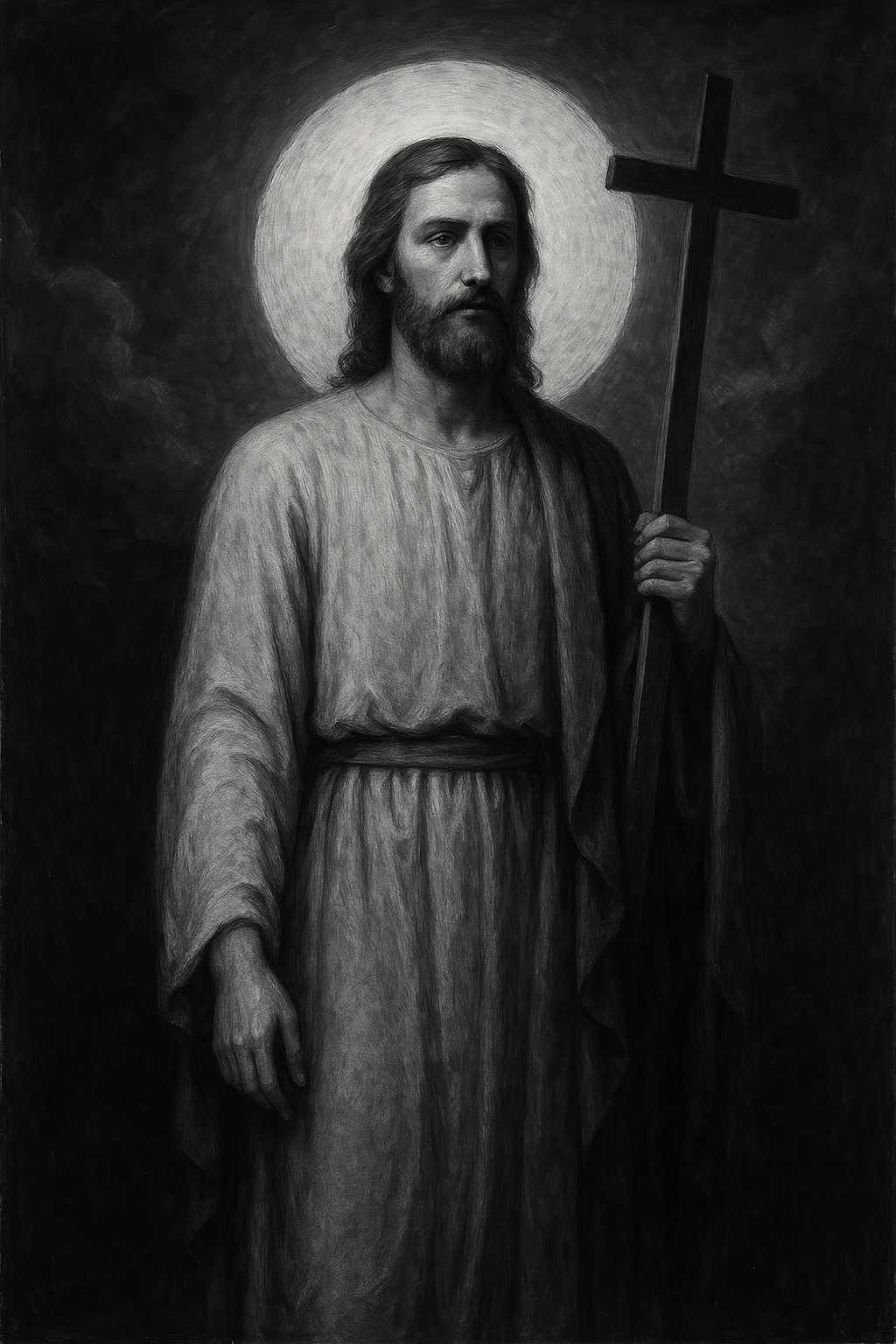
We see repeated images of a “Son of Man,” an elevated figure who partakes in God’s authority to judge both angels and humans. This motif resonates with Daniel 7’s “Son of Man” approaching the Ancient of Days. In Enoch, it’s typically called the Elect One or Anointed One—someone intimately involved in mediating final justice. This notion parallels certain Christian interpretations that link Enoch’s “Son of Man” references to the Christ figure. Even outside a strictly Christian reading, it points to the concept of a divinely chosen redeemer or judge who transcends ordinary humanity.

Hence, Enoch’s eschatology includes:

  • A great gathering in which hidden deeds are unveiled.

  • Angels of punishment restraining or casting rebellious powers into fiery pits.

  • The establishment of an era of peace and righteousness under divine rule.

3. Spiritual Warfare as a Cosmic Struggle

Modern readers who approach the Book of Enoch are often struck by its portrayal of spiritual warfare—not in purely metaphorical terms, but as a tangible conflict between heavenly beings loyal to God and those who have rebelled. The watchers initiated a spiritual cataclysm by mingling with humanity. Their actions gave birth to further demonic forces once the giant offspring perished, a phenomenon Enoch’s tradition identifies as disembodied evil spirits.

Thus, spiritual warfare in Enoch’s framework includes:

  • Angelic Powers: Good angels such as Michael, Gabriel, Raphael, and Uriel remain faithful, serving as instruments of divine justice. They confront the watchers, binding them until judgment.

  • Corrupted Spirits: The watchers themselves and the spirits derived from the Nephilim spread evil, knowledge of sorcery, and moral chaos.

  • Humanity’s Role: While humans are victims of these cosmic players, they also become agents for either good or evil. Righteous figures like Enoch or later Noah can stand in the gap, choosing fidelity to divine revelation.

This cosmic drama establishes a continuous struggle: spiritual wickedness persists as these rebellious entities persist within the universal narrative. Many interpreters see Enoch’s depiction as the precursor for later Jewish and Christian demonologies that identify certain angels with demonic roles, bridging the gap between the sin of “angels who left their proper dwelling” (cf. Jude 6) and day-to-day moral struggles on earth.

4. Connecting Enoch’s Themes to Later Biblical Thought

The synergy between Enoch’s text and New Testament theology is notable, even if indirect. For instance, the Epistle of Jude references “angels who did not keep their domain” (Jude 6) and mentions Enoch explicitly (Jude 14). The “spirits in prison” of 1 Peter 3:19 can be read through an Enochic lens, where watchers are bound and Christ proclaims victory. Although these references remain open to debate, they illustrate how deeply Enochic tradition flavored the worldview of many early Christian authors.

Furthermore, the notion that God reserves final punishment for rebellious angels underscores the concept of a spiritual realm intimately connected to human ethical conduct. Enoch’s expansions on sin, watchers, and judgment supply a robust background for any biblical scholar or lay reader seeking to understand the complexities of second temple Jewish eschatology and the Christian vantage on demonic forces.

Putting It All Together

What becomes clear from these major themes is that Enoch’s narratives strive to integrate the heavenly and earthly spheres into a single drama of creation, rebellion, and restoration. The watchers are not mere side characters; they highlight the capacity of free-willed beings—even angels—to deviate from divine design. Their moral failure reverberates in the Nephilim, roiling the entire cosmos with violence that demands an extraordinary response from God.

Yet, behind the severity of judgment stands a promise of redemption. The narrative arc reveals that in every instance of divine punishment, there is a merciful plan to preserve the righteous and eventually to renew the entire cosmos. Humanity, though battered by spiritual and physical corruption, is never left wholly unprotected—righteous individuals like Enoch, Methuselah, and Noah remain beacons of hope.

Such emphasis on cosmic order underscores the abiding conviction that the moral universe remains stable. Enoch’s elaborate depiction of celestial luminaries (in the Astronomical Book) demonstrates that creation is no accident. Just as the sun, moon, and stars follow strict courses, so moral cause-and-effect cannot be circumvented indefinitely. Evil seeds yield the fruit of destruction; faithfulness yields fellowship with God.

This inextricable link between present moral behavior and cosmic destiny is precisely where Enoch’s text resonates with readers today. Modern spiritual seekers, intrigued by the possibility that cosmic forces influence earthly life, find in Enoch a text that merges the mystical and the ethical. It urges watchfulness, humility, and alignment with God’s revealed order, reminding believers that behind every cosmic display stands the moral character of the Creator.

Finally, the prophetic and eschatological content within Enoch paves the way for reflection on end-time hopes, spiritual warfare, and ultimate accountability. For those reading the Book of Enoch to glean insights beyond the mere sensational stories of giants and fallen angels, these broader theological motifs form the anchor. Whether one interprets them literally or symbolically, they illustrate a worldview in which God actively governs and will one day bring all creatures—human and angelic—before His throne.

In summary, the Watchers, Fallen Angels, and the Nephilim stand as a dramatic illustration of boundary-breaking sin and its dire ramifications for creation. Judgment, redemption, and cosmic order show that even in the face of monstrous evil, God’s governance remains unshaken, and His intention to restore harmony endures. Finally, the insights on prophecy, eschatology, and spiritual warfare reveal a text grappling with big questions: how does heaven relate to earth, what is the final destiny of both faithful and unfaithful beings, and how should humanity respond in a universe rife with powerful spiritual undercurrents?

Chapter after chapter, Enoch maintains a tension between the cautionary tale of cosmic rebellion and the reassuring truth of ultimate justice. It points to a divine plan that neither watchers nor giants, nor the darkest evils, can annul. Though originally an ancient Jewish composition, the Book of Enoch’s influence has flowed through centuries of Christian, Jewish, and even secular eschatological thought. When readers grasp these overarching themes—rather than focusing only on the sensational elements—they find a vibrant, theologically rich narrative that underscores the seriousness of sin, the expansiveness of divine mercy, and the inevitability of cosmic renewal.
Chapter two

Canonical Status and Debates

Few ancient texts have traveled such a winding road of acceptance, rejection, and rediscovery as the Book of Enoch. Though it enjoyed a measure of authority among early Jewish and Christian communities, it would later be dismissed—or at least forgotten—by many traditions. Today, it occupies a position of curiosity, sometimes admired for its theological richness, sometimes questioned for its dubious standing outside the typical canons of Scripture. In this chapter, we will explore three pivotal areas: (1) how the early Church at times embraced Enoch’s writings before eventually discarding them, (2) the shifting rabbinical perspective and the role of Church Fathers such as Tertullian and Origen, and (3) the continuing influence of 1 Enoch on Christian, Jewish, and Ethiopian traditions.

1. Early Church Acceptance vs. Later Church Rejection

1.1 The Environment of Early Christian Enthusiasm
During the first few centuries of the Christian era, believers sought texts that illuminated the life and theology of Jesus, clarified moral expectations, and helped shape a coherent biblical worldview. The Book of Enoch—or 1 Enoch, as scholars often call it—emerged in some corners of the early Church as a compelling work with a remarkable claim. It purported to be authored (or at least dictated) by Enoch, the seventh descendant of Adam, who “walked with God” and was taken into heaven without tasting death (Genesis 5:24).

To an early Christian’s mind, 1 Enoch contained striking parallels to New Testament writings: it spoke of the righteous who would inherit eternal blessings, the punishment of fallen angels, the idea of a Messiah figure sometimes referred to as the “Elect One” or “Son of Man,” and strong eschatological themes regarding final judgment. Such themes naturally resonated with communities steeped in the apocalyptic fervor of the first centuries AD.

Additionally, 1 Enoch appeared to shed light on obscure passages in Genesis—namely, the identity of the “sons of God” and the “Nephilim.” Many early believers found that Enoch’s account of the Watchers (angelic beings who transgressed divine boundaries) bolstered a cosmic drama of spiritual warfare. This spiritual warfare explained not only the ancient past but also the urgent moral battles of early Christian life. As a result, Enoch’s text was quoted or cited by certain church figures, circulated in parts of the Mediterranean world, and sometimes read alongside canonical scriptures.

1.2 The Rise of a More Rigorous Canon
Yet, as the centuries advanced, church leaders began formalizing the boundaries of the biblical canon. This process, though gradual and not universally the same in each region, intensified in the late 2nd through 4th centuries. Councils and influential bishops tried to differentiate texts deemed truly apostolic and divinely inspired from those considered merely edifying or even spurious.

In that environment, the Book of Enoch faced hurdles. While some early Christian authorities (including Irenaeus, it seems, in the 2nd century) found Enoch’s account helpful, others grew wary of citing a text that did not appear in the Hebrew Bible. The developing consensus in the Greek-speaking Church was that the “Old Testament” ought to match the recognized Jewish canon—or at least some version of it. Because Enoch was not widely maintained in mainstream rabbinic circles as canonical, many Christian leaders concluded that, for them, 1 Enoch lay outside their official “rule of faith.”

1.3 Church Councils and Gradual Marginalization
By the 4th century, Christian leaders such as Athanasius of Alexandria in his famous Festal Letter (367 AD) listed the books accepted within the Alexandrian tradition. The Book of Enoch failed to appear there. Different regional canons existed—especially between the Eastern (Greek) and Western (Latin) branches—but a broad sense emerged that Enoch, while interesting, was not to be read publicly as Holy Scripture.

Though no single Church council offered a formal condemnation saying, “We reject Enoch,” its non-appearance in canonical lists effectively sealed its fate in much of Christendom. Over time, Greek manuscripts of 1 Enoch ceased being copied. The text lingered only in certain fringe circles or monastic libraries, often overshadowed by more widely accepted apocrypha (e.g., the Book of Tobit, Judith, Wisdom, Sirach, etc.).

1.4 Surviving in Ethiopia
Notably, the Ethiopian Orthodox Tewahedo Church preserved 1 Enoch in an unbroken chain of manuscript tradition—translating it from Greek into Ge’ez (the classical language of Ethiopia). The retention of Enoch in the Ethiopian biblical canon stands as a striking exception to the broader Christian rejection. As the centuries went on, the West largely forgot about the Book of Enoch until James Bruce brought Ge’ez manuscripts back to Europe in the late 18th century.

Thus, while Enoch enjoyed a period of relative acceptance among certain early Christian writers—cited occasionally as though it carried weight—it was eventually sidelined. Part of this sidelining was due to evolving standards of orthodoxy and a desire to align the Old Testament strictly with recognized Jewish texts.

2. Rabbinical Viewpoints and Church Fathers

2.1 Rabbinical Reception and Skepticism
Turning to Jewish communities: how did rabbis approach Enoch’s text? In Second Temple Judaism (roughly 200 BC to 70 AD), multiple groups existed—Pharisees, Sadducees, Essenes, and various other sects. Some of these groups, especially the Essenes at Qumran, prized Enochic traditions. The Dead Sea Scrolls preserve fragments of 1 Enoch, along with related works like the Book of Giants.

However, mainstream rabbinical Judaism that developed after the destruction of the Temple in 70 AD and after the Bar Kokhba revolt (132–136 AD) tended toward a narrower scriptural canon. By the late 2nd century AD, standard Jewish teaching recognized only those books we now know as the Hebrew Bible (the Tanakh). The Book of Enoch did not appear in that authoritative list.

image-placeholder

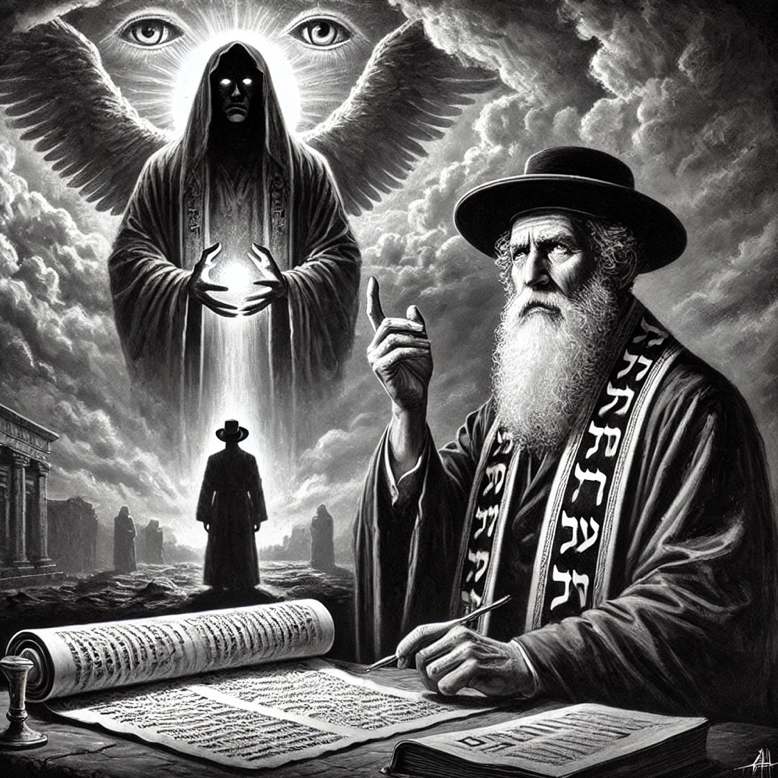
Certain rabbinic stories reference or allude to traditions about Enoch—sometimes praising him, sometimes treating him as an enigma. Yet it appears there was also a negative reaction, possibly under Rabbi Simeon ben Yoḥai, who is said (in later sources) to have pronounced a curse on those who speculated too much about the watchers and their sins. The sense was that Enochic texts gave undue prominence to angels and complicated cosmogonies, which could lead to mystical speculation outside the rabbinic mainstream.

Thus, in post-Temple Judaism, Enoch was relegated to the status of an interesting but non-canonical figure. The heroic, apocalyptic tone of 1 Enoch did not align as neatly with the emerging rabbinical interpretative frameworks that prioritized the Torah, the Prophets, and the Writings.

2.2 Tertullian: A Voice for Enoch
On the Christian side, we find a surprising range of opinions among the Church Fathers. Tertullian (ca. 155–220 AD), a prolific Latin theologian in Carthage, offers one of the most famous defenses of 1 Enoch. He argued that since the Epistle of Jude (in the New Testament) explicitly quotes Enoch (Jude 1:14–15 references 1 Enoch 1:9), it implied that the text had once carried a certain measure of inspired authority. Tertullian also reasoned that if it was accepted by the earliest believers, why should it be doubted centuries later?

Still, Tertullian’s advocacy for 1 Enoch did not sway the majority. He wrote at a transitional moment: the North African Church was in dialogue with the broader Christian world, and eventually Tertullian’s voice (as esteemed as it was in some circles) was overshadowed by the general trend that placed Enoch among apocryphal or “outside” writings.

2.3 Clement of Alexandria and Origen
Clement of Alexandria (ca. 150–215 AD) at times displayed knowledge of Enoch, referencing some of its theological motifs. He seemed to treat it with a measure of respect but did not elevate it to canonical status. Origen (ca. 184–253 AD), one of the most influential biblical scholars of the early Church, knew the text existed and recognized its significance. Yet in his extensive writings, Origen did not treat Enoch as strictly canonical.

Origen’s commentaries reflect an encyclopedic mind that surveyed a variety of Jewish and Christian works. He was aware that Enoch, while helpful for explaining angelic fall narratives, never held uniform acceptance across the Christian communities he encountered. He also recognized that Jewish tradition no longer embraced it as part of their sacred Scriptures. For Origen and many of his contemporaries, this raised concerns about whether it should be used for binding doctrine or considered "edifying reading" akin to other apocryphal works.

In sum, while the Church Fathers recognized 1 Enoch’s existence, gave it certain honors as an influential text, and sometimes quoted from it to bolster theological arguments, the text was never accorded universal scriptural authority once the formal debates about canon escalated.

3. Influence on Christian, Jewish, and Ethiopian Traditions

3.1 Enoch’s Ongoing Echoes in Christianity
Despite its removal from most recognized canons, the Book of Enoch continued to shape Christian thought indirectly. Enoch’s portrayal of fallen angels bridging the divine realm and the physical realm influenced demonological lore. Medieval Christian theology, especially in the West, built its angelology and demonology on a range of sources, including Scripture, patristic commentary, and popular apocryphal traditions. Even though Enoch was not officially read in church liturgy, some of its ideas survived in homilies, legends of saints, and works of mystical theology that described hierarchical layers of angels, cosmic watchers, or rebellious spirits.

By the time of the Renaissance and Reformation, knowledge of the Book of Enoch in Western Europe was so fragmentary that many scholars assumed the references in Jude or Tertullian were to some other lost text. Then, with the reintroduction of 1 Enoch’s Ge’ez manuscripts in the 18th and 19th centuries, new enthusiasm sprang forth among biblical scholars. They discovered that Enochic themes had likely shaped elements of early Christology—particularly the reverence for a cosmic “Son of Man” figure found in the Gospels. Some theologians drew parallels between the “Elect One” of 1 Enoch and statements made by Jesus about His own heavenly authority.

Consequently, though Enoch was never recognized in mainstream Catholic or Protestant Bibles, it exerted an influence upon Christian imagery of angels and eschatological judgment. The story of the Watchers who fathered giants resonates with believers who consider spiritual warfare a present reality. Modern readers, particularly those who are interested in prophecy, end-time events, or demonology, often perceive Enoch as a fascinating supplement that provides additional information.

3.2 Jewish Perspectives: Continuity and Rejection
For the Jewish tradition, Enoch’s influence was more subdued. After the destruction of the Second Temple, mainstream Judaism pivoted toward Torah-centric study and the formation of the Talmud. Apocalyptic works such as 1 Enoch, 2 Enoch, and similar texts were largely excluded from rabbinic discourse, though echoes of Enochic themes can be detected in early Midrash or mystical literature (e.g., certain threads of Merkabah mysticism might recall Enoch’s heavenly journeys).

The name “Enoch” still held a measure of respect: he was seen as a righteous ancestor. However, because 1 Enoch dwelt heavily on angelic activity, star lore, and cosmic secrets, it did not integrate seamlessly into rabbinic Judaism’s approach to revelation. As a result, references to Enoch in Jewish tradition rarely used the full content of 1 Enoch. Instead, rabbinic sources typically reworked or simplified the figure of Enoch into an exemplar of holiness (who might become the angel Metatron in later mystical writings).

Though certain Jewish mystical texts from the medieval era seem reminiscent of Enoch’s journeys, they do not cite 1 Enoch directly. One could argue that Enoch’s spirit survived in a subterranean way—through repeated emphasis that God punishes the rebellious angels and upholds the righteous. Nonetheless, it never had the same status as canonical, God-breathed Torah.

3.3 The Ethiopian Tradition: A Unique Guardianship

image-placeholder

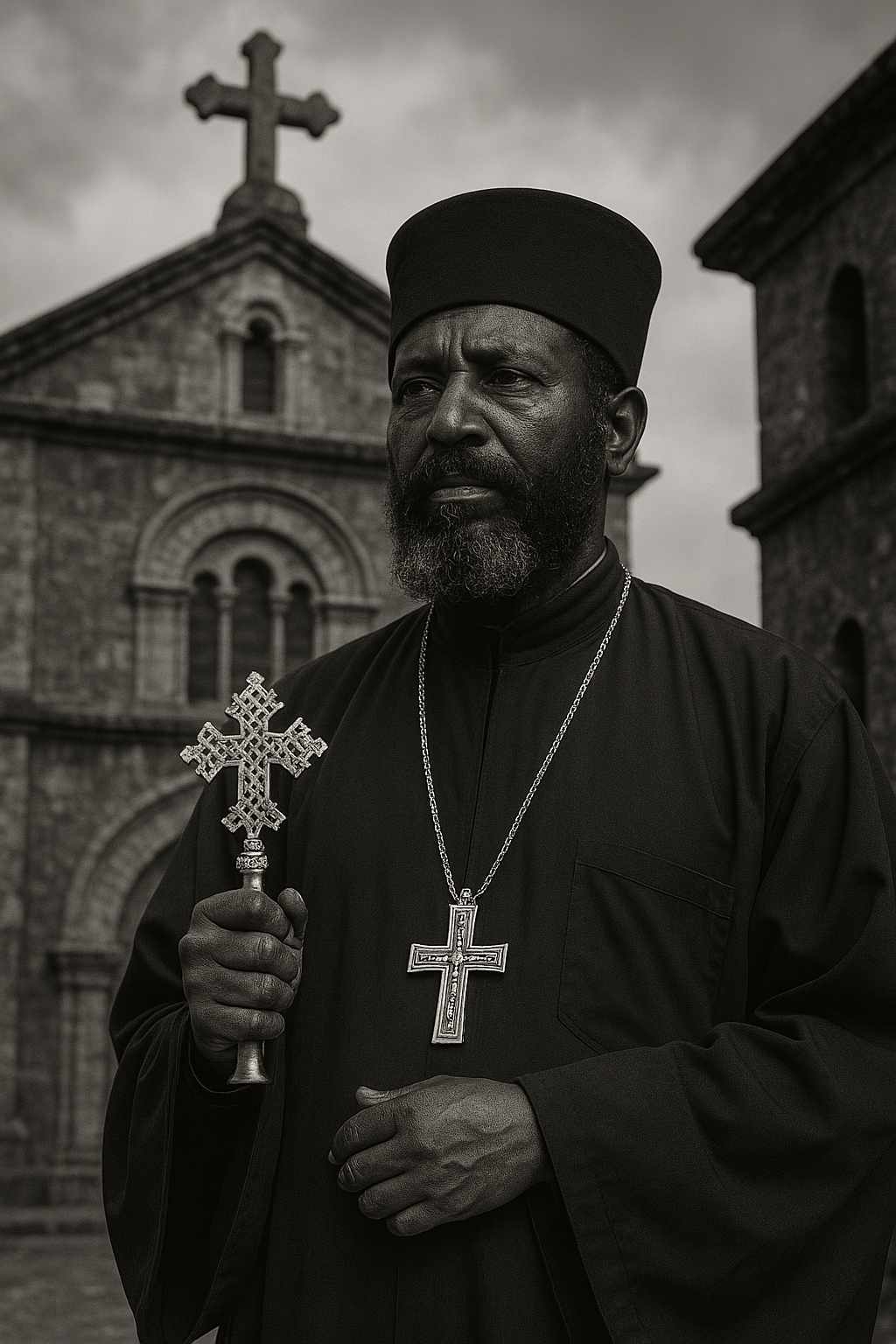
The Ethiopian Orthodox Tewahedo Church stands out as the one major Christian body that includes 1 Enoch in its Old Testament canon, alongside books like Jubilees. Within Ethiopian Christianity, Enoch is not an obscure side note. Rather, it is read as part of the broader biblical drama, bridging the gap between early Genesis and later redemptive history. The Ethiopian tradition, which developed somewhat independently of Western Latin or Eastern Greek doctrinal controversies, retained many works from the broad Jewish-Christian heritage.

For centuries, the Ge’ez text of Enoch circulated in Ethiopia, copied by hand in monastic settings. This gave rise to a form of biblical scholarship that accepted Enoch’s apocalyptic visions, genealogies, and moral exhortations as an integral portion of Scripture. In fact, Ethiopian Christian art and homilies sometimes depict scenes from Enoch’s revelations—vivid images of the rebellious angels, the fiery torment of the watchers, and Enoch’s assumption into heaven.

Not only did it shape the Ethiopian Christian imagination, but it also served as an additional witness to truths about judgment, moral living, and cosmic accountability that resonate deeply within the Ethiopian Orthodox worldview. Observers sometimes see parallels between the fervent Ethiopian emphasis on angelic presence in daily life and the content of 1 Enoch, which consistently underscores heaven’s watchful eye upon earthly affairs.

3.4 Modern Rediscovery and Interfaith Appeal
The modern age has seen a renewed surge of interest in Enoch, not only among Christian enthusiasts but also among students of Jewish mysticism, New Age spirituality, and even secular historians. Since the 19th century, translations of the Ge’ez manuscripts into European languages triggered a wave of scholarly analysis. The Dead Sea Scrolls discovered in 1947 added further impetus, as multiple Aramaic fragments of 1 Enoch and the Book of Giants were found, confirming the text’s antiquity and its importance in the Second Temple period.

This rediscovery has fueled cross-disciplinary studies in biblical scholarship, comparative religion, and historical theology. Researchers investigate how Enoch might have influenced the authors of the New Testament, to what extent it shaped the Qumran community’s theology, and how it illuminates broader trends in Jewish apocalyptic literature. For many Christians, Enoch offers what feels like “missing context” for certain biblical references, especially the cryptic statement in Genesis 6 about the “sons of God” cohabiting with human women.

Meanwhile, in popular culture, Enoch’s story has been woven into novels, conspiracy theories, and end-times prophecies. The notion of watchers from heaven descending to impart forbidden knowledge resonates with many modern concerns about advanced technology, moral boundaries, and the infiltration of evil. Enoch, ironically, has become more famous in some circles than certain minor prophets who remain in standard Bibles.

3.5 Balancing Fascination with Discernment
It is worth noting that interest in Enoch sometimes drifts into speculative territory. Some modern interpreters read 1 Enoch as a literal guide to cosmic secrets or treat its descriptions of giant offspring as proof of extraterrestrial contact. Many mainstream Jewish and Christian authorities would caution that while 1 Enoch may contain genuine theological depth, it should be read with the same discernment one applies to any ancient text outside recognized Scripture.

Nonetheless, from a purely historical perspective, 1 Enoch’s impact cannot be denied. It shaped the early Church’s apocalyptic imagination, influenced the demonology of Western Christendom, lingered in Jewish lore, and flourished in the living canon of Ethiopian Orthodoxy. In the 20th and 21st centuries, it has resurfaced as a significant text, establishing an unprecedented connection between academic scholarship and popular religious inquiry.

As we have seen, the Book of Enoch has swung wildly between high esteem and cautious repudiation. In the early centuries of the Church, it was often quoted or defended, particularly in regions where Christian communities were close to the Jewish apocalyptic traditions. Over time, standardization of biblical canons in both Jewish and Christian circles meant that Enoch was set aside—except in Ethiopia, where it maintained canonical dignity and shaped a unique Christian heritage.

Meanwhile, rabbinical Judaism, with its own evolving sense of sacred Scripture, refrained from placing Enoch inside the recognized Hebrew Bible. Church Fathers like Tertullian and Origen reflect a transitional moment: they inherited references to Enoch from earlier generations but also witnessed the growing reluctance to label it “inspired Scripture.” Ultimately, the wave of official canons and councils overshadowed Enoch in the Latin and Greek churches.

Yet this is hardly the end of Enoch’s story. In modern times, the text’s rediscovery—through Ge’ez manuscripts and the Dead Sea Scrolls—has reintroduced it to global Christian discourse. Today, theologians, historians, and lay readers alike examine Enoch for insights into everything from angelology to eschatology. The ancient father who “walked with God” has once again found a place in religious conversation, reminding us that the boundaries of what is deemed canonical and what is not can shift with the tides of history and the forging of doctrinal consensus.

In the chapters ahead, we will dive deeper into Enoch’s content itself. But understanding how it was regarded—and sometimes disregarded—by different faith communities helps us appreciate the complexity of the text. Whether canonical or apocryphal, embraced or set aside, Enoch’s powerful narrative of fallen angels, looming judgment, and the hope of righteousness remains a tapestry of ancient secrets that continues to intrigue believers and scholars across the world.

Chapter three

The Origins and Authorship of Enoch

It is one thing to come across the mysterious Book of Enoch in passing references—perhaps in discussions about fallen angels or the Nephilim—and quite another to delve into its origins and realize just how significant this work has been in shaping certain strands of Jewish and Christian thought. Although modern readers often discover 1 Enoch with a sense of novelty, the text itself is far from a recent curiosity. It has a deep-rooted history involving the Ethiopian Orthodox canon, fragmentary evidence from the Dead Sea Scrolls, and a winding journey through multiple languages, from Aramaic to Greek to Ge’ez (Ethiopic). Understanding the Book of Enoch’s path—how it was lost, rediscovered, and preserved—helps set the stage for all the remarkable narratives and theological concepts found in its pages. This first chapter explores the background of 1 Enoch, focusing on its historical setting, its manuscript traditions, and why it disappeared from much of mainstream Judaism and Christianity, only to reemerge centuries later.

1. The Historical Background: Ethiopian Canon and Dead Sea Scrolls

1.1 The Place of Enoch in the Ethiopian Canon

One of the most remarkable facts about the Book of Enoch is that it has been continuously regarded as sacred Scripture in the Ethiopian Orthodox Tewahedo Church. While the text never established the same canonical status in Western or Eastern Orthodox Christianity, nor in mainstream Judaism, Ethiopian Christians have preserved it as part of their broader biblical collection for centuries. This acceptance is not incidental. Ethiopian tradition venerates Enoch (called “Henok” in Ge’ez) as a holy figure akin to the patriarchs, and the reverence for his writings aligns well with the church’s deep connection to many ancient Jewish-Christian traditions.

Historically, Ethiopia’s Christian heritage traces back to the early centuries of the Common Era. With connections to both Judaism and early Christianity—legends about the Queen of Sheba, the Ark of the Covenant, and more—Ethiopia retained certain works that fell out of favor or were never embraced elsewhere. 1 Enoch (often referred to simply as “Enoch” in Ethiopian circles) became part of this unique tapestry.

The Ethiopian biblical canon is broader than that of the Roman Catholic Church, Eastern Orthodox Churches, and certainly broader than most Protestant canons. It includes not only Enoch but also Jubilees, the Shepherd of Hermas, and other texts Western Christians might label “apocryphal” or “pseudepigraphal.” That the Book of Enoch survived in such a canon is a testament to Ethiopia’s historical isolation. External theological disputes in the Mediterranean world did not fully disrupt or shape the Ethiopian acceptance of certain texts. Thus, while the Book of Enoch was condemned or viewed suspiciously by many church fathers (particularly after the second or third century), Ethiopian scribes kept copying it, reading it, and treasuring it as a genuine voice from antiquity.

1.2 The Dead Sea Scrolls and Proof of Antiquity

image-placeholder

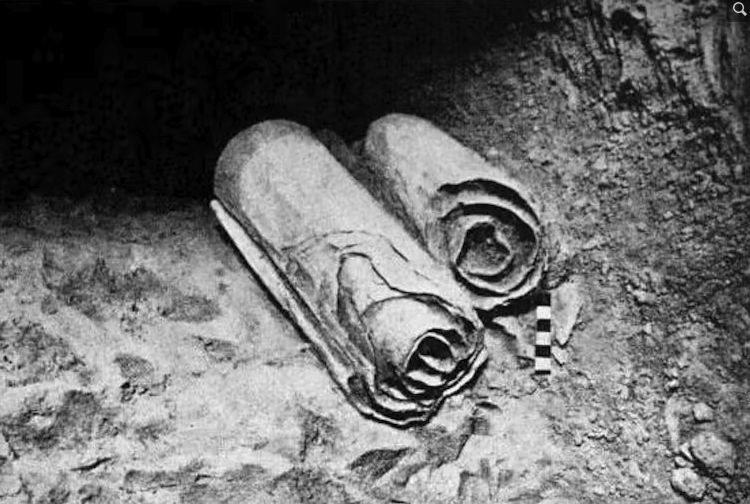
The second major factor establishing Enoch’s historical pedigree is the Dead Sea Scrolls discovery in the mid-20th century. When archaeologists and local Bedouin began uncovering scroll fragments in the Qumran caves (starting in 1947), scholars found pieces of texts that aligned with 1 Enoch. These Aramaic fragments corresponded to sections of what we commonly call the “Book of the Watchers” (the first major portion of 1 Enoch) and other Enochian material.

This Qumran evidence confirmed two essential points. First, it demonstrated that Enoch was read and revered by certain Jewish communities—likely the Essenes—in the Second Temple period (roughly the last few centuries before the birth of Jesus). Second, it proved that the text existed in a form substantially similar to the Ethiopic version we possess today. Even though the fragments are not always complete, the parallels in content (references to fallen angels, their punishment, Enoch’s heavenly journeys) demonstrate continuity between the Ethiopian Enoch and these early Aramaic witnesses.

image-placeholder

Such Qumran fragments date to around the second century BCE, revealing that Enochic traditions were already in circulation by then. Because scholars believe some layers of 1 Enoch (particularly the Book of the Watchers) might be even older, it underscores the text’s antiquity: it is not an early medieval creation or Christian-era forgery. Instead, it is demonstrably Jewish in origin, embedded in the swirling religious currents of the late Second Temple period.

Together, the Ethiopian canon’s preservation and the Qumran Scrolls’ confirmation offer a fascinating portrait of how Enoch lingered on the edges of mainstream religious communities, never entirely forgotten—and for some believers, never set aside at all.

2. Language and Manuscript Traditions: Ethiopic, Greek, and Aramaic

2.1 The Aramaic Roots

The earliest textual witnesses we have for 1 Enoch come from Aramaic fragments. Aramaic was a common lingua franca of the ancient Near East, especially during the Persian period and stretching into the Hellenistic era. The Dead Sea Scrolls preserve a few separate Aramaic manuscripts that correlate with the different sections (or “books”) within 1 Enoch. Although none of these manuscripts has survived in complete form, collectively they make up the bulk of what scholars needed to confirm that the Book of Enoch existed—virtually in the shape we know it—before the advent of Christianity.

It is generally accepted that the original language for most of 1 Enoch was indeed Aramaic, though certain scholars argue that some sections could have been composed in Hebrew or a related dialect. Regardless, the Dead Sea Scrolls confirm that the Enochic traditions were deeply rooted in a Jewish environment that read and wrote in Aramaic.

2.2 Greek Translations

As Judaism encountered the Hellenistic world, many important Jewish works, including biblical writings, were translated into Greek (the Septuagint being a famous example). In a similar manner, 1 Enoch found its way into Greek translations, fragments of which have been discovered in various papyri and quotations by early Christian writers. Although these Greek pieces are often partial (a page here, a few lines there), they indicate that Enoch circulated beyond a purely Aramaic-speaking audience. This Greek version eventually played a role in shaping how early Christian thinkers (particularly those conversant with Greek) received the text.

Interestingly, some church fathers, such as Clement of Alexandria, Origen, and Tertullian, show awareness of Enoch. Tertullian, writing in Latin, even muses about whether the Book of Enoch ought to be regarded as canonical. For Tertullian, the “ancientness” of Enoch was not in doubt; he cites it approvingly in discussions of angels and demonic entities. While the Greek translation likely made Enoch more accessible, it did not ensure wide acceptance, and soon the text’s popularity waned in most of Christendom’s major centers—except in Ethiopia.

2.3 The Ethiopic (Ge’ez) Manuscripts

Perhaps the most extensive manuscript tradition of 1 Enoch is in Ge’ez (Classical Ethiopic). When European travelers and scholars rediscovered the Book of Enoch in Ethiopia during the late 18th century, it caused a stir in biblical and theological circles. These Ethiopic manuscripts were often multiple centuries old, meticulously copied by hand. The content was far more elaborate and complete than the fragmented Greek or Aramaic texts known outside of Ethiopia.

Modern editions and translations of 1 Enoch typically rely heavily on the Ethiopic version, supplemented by Greek fragments and the Aramaic from Qumran to correct or verify certain passages. That is why, when referencing 1 Enoch, scholars often cite chapter and verse from the “Ethiopic Enoch.” If the text had not been preserved in Ethiopia, we would lack a large percentage of the content that illuminates the dramatic narratives about the Watchers, the cosmic journeys of Enoch, and the parables describing a future Messianic figure.

2.4 Recurring Manuscript Challenges

Like many ancient texts, Enoch’s manuscripts present a tapestry of scribal variations: divergences in spelling, inserted glosses, omitted lines, and occasional reinterpretations of ambiguous phrases. Some sections that appear in the Ethiopic tradition are missing from existing Greek fragments. And because the Aramaic manuscripts from Qumran are incomplete, scholars must stitch these sources together carefully to produce a critical edition.

This patchwork tradition does mean that certain verses come down to us in multiple versions, each with slight differences. Yet the overall coherence of 1 Enoch across these tongues—Aramaic, Greek, and Ethiopic—underscores that it was a single recognized work, not just a random collection of folk tales. Its unity, in content if not always in editorial polish, highlights how strongly the Enochic storyline resonated with ancient believers, enough to be translated repeatedly for new audiences.

3. Why It Was Lost and Rediscovered

3.1 Falling Out of Favor in Mainstream Judaism and Christianity

The Book of Enoch is referenced in the Epistle of Jude in the New Testament—specifically, Jude 1:14–15 alludes to a prophecy from Enoch about the Lord coming with “ten thousands of His saints.” For Jude, quoting Enoch does not seem controversial; it likely indicated that his audience already had some familiarity with Enoch’s prophecies. However, a few centuries later, opinions shifted. By the time the official Jewish canon was crystallizing (around the 2nd century CE or later) and rabbinic tradition became dominant, Enoch did not find a place among the recognized Hebrew Scriptures.

One possible reason for its exclusion was skepticism around the radical depiction of angels mating with human women and producing monstrous offspring. Another factor could be that the text, while popular among certain groups (like the Essenes), was not universally accepted across all Jewish communities. Enoch’s elaborate visions and parables were also far from the simpler narrative tradition of the Torah or the recognized prophets.

In the Christian sphere, the first few centuries saw some leaders who regarded Enoch favorably, but soon official attitudes cooled. Church synods and councils did not include Enoch among canonical writings. The condemnation might have been partly due to Gnostic or other heterodox groups occasionally appealing to Enoch to bolster their own speculations about angelic realms. By the time of Augustine in the 4th–5th centuries, Enoch was rarely cited as authoritative. Eventually, it all but vanished from Christian usage in the Mediterranean and European realms.

3.2 Preservation in Ethiopia and Translations into Europe

As mainstream Judaism and most Christian communities laid Enoch aside, the Ethiopian Church continued to copy it as Scripture. In an environment comparatively free of the doctrinal controversies swirling around Roman or Byzantine Christianity, Ethiopia maintained older traditions. The Book of Enoch joined the ranks of other so-called “narrow path” texts that never quite broke into the canons of Rome or Constantinople but thrived in the Ethiopian highlands.

The modern rediscovery process began in the late 18th century when Scottish traveler James Bruce acquired Ethiopic manuscripts of Enoch during his exploration of Ethiopia. Bruce returned to Europe with these manuscripts around 1773, but it was only decades later, in 1821, that Dr. Richard Laurence of Oxford produced the first English translation of 1 Enoch. This sparked new interest among biblical scholars, who were both curious and somewhat perplexed. Many had presumed Enoch no longer existed in any form, or that if fragments survived, they might be spurious.

Further impetus came in the 20th century with the Qumran discoveries. When portions of Enoch turned up in Cave 4, it stunned researchers, because it provided undeniable evidence of Enoch’s antiquity, bridging the gap between the Ethiopic text and a pre-Christian Jewish milieu. Suddenly, Enoch was not just an odd Ethiopian artifact; it was an ancient writing central to understanding certain streams of Jewish apocalyptic thought. This reevaluation also fed into the academic quest to comprehend the diversity of Second Temple Judaism—where groups like the Essenes, Pharisees, Sadducees, and others held variant scriptural canons and theological views.

3.3 Modern Scholarship and the Book’s Ongoing Significance

As a result of these rediscoveries, modern scholarship has gradually acknowledged that 1 Enoch belongs to the same broad tradition of Jewish apocalyptic literature as Daniel, parts of Isaiah, and other works that speak of cosmic revelations, final judgments, angels, and messianic deliverance. While some theologians remain cautious—especially those committed to strict canons—it is widely recognized that 1 Enoch offers unparalleled insight into how certain Jewish circles of the late Second Temple period interpreted Genesis 6:1–4, envisioned the structure of heaven and earth, and prophesied about the destiny of righteous and wicked alike.

That is not to say Enoch has suddenly become universally accepted as canonical. Rather, it is seen as historically and theologically significant. Many believers with an interest in biblical backgrounds find the Book of Enoch a fascinating companion to canonical texts like Genesis or Revelation. Others, especially in Pentecostal or charismatic circles, see it as a window into the spiritual warfare elements that appear in scripture. And in academic contexts, it is a centerpiece for understanding how Judaism moved from a strictly Torah-based piety to the apocalyptic fervor that gave rise to Christianity and Rabbinic Judaism.

Enoch’s “loss” from mainline traditions might be lamented by those who consider it an inspired or near-inspired text. But ironically, that very process of falling into obscurity, followed by dramatic rediscovery via Ethiopian manuscripts and the Dead Sea Scrolls, has generated a fresh wave of interest in modern times. We are now in a period where translations of 1 Enoch are widely available in countless editions, and spiritual seekers and biblical scholars alike are reevaluating the text for themselves.

The Book of Enoch’s remarkable odyssey—from its composition in an ancient Jewish setting to its eclipse in most of the world, to its unbroken preservation in Ethiopia, and eventual archaeological resurrection in the Judean Desert—makes it one of the most intriguing texts of antiquity. Understanding how and why it moved through Aramaic, Greek, and Ethiopic helps dispel the myth that it is some modern invention. Indeed, it stands as a profound testament to the complexity and diversity of early Jewish thought.

Far from being a mere footnote in the story of biblical literature, Enoch was a powerful influence on the theological imagination of various communities, shaping views on angels, the structure of heaven, and even moral instruction for daily life. That we hold in our hands a text once believed lost underscores how historical circumstance can determine the fate of sacred books. For some, Enoch serves as a crucial piece connecting Genesis to Revelation, while for others, it is a captivating tale of rebellious angels and cosmic judgments that deepens our understanding of Jewish apocalypticism.

Now that we have explored how the Book of Enoch was preserved in the Ethiopian canon and affirmed by the Qumran findings—and how it traversed languages—our next step is to look more closely at its contents. In the chapters ahead, we’ll journey through the five major sections of 1 Enoch, unraveling their distinct themes, stories, and parables. By the end, hopefully you, dear reader, will have both a solid historical grounding and a deep spiritual appreciation for this ancient and once-forgotten scripture.

Chapter four

Book 1 – The Watchers

The opening section of the Book of Enoch, often referred to as Book 1 – The Watchers, lays the foundation for Enoch’s dramatic narrative of fallen angels and the birth of monstrous offspring known as the Nephilim. It is here that we first encounter the mysterious “Watchers,” celestial beings who abandon their heavenly post out of rebellion and misguided desire, provoking divine judgment upon both themselves and humanity. The idea of angels descending to Mount Hermon, imparting forbidden knowledge, and fathering giants is among the most striking features of this ancient text. In this chapter, we will explore the key passages and motifs in Book 1, focusing especially on the sin of the angels, the role of Azazel as an archetypal corrupter, the widespread cosmic consequences of angelic rebellion, and Enoch’s own part as a mediator between the fallen Watchers and the divine throne.

1. The Setting: Fallen Angels Descend to Mount Hermon

1.1 Introduction to the Watchers

image-placeholder

The Book of Enoch begins by describing the conditions on earth when the “children of men” were multiplying. In this environment, certain angels—referred to in the text as the “Watchers” or “the children of heaven”—become captivated by human women. The term “Watchers” is used because these angelic beings were charged with monitoring or “watching” humanity, presumably to guide, protect, or oversee. Their position as intermediaries between heaven and earth makes their later betrayal of divine law especially stark.

One of the earliest episodes in the Watchers narrative sees them take an oath of mutual commitment, deciding that they will all share the blame for what they are about to do. Led by their chief, Semjaza (sometimes spelled Shemyaza), they descend upon Mount Hermon, which the text indicates they named as such because on that peak they “swore” and “bound themselves by mutual imprecations.” This communal oath underscores how the angelic rebellion was not a mere accident but a deliberate, collective transgression.

Mount Hermon itself, often connected to northern Israel and southern Lebanon in biblical geography, becomes a potent symbol: a physical mountain on earth where supernatural beings left their designated heavenly realm. For ancient readers, the coupling of sky and earth at a literal mountaintop represented the bridging of a divide never meant to be crossed. The “lofty place,” a motif repeated in other biblical and Near Eastern contexts, highlights how the Watchers stepped away from their ordained boundaries, dragging humanity into grave peril.

1.2 Why the Angels Fell

Although the initial reason the Watchers give for descending is their lust for mortal women, the deeper sin, from a theological perspective, is the abandonment of divine order. Angels, by design, belong to the heavenly sphere. They were tasked to watch from above, never to intermix or challenge God’s created boundaries. By choosing to take human wives, they invert the created hierarchy. This sets in motion a sequence of corruption that spreads from the angels themselves into the entire fabric of mortal society.

image-placeholder

Many scholars note that the watchers’ sin parallels biblical motifs in Genesis 6, wherein “the sons of God” saw the daughters of men were fair and took them as wives. The Book of Enoch amplifies this theme dramatically: not only do angels marry humans, but they produce giant offspring whose violence escalates into devouring humanity. The emphasis on physical and moral corruption—ranging from illicit unions to shared secrets—provides a cosmic dimension to the concept of sin: it is not merely a human failing but also a cosmic betrayal by spiritual beings.

2. The Birth of Giants (Nephilim) and Their Devastating Impact

2.1 Nephilim as the Hybrid Offspring

Shortly after describing how the angels took wives among human women, Book 1 explains that these women gave birth to children of enormous stature, the giants or Nephilim. The text frequently portrays them as creatures of vast physical power—some versions claim their height reached hundreds or even thousands of cubits. While the exact measure can vary across traditions, the point is clear: these beings transcended normal human limitations, standing as half-spiritual, half-flesh monstrosities.

The name Nephilim sometimes translates to “the fallen ones” or “those who cause others to fall.” Their existence is one of the stark results of the Watchers’ disobedience. Because these giants were born from an unnatural union, they inherit not only superior might but also an insatiable hunger that leads them to commit horrific acts of violence.

2.2 Spreading Violence and Devouring Humanity

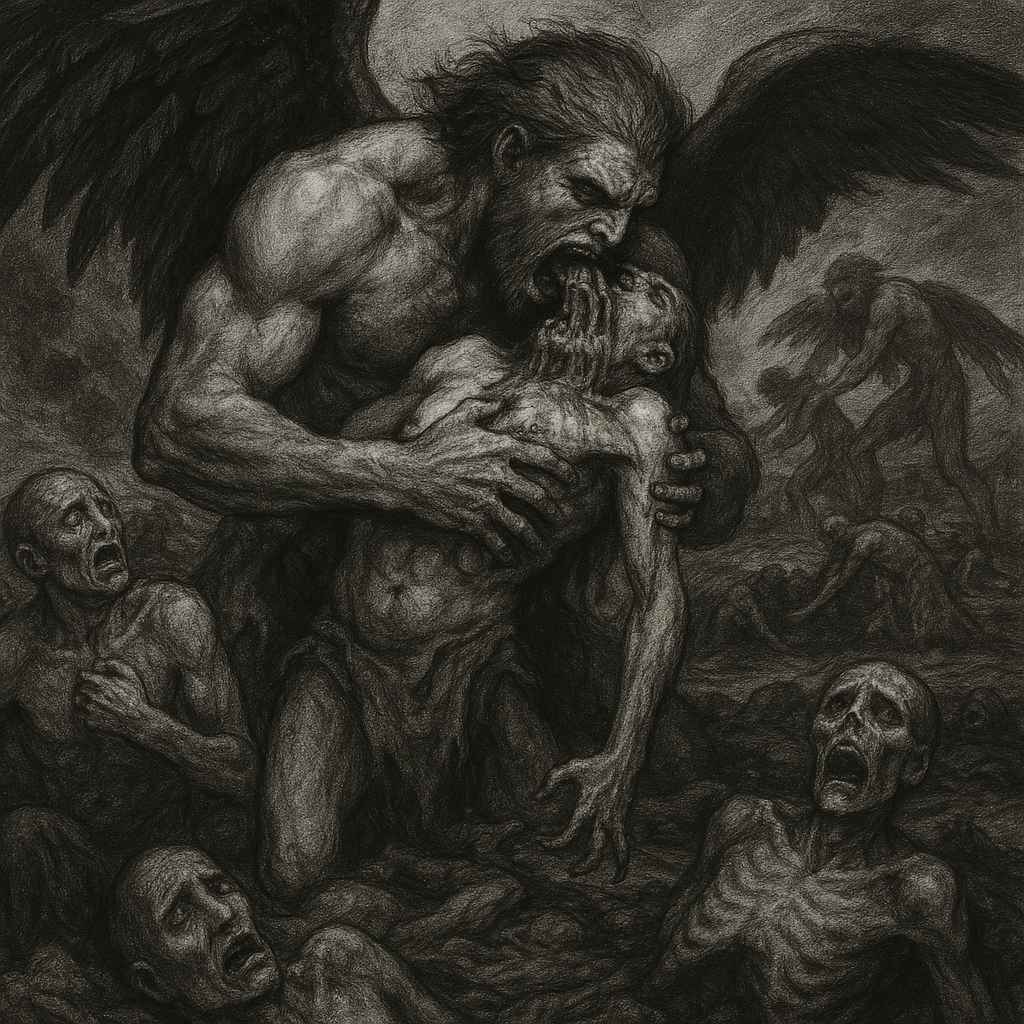
The narrative intensifies by describing how the giants come to dominate and ravage mankind. Initially, they devour the resources of the earth—grains, livestock, and produce—at a pace that no mere mortals can sustain. Starvation and territorial conflicts arise. When the supply of food is exhausted, the giants turn on humanity itself, devouring human flesh and drinking blood. This cannibalistic horror exemplifies how far the created order has degenerated under the sway of the Watchers and their progeny.

image-placeholder

In effect, the giants become harbingers of a larger cosmic disorder. Their presence upends natural boundaries: not only have angels and humans intermingled, but the rules of basic sustenance have morphed into predatory chaos. Humanity’s cry goes up to heaven because the weight of oppression is unbearable. This is one of the text’s most visceral portraits of sin’s consequences—when spiritual rebellion filters down into daily life, the meek suffer, and bloodshed becomes the norm.

2.3 The Earth Accuses Its Inhabitants

Intriguingly, the Book of Enoch personifies the earth itself as an entity that lodges complaints against these atrocities. The earth “laid accusation” or “accused the lawless ones,” symbolizing that creation cannot abide the wanton destruction. This concept resonates with later biblical passages that speak of the land “vomiting out” its inhabitants for idolatry or wrongdoing. In Enoch’s vision, creation is intimately responsive to sin—cosmic rebellion leads to environmental upheaval, famine, and an outcry that echoes to the gates of heaven.

3. Key Motifs: The Sin of the Angels and Azazel’s Teachings

3.1 Azazel, Archetype of Corruption

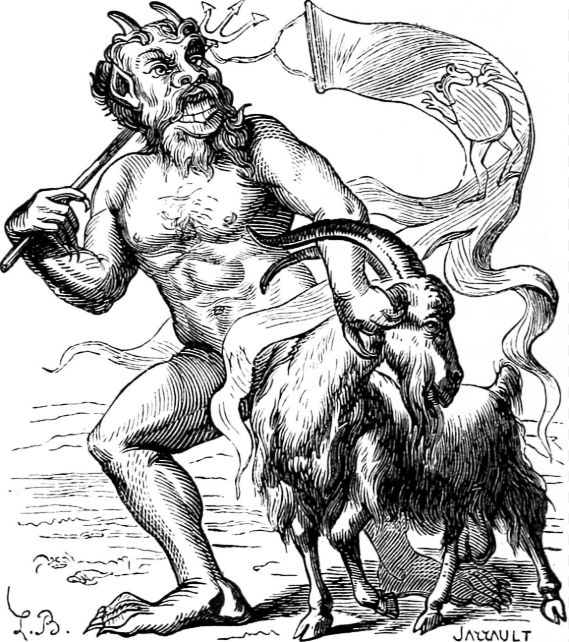
Among the watchers described in Book 1, Azazel stands out as a particularly notorious figure. He is singled out for teaching mankind the manufacture of weapons—swords, knives, shields, and breastplates—and also for imparting knowledge of cosmetics, precious metals, and ornamentation. At first glance, these might seem like mundane skill sets. Yet within the world of Enoch, these forbidden arts accelerate the spread of violence (through advanced weaponry) and seduction (through vanity).

image-placeholder

Azazel’s name appears not only in Enoch but also in some biblical traditions (e.g., Leviticus 16, in the ceremony of the scapegoat) and in later Jewish demonology. The significance in Enoch is that Azazel exemplifies how spiritual knowledge, meant for a higher or different cosmic function, becomes toxic when handed to humanity outside its proper context. Instead of fostering a peaceful, God-centered society, these “gifts” drive men to war, rivalry, and immorality.

3.2 Cosmic Consequences: From Knowledge to Devastation

The sin of the Watchers is multi-layered:

  1. Betrayal of Heavenly Estate: They desert their assigned domain, choosing fleshly lusts over spiritual duty.

  2. Illicit Unions: By impregnating human women, they create a race of giants who spread chaos.

  3. Transmission of Forbidden Knowledge: Azazel and others teach humanity about astrology, enchantments, root-cutting (early forms of sorcery), and various crafts.

Viewed theologically, the misuse of knowledge leads to widespread ruin. Weapons manufacturing fosters warfare and bloodshed. Sorcery and root-cutting degrade true worship, spurring deeper idolatry. The watchers thus accelerate humanity’s moral collapse, highlighting a consistent biblical theme: the wrong kind of knowledge—or knowledge used in disobedience to God—brings destruction rather than enlightenment.

3.3 From Spiritual Deviation to Historical Ramifications

Many ancient traditions view the introduction of advanced technology or secret arts by supernatural beings as having both positive and negative effects. While some myths present it as beneficial, Enoch’s perspective is unequivocally negative, framing the watchers’ gifts as catalysts for moral darkness. This stands as a cautionary paradigm: not all revelations or technologies are inherently good if they lead people away from divine truth or produce societal chaos.

For Enoch’s original audience—be they Second Temple Jewish communities or a mixture of Jewish and early Christian readers—this narrative could also reflect real historical experiences of corruption, oppression, and violent empires. By personifying cosmic evils in angels-turned-rebels, the Book of Enoch contextualizes worldly suffering as part of a bigger cosmic war between faithful angels and renegade powers.

4. “Mount Hermon,” the Corruption of Mankind, and Enoch as Mediator

4.1 Mount Hermon: More Than a Geographical Detail

image-placeholder

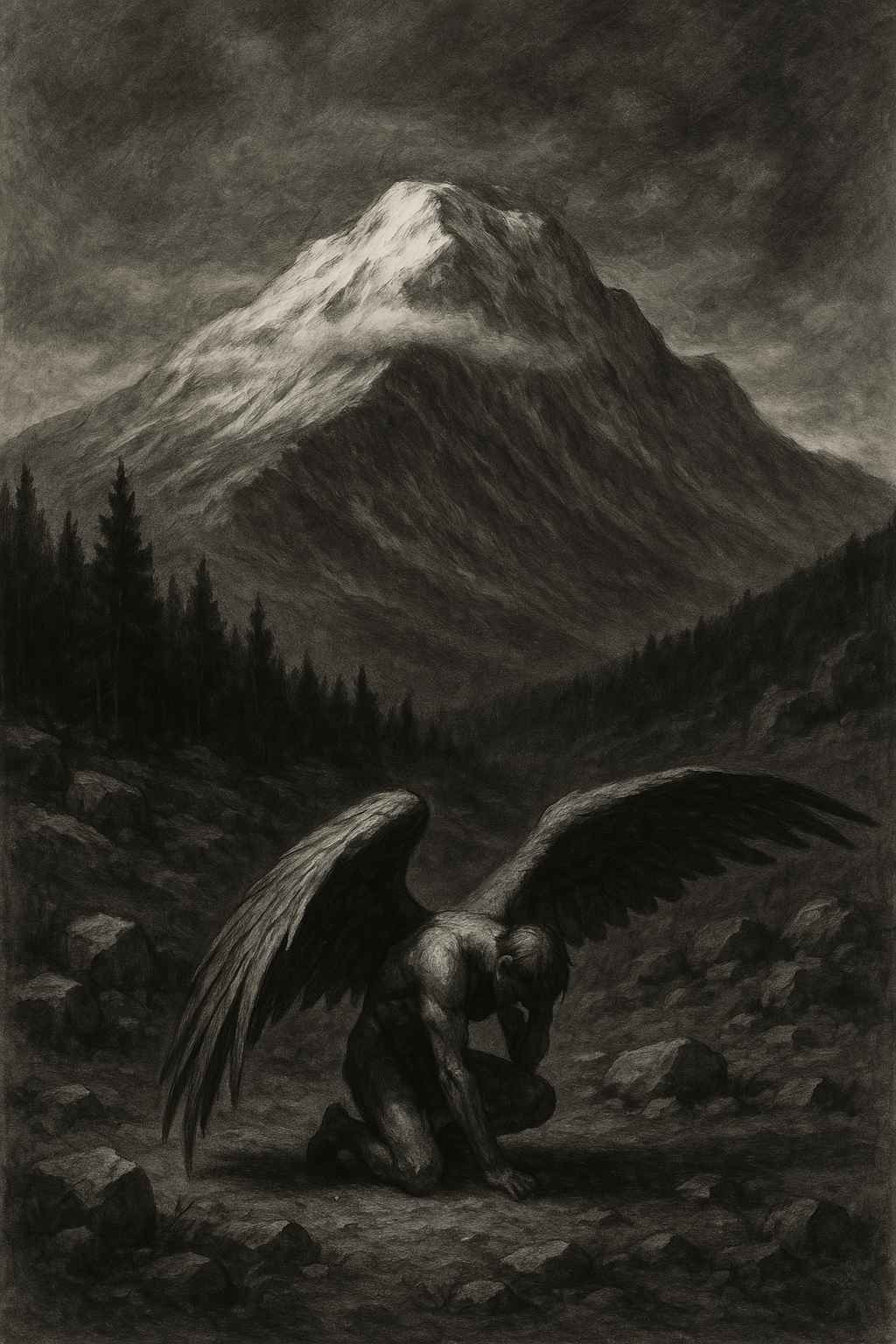
As noted, Mount Hermon serves as a pivotal location where the Watchers descend and swear their oath. Symbolically, it is the site of the boundary between heaven and earth, the place where spiritual transgression becomes physically manifest. While biblical references to Hermon (e.g., Psalm 133:3) highlight it as a region of dew and blessing, Enoch’s account is overshadowed by violation and curses. This duality underscores how the same location can be perceived in multiple ways depending on whether divine or diabolical beings are in operation.

Mount Hermon’s significance as a cosmic threshold is not lost on commentators: some Christian traditions later connect Jesus’s Transfiguration to a high mountain region near Caesarea Philippi (sometimes speculated to be Hermon), thereby symbolically reversing the watchers’ descent with Christ’s heavenly revelation. Whether or not that is an exact correlation, it indicates Hermon’s continuing resonance in spiritual geography.

4.2 The Cry of the Righteous: Humanity’s Desperate Plea

Once the watchers’ corruption has borne fruit, the Book of Enoch speaks of mankind’s outcry. People are overwhelmed by the giants’ oppression, the infiltration of sorcery, and the tangles of sin. As violence becomes widespread, the plight of humanity reaches the ears of the archangels—Michael, Gabriel, Raphael, and Uriel—who behold the destruction and bring news before the “Lord of Spirits.”

In traditional biblical narratives, an oppressed people often cry out, and God hears them (Exodus 2:23–25). Here, the outcry is not just from mortals but includes the earth’s own lament, signifying the cosmic dimension of wrongdoing. The watchers’ sin is recognized as unprecedented, and immediate action must be taken. Thus, we see that the primary impetus for heaven’s intervention is the suffering of God’s creation under corrupt, illegitimate dominion.

4.3 Enoch’s Role as Intercessor and Scribe

Amid this chaos, Enoch emerges as a vital mediator. The text portrays him as a righteous man favored with divine visions, standing between the Watchers and God. Interestingly, once the watchers realize the magnitude of their judgment, they attempt to petition heaven. Yet they themselves cannot approach the holy throne. Rather than approaching the holy throne themselves, they ask Enoch to pen down their plea for mercy and bring it before the Lord, a reversal of normal cosmic hierarchies that necessitates angels relying on a human for communication.

This underscores a central theme: moral standing outweighs mere angelic power. The watchers are physically and spiritually separated from God due to their rebellion, while Enoch—though mortal—has maintained a path of righteousness, granting him special access to divine counsel. Enoch writes out the watchers’ petition but is told by the Lord that no forgiveness will be granted for these transgressions. Instead, Enoch is commissioned to pronounce the watchers’ final doom and detail how they will be bound in the depths of the earth until the final judgment.

4.4 Enoch’s Journey into the Heavenly Realm

In Book 1, we witness glimpses of Enoch being taken up into visionary experiences. Although the full exploration of Enoch’s cosmic journeys occurs in subsequent parts of the text (particularly in the “Book of the Heavenly Luminaries”), these early references lay the groundwork. Enoch’s role is part prophet, part scribe, and part intercessor. He not only addresses the watchers but also receives revelations about the future punishment of angels and men. This combination distinguishes Enoch as a pivotal figure in Second Temple literature—someone who stands at the intersection of heaven and earth, bridging the gap that rebellious angels attempted (and failed) to lawfully cross.

5. The Aftermath: Setting Up a Narrative of Judgment

5.1 Azazel’s Binding and the Watchers’ Imprisonment

One of the most dramatic episodes in Book 1 is the divine command to bind Azazel hand and foot and cast him into the darkness of a desert called Dudael. Rough and jagged rocks bury him, a symbolic imprisonment that parallels the watchers who will also be bound “in the valleys of the earth” until the day of final judgment. Enoch’s role in announcing this sentence accentuates that cosmic justice can be delayed, but not denied.

Heavenly archangels—Raphael, Michael, and Gabriel—each receive specific tasks in carrying out the condemnation: some oversee the watchers’ demise, while others intercede for the righteous humans. The text clarifies that the watchers hoped for immortality or an extended existence akin to angels in heaven, but their sin ensures a fate of torment and confinement. They had tried to circumvent divine boundaries, but in doing so, they triggered their own downfall.

5.2 Cleansing the Earth

image-placeholder

With the watchers judged and the giants unleashing cruelty upon mankind, a major theme emerges: Earth itself must be cleansed of this pollution. The Book of Enoch hints at the notion of a great flood that will purge creation of the watchers’ taint. Though elaborated more fully in later sections—particularly in the Book of Noah—this cleansing is portrayed as an act of both wrath and mercy. Wrath, because it punishes sin; mercy, because it halts the unstoppable violence wrought by cosmic-level corruption.

Thus, Book 1 prepares the ground for Enoch’s eventual announcements concerning global cataclysm. It also heightens the moral dimension: if angels were judged for their transgression, how much more will humanity be held accountable for learned wickedness?

6. Interpreting Book 1 for Modern Readers

6.1 Spiritual Lessons from the Watchers’ Fall

From a theological or spiritual perspective, Book 1’s account of the watchers reveals cautionary principles:

  1. Pride and Misplaced Desire: The watchers, initially sinless creatures, fall because they yield to lust and ambition. This resonates with biblical warnings about pride preceding a fall.

  2. Misuse of Power and Knowledge: Azazel’s instruction in warfare technologies and vain cosmetics suggests that no knowledge is neutral when severed from divine wisdom.

  3. Individual vs. Collective Responsibility: The watchers do not sin individually; they form a pact. This speaks to the danger of group complicity—once a consensus is reached to rebel, the momentum toward evil grows exponentially.

6.2 Enoch’s Righteous Example

Enoch, by stark contrast, stands as the righteous man who “walks with God.” His unique closeness to the divine empowers him to mediate cosmic affairs. For modern believers, Enoch’s example shows that even when society or cosmic powers turn against God, faithful adherence to righteousness grants spiritual authority and insight. Enoch’s humility and obedience allow him to function where exalted angels dared not tread.

6.3 Moral Implications for Society

image-placeholder

On a more societal level, the watchers’ infiltration and the giants’ violence parallel all epochs where technology, power, or ambition outpace moral responsibility. Armies wielding newly discovered weaponry, elites trading in vanity, oppression of the vulnerable—these are perennial themes. The Book of Enoch warns that any pursuit of progress divorced from reverence for the Creator leads eventually to destructive ends.

6.4 The Cosmic Scope of Sin

A distinctive feature of Book 1 is how it expands the scope of sin beyond mere human failings to include angelic wrongdoing and environmental consequence. Sin in Enoch’s perspective is fundamentally disruptive to the cosmic order. When “the children of heaven” forget their place, creation groans. In this sense, Enoch’s theology underscores an interconnectedness of all things: spiritual beings, humankind, and the natural world. Violations in one sphere spill into the others.

The Legacy of Book 1 – The Watchers

Book 1 of Enoch sets a profound tone for the entire work: it merges cosmic drama with moral teaching, weaving together the stories of rebellious angels, suffering humanity, and a righteous mediator named Enoch. It introduces some of the text’s hallmark elements:

  • The watchers as supernatural overseers turned transgressors, embodying the archetype of pride and forbidden lust.

  • The Nephilim or giants, creatures of hybrid origin whose violence and appetite mirror the moral chaos introduced by angelic sin.

  • Azazel as a central corruptor, channeling destructive knowledge to humanity.

  • Mount Hermon as the emblematic meeting point of heaven and earth, where oaths of evil overshadow the intended divine order.

  • Enoch is the chosen human scribe and intercessor, whose intimate access to heaven underscores that holiness, not angelic status, is what truly draws one near to God.

The narrative of Book 1 resonates with readers who look for a deeper explanation of the primeval era hinted at in Genesis 6. It also resonates with those intrigued by the interplay of spiritual authority and moral responsibility. Indeed, the watchers’ story has influenced numerous religious and cultural traditions, shaping later Christian demonology, Jewish angelology, and even modern pop culture.

image-placeholder

In the end, Book 1 – The Watchers drives home that no realm is exempt from accountability. Whether angels in heaven or humans on earth, all are called to honor the boundaries and commands laid out by the Creator. Enoch serves as a pivotal figure, reminding both observers and mortals alike that God alone possesses ultimate power and justice. By bearing God’s message of condemnation or grace, Enoch foreshadows the role of a prophet-figure who labors to bring clarity amid cosmic turmoil. This ensures that Book 1’s legacy continues to spark reflection on the fragile interplay between the spiritual and the earthly, between knowledge and submission, and between rebellion and redemption.

Chapter five

Book 2 – The Parables (Similitudes)

Book 2 of the Book of Enoch, often called The Parables or The Similitudes, stands out from the rest of Enochic literature for its visionary focus on the “Elect One” or “Son of Man.” Across these chapters, Enoch recounts three grand parables that weave together themes of divine judgment, cosmic order, and eschatological hope. For a modern reader, this section can feel both intriguing and mysterious: the language reflects a profound belief in a heavenly figure who will exercise authority over all creation. This “Elect One” has long invited comparison to the Messiah figure in mainstream biblical traditions and, indeed, reveals striking parallels to certain New Testament concepts—particularly those found in the Book of Revelation. By the time we conclude our exploration of these parables, we will see how Enoch’s vision of the Son of Man underscores both divine mercy and unyielding justice, standing as an ancient testimony to humanity’s ongoing quest for righteous leadership and final redemption.

I. Introduction to the Three Parables: The “Elect One” or “Son of Man”

The three parables (or “similitudes”) within this section of 1 Enoch are literary devices that use visionary imagery to convey spiritual truths. Unlike the straightforward narrative style of Book 1—where we meet the Watchers, fallen angels, and the subsequent rise of the Nephilim—these parables shift our perspective toward the heavens, unveiling cosmic judgment and the role of a mysterious figure called “the Elect One,” “the Righteous One,” or “the Son of Man.” Such titles are never incidental in ancient Jewish writings; they are carefully chosen to suggest authority, divine appointment, or messianic identity.

  1. First Parable
    The First Parable (sometimes spanning roughly 1 Enoch chapters 38–44 in modern divisions) presents a vision of the ultimate division between the righteous and the sinners. Enoch is shown a realm where the righteous will appear before the face of the Lord of Spirits in glory, and the sinners will, in turn, be driven away. Within that revelation, the text hints at the emergence of this “Son of Man” who dwells in the presence of the Lord of Spirits. The righteous, buoyed by divine light, celebrate and bless the name of this exalted figure.

  2. Second Parable
    The Second Parable (commonly associated with chapters 45–57) intensifies the focus on cosmic judgment. In it, the Son of Man is explicitly granted authority to mete out punishment upon the mighty and kings of the earth who have abused their power. This imagery of an enthroned figure presiding over judgment elevates the “Elect One” to a near-divine level, closely associating him with God’s own sovereignty.

  3. Third Parable
    The Third Parable (roughly chapters 58–69) expands further upon the fate of sinners and the reward of the righteous, weaving in deeper prophetic elements about the restoration of creation. It includes references to the secrets of light, thunder, lightning, and final reconciliation for the elect. Here, we see more direct descriptions of the Son of Man’s authority over both angels and humans. In some manuscripts, references to Leviathan and Behemoth—primeval monsters—appear, suggesting a cosmic scope to this final redemption.

image-placeholder

Throughout these parables, the repeated mention of “he who has righteousness” or “the One in whom righteousness dwells” draws our attention to an extraordinary figure whose perfection outshines all angelic hosts. While the text does not refer to this being as “Christ” in a New Testament sense—given the Book of Enoch predates Christian canonization—many interpret the Son of Man in Enoch as a precursor to Christological ideas. Regardless of how one reads it, the parables consistently teach that cosmic justice will be administered by this chosen agent of God.

II. Judgment of Sinners, Reward of the Righteous, and the Messiah Figure

One might summarize the essential “plot” of the Parables in a single theme: the righteous will be vindicated, and the wicked will be judged. The text is unequivocal about the finality of divine justice. It offers, side by side, a promise of security for those who uphold righteousness and a dire warning for those who scorn the divine law. Let us look more closely at how this dynamic emerges within the text and the identity of this Messiah-like individual.

1. Judgment Scenes and Cosmic Order

In the world of Enoch, cosmic order and moral order intertwine. The watchers of heaven keep track of deeds, and nothing escapes divine sight. In the Book of Parables, Enoch sees how the righteous are “written” in certain heavenly records, while sinners find their names absent or blotted out. This idea that an otherworldly ledger catalogs all human actions was deeply rooted in Jewish apocalyptic tradition.

As the parables progress, a throne of glory is established. Here, the “Son of Man” appears to Enoch, accompanied by innumerable angels and burning fire. The text makes repeated references to the condemnation of “kings and the mighty” who have wielded power unjustly. In a rhetorical flourish that echoes many biblical passages, such lofty individuals are said to be humbled, to be cast down, or to become as “straw before the flame.” The language underscores the humiliating reversal: those once admired in worldly terms will fall before the unstoppable judge.

2. Reward for the Righteous

Simultaneously, the Book of Parables paints a portrait of triumph for those who remained faithful. They are described as people who have endured hardship, presumably under oppressive regimes or in a sinful generation. They are sometimes referred to as “the elect,” standing opposite “the godless.” Their reward is multi-faceted:

  • They inherit the earth, which is purified and renewed.

  • They partake in the light that emanates from the presence of the Elect One.

  • They rejoice with songs of praise that never end, safe from torment or strife.

This reward is not solely personal bliss but also communal and cosmic. The righteous form a society aligned with heaven’s order, living in peace without fear of those oppressive powers that once reigned. In other words, it is not just an afterlife scenario, but a transformation of the entire created order where righteousness prevails under the guiding leadership of the Son of Man.

3. Identification of the “Son of Man” or “Elect One”

The phrase “Son of Man” in the Jewish apocalyptic milieu typically denotes a heavenly being with a unique role of authority, though its usage can vary. In the Book of Daniel (chapter 7), we see “one like a son of man” approaching the Ancient of Days, receiving dominion. Many scholars point out how Enoch’s Son of Man passages parallel Daniel’s vision: the one who is given dominion and a kingdom that shall not pass away.

Unlike Book 1 (The Watchers), which focuses more on immediate judgments of angels and giants, Book 2 invests heavily in describing how this Son of Man is pre-existent with God. By “pre-existence,” the text implies that this figure was named or chosen “before the sun and the stars,” echoing a sense of eternal mission. He becomes the agent of cosmic justice, the living standard of righteousness, and an intercessor for the oppressed. That description resonates strongly with later messianic themes.

Although Enoch does not use the term “Messiah” extensively in the Parables (the text leans more on “Elect One” or “Son of Man”), many see this figure as a clear messianic parallel—someone anointed, chosen, and entrusted with administering final salvation. The text suggests that through him, the fullness of divine will is manifest. Some interpreters see the Book of Parables as bridging a gap between early Jewish concepts of a heavenly redeemer and the eventual Christian identification of Jesus as the ultimate “Son of Man.”

III. Comparison with New Testament Parallels (Especially Revelation)

One of the most compelling features for modern Christian readers is how these Enochic parables resemble passages found in the New Testament, especially the Book of Revelation. It is important to remember that while the canonical Revelation is widely accepted in Christianity, the Book of Enoch is generally considered extracanonical in Western traditions (though accepted in the Ethiopian Orthodox canon). Despite that difference in canonical status, the parallels are striking:

  1. Visions of Thrones and Judgment

    • In Enoch’s parables, we have the grand imagery of a throne of glory surrounded by angels, with the Son of Man ready to judge.

    • In Revelation (chapters 4–5, 20), we see a throne in heaven, 24 elders, and books opened for judgment. This enthroned Lamb (Christ) executes the final measure of who belongs to righteousness.

    The underlying theological concept is that heaven’s court convenes to declare the final destiny of both the righteous and the wicked.

  2. Designation of “Son of Man”

    • Enoch’s portrayal calls this figure “Son of Man,” “Elect One,” or “Righteous One.”

    • The Gospels repeatedly show Jesus using the self-reference “Son of Man.” The Book of Revelation calls him “the Lamb,” “Faithful and True,” and “the Word of God,” yet in Revelation 14:14 John of Patmos sees “one like a son of man” seated on a cloud, wearing a golden crown, who swings a sharp sickle in judgment.

    That passage in Revelation 14 resembles Enoch’s depiction of a divine figure executing the harvest of the earth’s final judgment.

  3. Judgment on Kings and Mighty of the Earth

    • In the parables, there is a powerful condemnation of earthly rulers who abuse power. They beg for mercy but find none; they are said to be “cast into the burning furnace.”

    • In Revelation, similarly, “the kings of the earth” and the “mighty men” unite in opposition to the Lamb, only to be overthrown (cf. Revelation 6:15–17, 19:18–21). Their armies are destroyed, and the birds of the air feast upon the flesh of the defeated.

    While the exact details differ, the shared theme is that no earthly power can stand when the final cosmic reckoning arrives.

  4. Book of Life and the Record of Deeds

    • In Enoch’s parables, the righteous have their names recorded in certain divine ledgers. The watchers present these records, guaranteeing safe passage for those who lived uprightly.

    • The Book of Revelation mentions “the Book of Life,” from which names are either found or absent (Revelation 20:12–15). The dead are judged “according to their works,” paralleling Enoch’s notion that no wicked deed goes unaccounted for.

    This ledger imagery reaffirms an ancient Near Eastern concept of moral accountability, one that transcends denominational boundaries.

  5. Pre-Existence and Divine Sonship

    • The Book of Parables underscores how the Elect One is hidden with God before creation itself and is revealed at the proper time.

    • In the New Testament, particularly in John’s Gospel (John 1:1–5) and implied throughout the Pauline epistles, the Son (Christ) is described as pre-existent. The Book of Revelation 1:8 depicts the divine nature as the “Alpha and Omega,” also implying pre-existence.

    While the theological fullness of Christian doctrine (e.g., Trinity) is not spelled out in Enoch, the conceptual framework that a heavenly being has existed from eternity resonates with later Christology.

IV. Keeping It Interesting and Accessible

Given the deep cosmic speculation in these parables, it is easy to see how readers might get lost if the text is read in isolation. The style in the Book of Parables is at once awe-inspiring and cryptic. Amidst the repeated scenes of heavenly courts, the enthronement of the Son of Man, and the condemnation of the wicked, we must keep track of Enoch’s vantage point: he is a human, taken up into these heavenly regions and permitted to witness these mysteries so that future generations—indeed, we as readers—might heed the lessons.

  • Central Lesson: The main thrust is not to impart mere curiosity about otherworldly realms but to challenge believers to reflect on righteous living in the face of rampant evil.

  • Moral Urgency: The righteous in Enoch do not just “coast” into salvation; they stand firm despite oppression. They trust a cosmic plan in which the final “Elect One” will set all things right.

For those who approach it from a Christian perspective, it can be helpful to see Enoch’s parables as an ancient commentary or preliminary rumination on what Christ’s role might be, at least in the eyes of early Jewish apocalyptic tradition. While that synergy may not be how the earliest Enochic communities perceived it—some attributing the text earlier or to different communities—modern believers often connect these dots with relative ease, seeing in Enoch a prophecy of Jesus’ cosmic reign.

V. Insights for Modern Application

Even outside strict theological boundaries, the notion that ultimate justice prevails holds universal appeal. People across cultures yearn for a cosmic moral order: the oppressor dethroned, the innocent vindicated. The Book of Parables invests that hope in a singular, exalted figure chosen by the Almighty. In a modern climate where cynicism sometimes leads one to doubt any higher justice, the text’s confidence in a righteous judge can be strangely comforting.

  • Ethical Grounding: If we truly believe in a day of accountability, how might that change our daily choices or sense of responsibility?

  • Hope vs. Despair: The parables invite readers not to be confounded by the apparent success of wicked rulers but to trust a divine timeline. In Enoch’s cosmology, everything is measured out, all is known, and redemption is certain.

One caution, of course, is that apocalyptic texts (including Enoch) have at times been misused to incite fear or fanaticism. The Book of Parables—while indeed frightening to those who commit injustice—casts a promise of mercy for those who align themselves with the ways of righteousness. At the heart is an encouragement for moral perseverance and reverence for the cosmic King.

VI. The Parables in Summary

To bring clarity to Book 2’s content:

  1. First Parable:

    • Enoch sees the congregation of the righteous appear and the sinners judged.

    • God’s light illuminates the holy, while those who denied God are banished.

    • The Son of Man motif emerges, intimately linked with God’s own throne.

  2. Second Parable:

    • The focus sharpens on the condemnation of earthly powers.

    • The “Elect One” is given dominion to judge.

    • Heaven’s storehouses, angels of punishment, and cosmic upheaval frame the setting.

  3. Third Parable:

    • Develops the final restoration of the earth under divine rule.

    • Leviathan and Behemoth, primeval monsters, stand as metaphors for chaos.

    • The righteous, along with Enoch, glimpse the fullness of God’s triumph.

In each parable, layers of supernatural phenomena—chariots of fire, angelic hosts, hidden mysteries—amplify the sense of a “hidden reality” behind ordinary human experience. Enoch, entrusted with cosmic secrets, becomes the messenger for future generations, ensuring that no one can claim ignorance if they stray from the path of virtue.

VII. Reflections

Within the Book of Enoch, The Parables is arguably the most theologically rich and conceptually challenging portion. It firmly cements Enoch as more than a man who witnessed the fall of angels—he is a prophet of eschatological hope, chronicling visions in which the final story of humankind and angels alike is laid bare. If one can traverse the mesmerizing language and symbolic imagery, one finds a consistent moral: God’s justice is unstoppable, and a chosen agent—this Son of Man—will oversee it.

Comparisons to Christian eschatology, especially the Book of Revelation, are not coincidental. Scholarship increasingly sees the Book of Enoch as a text that helped shape Second Temple Jewish thought about a heavenly redeemer figure. The New Testament, crafted in the same broader religious environment, resonates with Enoch’s portrayal of a transcendent judge and redeemer. The theological differences and doctrinal nuances between Enoch’s “Elect One” and the Christ of Christianity are subjects of deep academic debate, but the thematic parallels remain undeniable.

For modern believers, or even spiritual seekers, Book 2 of Enoch challenges comfortable assumptions. It demands we examine how we treat power, wealth, and the vulnerable among us. It pushes us to anticipate a day when all secrets are revealed, all actions weighed, and the moral arc of the universe finally curves into alignment with divine righteousness.

Thus, The Parables calls its audience to a dual response:

  1. Repentance: to acknowledge human limitation and wrongdoing, particularly under oppressive or sinful structures.

  2. Hope: to trust in a final revelation of cosmic order in which the righteous shall be united with the Son of Man, praising him forever under the light of God.

In that sense, these chapters remain a powerful testimony to an ancient yet ever-relevant hope: that no matter how bleak the present course of history may seem, there abides a plan—transcendent, unwavering, sealed in the heavenly courts—to rectify injustice and grant lasting peace to all who would choose the side of goodness. And for those familiar with or drawn to Christian Scripture, it can be a humbling realization that these “pre-Christian” visions of Enoch laid spiritual bedrock for some of the cherished beliefs about Christ’s ultimate kingship. Whether we call this figure “Elect One,” “Son of Man,” or “Messiah,” the message is the same: righteousness will not be forgotten, and evil will not go unanswered.

In reading and reflecting upon these parables, we find not a mere curiosity from antiquity but a living challenge—one that still stirs hearts to re-examine how we live, how we hope, and how we worship the eternal God who, in due time, will set all things right.

Key Takeaways from Chapter 5:

  • Book 2 (The Parables) centers on the cosmic figure of the “Elect One” or “Son of Man,” introduced across three visionary parables.

  • These parables foretell the dramatic judgment of sinners, the vindication of the righteous, and the final bestowal of authority upon the Son of Man.

  • Strong parallels to New Testament eschatology, particularly the Book of Revelation, invite reflection on the interplay between Jewish apocalyptic thought and later Christian theology.

  • Believers throughout history have drawn encouragement from these passages, seeing in them a promise of ultimate justice and a model of unwavering faith amid opposition.

In the next chapter, we will turn our attention to Book 3—The Book of Noah—where Enoch’s revelations illuminate a pivotal moment in pre-Flood history. The figure of Noah, foreseen as a child of destiny, will shed even more light on how Enoch’s visions integrate with well-known biblical narratives.

Chapter six

Book 3 – The Book of Noah

In the Book of Enoch, the section often referred to as “Book 3 – The Book of Noah” presents a remarkable expansion of familiar Flood narratives and family dynamics that differ from, or at least supplement, the more streamlined story told in the Book of Genesis. This segment highlights Noah’s unusual birth, the paternal anxiety surrounding his “strange appearance,” and the continued guiding influence of the patriarch Enoch upon future generations. By examining this narrative, we gain deeper insights into how the Enochic tradition understands the Flood story, the role of angelic corruption, and the transmission of righteous wisdom through a chain of holy men—Enoch, Methuselah, Lamech, and finally Noah. In this chapter, we will explore three key aspects: (1) the significance of Noah’s birth story and the “strange appearance” motif, (2) the role of Enoch in guiding Methuselah, Lamech, and eventually Noah, and (3) the comparison of Flood accounts in Enoch to the standard Genesis narrative.

1. The Significance of Noah’s Birth Story and the “Strange Appearance” Motif

The Book of Enoch diverges sharply from mainstream biblical tradition by beginning Noah’s story with a scene that is both surprising and somewhat unsettling. In the standard Genesis account, Noah simply appears in the genealogy of Adam, and the text states that he “found favor in the eyes of the Lord” (Genesis 6:8). However, in Enoch’s expanded narrative, we see an anxious father, Lamech, reacting in near disbelief to his newborn son.

1.1. The Unusual Features of the Child
According to the Enochic tradition (often found in what is labeled “The Book of Noah” within 1 Enoch), Noah is born with a countenance that does not resemble ordinary humans. He is described as being radiant—his body is said to be white as snow and ruddy like the bloom of a rose, with hair that is “white as wool” and eyes that seemingly illuminate the entire room. This description goes beyond poetic flourish, implying that Noah possesses traits almost angelic in nature.

Such an otherworldly depiction of a patriarch stands out. While the Bible occasionally describes individuals with distinctive physical attributes, the dramatic framing around Noah’s birth in Enoch’s text is extraordinary. One reason for this emphasis could be Enoch’s overarching theme of angelic infiltration: the suggestion—though not stated outright—that the bizarre brightness of Noah’s features might spark concern that he has some angelic, or even fallen angel, lineage. Lamech’s anxiety reflects the swirl of rumors and reality in a time when “the sons of God” had descended, married women, and produced giants (Genesis 6:1–4, echoed in Enoch).

1.2. Lamech’s Suspicion and Fear
Immediately upon seeing Noah’s radiant countenance, Lamech fears that the child might be the offspring of an otherworldly being rather than his own. This tension underscores the moral chaos of the era: an era in which the boundary between angelic beings (specifically Watchers) and human women had already been grievously crossed. Genesis 6:2–4 attests to the existence of the Nephilim (giants) as proof of these unions, but in Enoch’s elaboration, the infiltration is more widespread, sowing confusion among regular families.

Lamech’s crisis is reminiscent of patriarchal genealogical anxiety in the ancient world: identity and legitimacy were paramount. If a child was not purely human or purely from one’s own line, one risked condemnation or moral compromise. The idea that Noah could be part angel—particularly one of the fallen watchers—would be catastrophic because it would place him on the side of cosmic rebellion rather than the chosen line of righteousness.

1.3. The Role of Birth Accounts in Ancient Literature
It is not uncommon in ancient religious texts to include special birth stories that signal a child’s future significance. Many narratives—biblical and otherwise—portray infant heroes as extraordinary, whether it be shining lights, the presence of unusual visitors, or feats of precocious speech. For example, the birth of Moses is accompanied by a sense that he is “beautiful” in God’s sight (Acts 7:20), and certain Jewish traditions describe an unusual glow around him. Yet the Book of Noah takes such a motif a step further, accentuating the notion that Noah’s very human father is worried the baby might be a supernatural hybrid. This motif underscores the tension between heaven and earth that saturates the Enochic worldview.

1.4. Noah as the Righteous Remnant
What we glean from the “strange appearance” motif is that it is not about condemning Noah, but rather affirming him as uniquely prepared for the coming cataclysm. By bridging the realms—righteous humanity on the one side and the angelic domain on the other—Noah is positioned as a vessel of preservation. His luminous appearance might signal that God’s favor rests upon him in an unmistakable way. The text sets the stage for the special purpose for which Noah will be used: surviving the global Flood and re-establishing life on earth.

In short, Noah’s unusual form stands as a literary signpost. He is pure in a time of impurity, singled out for God’s rescue in a generation steeped in violence and cosmic corruption. The “strange appearance” underscores that humanity’s hope rests with this child who is both ordinary (born of Lamech) and extraordinary (seemingly marked by divine radiance).

2. The Role of Enoch in Guiding Methuselah, Lamech, and Eventually Noah

Within this narrative, Enoch stands as the archetypal “righteous scribe,” a chosen man who has been privy to the secrets of heaven. By the time Noah is born, Enoch has already ascended into the angelic sphere, or at least departed ordinary human society, yet he still functions as a spiritual mentor to the next generations.

2.1. Enoch’s Ongoing Influence
In canonical Scripture, Enoch disappears early, described succinctly in Genesis 5:24: “Enoch walked faithfully with God; then he was no more, because God took him away.” However, the Book of Enoch expands that minimal statement into a lengthy tale of revelations, celestial journeys, and direct contact with the angels. Enoch becomes an intercessor, particularly with the rebellious Watchers.

In “The Book of Noah,” Enoch’s paternal wisdom echoes from beyond normal human boundaries. Methuselah, who is Enoch’s son, is portrayed as continuing the righteous lineage that includes Lamech and eventually Noah. When Lamech is distraught over the nature of his newborn, Methuselah mediates, traveling (in some versions) to the “ends of the earth” to locate Enoch. We see the chain of communication: Lamech asks his father Methuselah for guidance; Methuselah, in turn, seeks out Enoch.

2.2. Clarifying Noah’s Legitimacy
A central episode in the Book of Noah is when Methuselah informs Enoch of Lamech’s crisis: the fear that Noah might be tainted by watchers’ blood. Enoch calms these fears by assuring Methuselah that Noah is indeed the legitimate offspring of Lamech, foretelling that God has set this child apart for a great salvific purpose. Enoch reveals that a mighty deluge is soon to come, one that will cleanse the earth of the Watchers’ corruption, yet Noah, along with his progeny, will be preserved.

This scene underscores Enoch’s continuing role as a revealer of hidden truth. He is not merely a figure of the past; he remains the wellspring of knowledge to which subsequent generations appeal. The text thus underscores the paternal line: from Enoch’s direct communion with heaven flows the clarity needed to dispel confusion about Noah’s paternity and the destiny that awaits him.

2.3. The Transmission of Righteous Knowledge
Throughout Enoch’s works, knowledge is a key theme: knowledge can be perverted (as with the illicit teachings from Azazel and other fallen angels), but understanding can also be pure (divine wisdom). Enoch represents that pure knowledge. By teaching Methuselah, and thereby Lamech, he ensures that moral discernment endures. This knowledge directly influences how Noah views the coming disaster and how he prepares to obey divine instructions for constructing the Ark.

Even though Enoch is removed from everyday human affairs, the text depicts him as accessible when dire events necessitate counsel. It is reminiscent of how, in certain biblical narratives, prophets or patriarchs might vanish into the wilderness or be “taken up,” only to reappear, bestowing revelation. For an ancient audience, the notion that Enoch’s heavenly ascension did not annul his paternal influence underscores the power of righteous intercession: a truly holy man’s guidance transcends normal limitations of time and space.

2.4. Setting the Stage for the Flood
In short, Enoch’s counsel on Noah’s identity and mission sets the final act in motion. The watchers have run rampant, human evil abounds, but a chosen lineage remains: Enoch’s line. Lamech’s relief on hearing that Noah is indeed his son, fully human—rather than a monstrous half-angel—cements the moral clarity that God’s rescue plan is still operational. The story implicitly underscores that though watchers might have defiled many, they have not defiled all.

3. Flood Narratives in Enoch vs. the Standard Genesis Account

The next logical inquiry arises: how does the depiction of the Deluge in the Book of Noah differ from the more well-known biblical account found in Genesis 6–9? Both depict Noah, a righteous man, as the chosen one to survive a cataclysmic flood. Both underscore the moral depravity of the generation in question. However, the details, emphases, and theological ramifications can differ significantly when read side by side.

3.1. Emphasis on Angelic Corruption
One striking difference is that Enoch’s text amplifies the role of fallen angels (the Watchers) in corrupting humanity. In Genesis, we do see the cryptic statement that “the sons of God saw that the daughters of humans were beautiful, and they married any of them they chose,” leading to giants (Nephilim) upon the earth (Genesis 6:1–4). Yet the canonical text swiftly moves on to declare that humankind had become utterly wicked, justifying the Flood.

Enoch, however, devotes a significant amount of narrative to the watchers’ transgressions, their impartation of forbidden knowledge (e.g., warfare, sorcery, astrology), and the birth of violent giants. The moral downfall of the era is thus pinned largely on a cosmic rebellion. Humanity is indeed guilty, but their guilt is intertwined with the watchers’ malicious guidance. God’s reason for sending the Flood, therefore, emerges not solely from human sin, but from a cosmic breach requiring cosmic cleansing.

3.2. The Giants’ Role and Their Aftermath
Related to that is the question of the giants. In Enoch, the Flood is also depicted as a means of eradicating these monstrous offspring. Book 1 – The Watchers clarifies that once these giants die physically in the Flood, their spirits become what later traditions interpret as demons or unclean spirits. This overarching storyline redefines the theological significance of the Flood: it is not merely a reset of moral humanity, but a purging of an aberrant species and the watchers’ direct handiwork on earth. The Book of Noah thus weaves in seamlessly: Noah is chosen to remain pure and not part of that corrupted lineage.

In Genesis, by contrast, references to giants are minimal and overshadowed by a simpler moral condemnation: “every inclination of the thoughts of the human heart was only evil all the time” (Genesis 6:5). The text implicates humanity collectively, leaving watchers or angelic infiltration more implicit, rarely spelled out.

3.3. Divine Communication and Preparation
In both Enoch’s account and the Genesis narrative, Noah is divinely informed of the coming deluge and prepared to build an ark or vessel of deliverance. However, the Book of Noah frames this preparation within the extensive dialogue between Lamech, Methuselah, and Enoch. The canonical text, in contrast, has God speak directly to Noah, with minimal mention of Lamech or Methuselah in the conversation.

Thus, Enoch’s perspective gives a multi-generational drama: the “Torah of Heaven” is passed down from Enoch to Methuselah, from Methuselah to Lamech, and eventually to Noah, ensuring that the knowledge of how to remain righteous under extreme corruption is intact. In that sense, the physical construction of the Ark is but a final manifestation of the moral building that had taken place for generations prior.

3.4. Aftermath and Thematic Conclusions
Genesis concludes its Flood story with the receding waters, the rainbow covenant, and an admonition for Noah and his family to be fruitful and multiply. The Book of Noah, by extension, invests time in describing how the Post-Flood world is meant to remain free of watchers’ influence. Enochic texts often note that the watchers themselves are bound in spiritual prisons, waiting for final judgment. The impetus behind the reset is not just to remove violence but to rectify the cosmic order that was disrupted when angels left their proper dwelling.

Therefore, while Genesis emphasizes the theological truths of human wickedness and God's gracious redemption, Enoch presents a comprehensive heavenly drama, situating the Flood within a larger cosmic framework. In this bigger narrative, Noah’s extraordinary birth and unwavering lineage stand as the critical hinge point for preserving a pure humanity that is not overrun by demonic legacy.

4. Synthesis: Why These Differences Matter

For many readers, the question arises: what do we do with these expanded stories? The Book of Enoch, including its “Book of Noah,” has not been canonized in most Jewish and Christian traditions outside the Ethiopian Orthodox Tewahedo Church. Yet the Enochic approach clarifies and magnifies certain cryptic hints in Genesis 6. This synergy helps to explain how the early church, certain Jewish communities, and other ancient readers might have interpreted the causes of the Flood.

The "strange appearance" motif surrounding Noah's birth establishes a dramatic tone, suggesting that an otherworldly aura may already be overshadowing the future hero of the ark. This drama intensifies Lamech's faith crisis, necessitating an appeal to the ultimate wise man—Enoch—who remains accessible beyond normal boundaries. Once Enoch assures them that Noah is indeed legitimate and chosen, the stage is set for a new dawn after the waters subside.

Comparing Enoch’s portrayal of the Flood with that of Genesis reveals a consistent ethic but two different vantage points:

  • Genesis: A succinct moral condemnation of humankind, universal violence, and God’s grace upon a faithful man.

  • Enoch: A cosmic theodicy explaining how rebellious angels introduced chaos into creation, culminating in hybrid giants, and how God’s justice demanded a thorough cleansing.

Both vantage points converge on the ultimate outcome: Noah emerges as the righteous figure who preserves the line of Adam, but Enoch’s lens clarifies the supernatural convictions behind that global cataclysm.

5. Concluding Reflections on “The Book of Noah”

Throughout the broad Enochic corpus, “The Book of Noah” stands out for its personal touches: the angst of Lamech, the paternal counsel of Enoch, and the unfolding recognition of a child whose very physical traits proclaim a destiny. This narrative highlights themes that are deeply Enochian:

  1. Cosmic Accountability: Humans do not sin in a vacuum. When watchers introduced knowledge and stirred forbidden passions, the entire earth reeled. Noah’s role is to restore earthly equilibrium.

  2. Generational Righteousness: Enoch’s presence long after he is “taken” underscores the continuity of wisdom. Even if the righteous seem absent, their moral and spiritual legacy can guide future generations.

  3. Purity of Lineage: In a world threatened by giant offspring and half-angelic hybrids, the text insists that a pure human line continues, ensuring that the destructive chain of watchers’ genetics is eventually wiped out.

  4. God’s Merciful Purpose: Despite cataclysmic punishment, the underlying message remains that God desires to preserve a faithful remnant. Noah’s strange appearance is not a sign of condemnation but a seal of favor, verifying that God has prepared a “new Adam” for the post-Flood world.

Finally, the parallels and divergences between “The Book of Noah” in Enoch and the canonical Flood story encourage readers to appreciate the vast interpretive tapestry that shaped early Jewish and Christian thought. For those exploring the Book of Enoch, encountering Noah in this expanded form enriches the typical portrayal in Genesis by adding layers of cosmic conflict and angelic rebellion. It also underscores the extraordinary nature of Noah’s mission: not merely building a boat, but safeguarding the entire future of humankind against spiritual contamination.

The moral for modern readers is twofold: first, that even amid sweeping corruption, a single household’s faith can preserve hope for the future; second, that the spiritual dimension of sin is often deeper than we assume. The watchers’ infiltration reminds us that the biblical worldview, especially in the Enochic tradition, conceives of cosmic evil as more than just “bad human choices”—it can manifest through supernatural beings intent on leading humanity astray. By hearing Enoch’s words and heeding the line of righteousness from father to son, we see that God’s plan to redeem and restore is never thwarted, even by the darkest generational crisis.

The Book of Noah thus nestles comfortably within 1 Enoch’s grand design, bridging heaven and earth, the primeval patriarch Enoch and the pivotal patriarch Noah, and providing a more intricate tapestry behind one of the Bible’s most famous cataclysms. As Lamech’s child grows into the hero of the deluge, the pre-Flood world—and the watchers who corrupted it—draws toward inevitable judgment. From the vantage point of Enoch’s revelations, the Flood is not simply an act of divine wrath but an essential rescue operation in a cosmos besieged by rebellious angels and unholy offspring. Noah, illumined by a strange, God-given radiance, becomes the beacon that ensures humanity’s future remains firmly in God’s hands.

Chapter 6 Key Takeaways

  1. Noah’s strange birth in Enoch’s account underscores tension between human lineage and watcher influence. Lamech’s fear reveals the era’s confusion over angelic-human intermingling.

  2. Enoch’s continued guidance—even after his mysterious departure—shows how generational faith and moral wisdom pass from patriarch to patriarch, culminating in reassurance for Lamech that Noah is fully human and chosen by God.

  3. Comparison with Genesis highlights Enoch’s stronger emphasis on the watchers’ role in corrupting the pre-Flood world. While both emphasize universal sin, Enoch clarifies the cosmic infiltration at work.

  4. The Book of Noah concludes with an affirmation that Noah stands at the nexus of God’s redemptive plan, prepared from birth to weather the impending cataclysm and rebuild a righteous line.

In the ensuing chapters of our study, we will explore further parallels, delving into how other portions of Enoch’s writings weave together the tapestry of fallen angels, final judgment, and the promise of restoration. For now, “The Book of Noah” remains a striking testament to the Enochic expansion on a beloved biblical narrative, re-centering the Flood as part of a cosmic conflict whose resolution depends on one radiant child born to carry forward the legacy of righteousness.

Chapter seven

Book 4 – The Kingdom of Heaven (Astronomical Book / Heavenly Luminaries)

In the Book of Enoch, one of the most fascinating and detailed sections is often referred to as the “Astronomical Book” or, in some manuscripts, “The Book of the Heavenly Luminaries.” Within Dr. Jay Winter’s structure, this is presented as Book 4 – The Kingdom of Heaven. Here, we encounter Enoch taking visionary journeys through the cosmos, investigating the pathways of celestial bodies, and unveiling a grand, divinely ordered system that binds heaven and earth. While the material can seem technical and even obscure at first glance—detailing portals, winds, times, and cycles—it carries profound significance. It offers us not only an ancient worldview of cosmic geography and “celestial mechanics” but also a portrait of spiritual realities and angelic governance over creation.

What follows is a careful explanation of these heavenly visions, focusing on three major themes: (1) Enoch’s visionary journeys through the cosmos, (2) an overview of “celestial mechanics” and ancient concepts of the sun, moon, and stars, and (3) the spiritual significance of cosmic order and the angelic “governors” or “watchers” assigned to these cosmic processes. By weaving these together, we can appreciate how Enoch’s ancient perspective merges physical phenomena with profound theological insight, ultimately illustrating a cosmos shaped by the hand of the Most High—one in which all the heavenly luminaries, from blazing sun to faintest star, work under divine command.

1. ENOCH’S VISIONARY JOURNEYS THROUGH THE COSMOS

1.1. A Celestial Tour

image-placeholder

Earlier in the Book of Enoch, we have seen Enoch interacting with angelic intermediaries, especially in the context of the fallen angels, the giant offspring, and the pronouncement of judgment on their transgressions. When readers arrive at Book 4, the focus shifts substantially: Enoch is granted a cosmic “tour” that describes how the universe is ordered, from portals where the sun rises and sets, to the cyclical patterns of months, years, and even intercalary days. For modern readers, this might be surprising, as we often separate astronomy from theology. In Enoch’s world, however, there is no such boundary: cosmic observation is bound up with moral and spiritual meaning.

The text indicates that Enoch is ushered by an archangel—commonly identified as Uriel—who is described as having authority over the luminaries. Uriel reveals to Enoch the mysteries of the heavenly bodies, such as the sun's journey through specific "portals," the moon's cyclical phases, and the angels' control over the stars. Enoch is deeply captivated by the majesty of these sights, often reacting with awe or, at times, fear. The book portrays him as a humble prophet, frequently prostrating himself and acknowledging his own finite understanding in the face of such grandeur. This stance underscores the sense of cosmic order as something meticulously arranged by God, not a random phenomenon.

1.2. Angelic Guidance

image-placeholder

Throughout this journey, Enoch is not left to interpret cosmic phenomena on his own. In a manner reminiscent of biblical prophets (e.g., Daniel or John in Revelation) who rely on an angelic interpreter, Enoch receives continuous commentary. The book is sometimes structured as a conversation: Enoch sees or is shown a sight, then asks, “What is this, my lord?” or “Why is this so?” and the angel—Uriel in many manuscripts—responds with instruction, linking visual phenomena to spiritual truths.

For example, when Enoch sees “six portals in the east” from which the sun rises, or how the moon has her own unique paths, the angel clarifies that each aspect is bound by an oath from the Most High. This notion of “bound by oath” is a theme that emerges repeatedly in Enoch: everything in creation is said to function according to a divine decree, an agreement that the sun, moon, stars, and even the winds cannot transgress. The integrity of creation depends on these powers adhering to their appointed laws, reinforcing that cosmic stability is the result of God’s sustaining word.

1.3. Enoch’s Motivation: Judgment and Hope

Why would Enoch delve so deeply into celestial details? One clear reason is that understanding cosmic order helps Enoch (and readers) place divine judgment in a universal context. Earlier books focus on the moral failings of the Watchers, the sin on earth, and the subsequent condemnation. Now, the text reminds us that behind the cycle of days and seasons is the unchanging goodness of God. In times of disorder—when sin multiplies or when humanity experiences cosmic upheavals—Enoch’s message remains unwavering: the same God who orchestrates the sun’s rising is the One who calls for repentance and promises eventual restoration. The cosmic tour is thus not an idle curiosity; it is an affirmation that the same God who set the stars in motion can hold angels and humans accountable for their deeds, yet also offer hope to the righteous.

2. “CELESTIAL MECHANICS” AND THE ANCIENT WORLDVIEW OF SUN, MOON, AND STARS

2.1. Ancient Astronomy in a Theological Framework

In modern times, we think of astronomy as a scientific discipline, analyzing star motions, planetary orbits, and gravitational forces. In Enoch’s era—likely composed or compiled during the Second Temple period—astronomy was closely intertwined with spiritual conviction. Observing the heavens was not merely for navigation or for calculating agricultural calendars (though those were practical concerns); it was also a source of wonder that pointed back to the Creator.

The Book of Enoch repeatedly mentions “portals.” These portals are described as literal openings in the firmament (or “heavens”) through which the sun, moon, and winds enter and exit. From our modern perspective, we know the sun does not physically pass through gate-like structures. Yet, from Enoch’s vantage, these portals provide an elegant symbolic framework to explain why the sun’s path varies across seasons. One can almost imagine Enoch noticing how the sunrise “shifts” along the horizon over the course of a year and concluding that these changes correspond to the sun entering a different “portal” of the heavens.

Moon phases, likewise, get their own elaborate explanation. The book details how, on certain days, the moon is described as “increasing by one-seventh part” of her light and “decreasing” in like measure. While modern astronomy accounts for phases by the relative positions of sun, earth, and moon, Enoch’s text references spiritual or angelic oversight, ensuring that this cyclical waxing and waning happens precisely in tune with the times designated by God.

2.2. The Cycles and Intercalary Days

A striking element is Enoch’s insistence on a 364-day “true” year, distinct from the 365.24-day solar year we measure today. The Book of Enoch asserts that the 364-day year is perfect and in line with divine justice, while acknowledging that a discrepancy arises if humankind fails to incorporate “intercalary days.” The text suggests additional days inserted at set intervals to keep the calendar aligned with heavenly cycles. Some interpret these references as reflecting ancient Jewish priestly calendars or Qumran community calendars, each seeking to maintain a stable liturgical schedule.

We find repeated warnings in the book that men will “go wrong” if they do not correctly account for these days. This hints at a broader theological principle: if we fail to respect the rhythms God has inscribed into creation, we risk stepping into confusion and chaos. It is not simply about counting days; it is about aligning oneself with the cosmic order that God established. For Enoch, time is not arbitrary; it is sanctified, structured, and reveals part of God’s character.

2.3. Stars and the Heavenly Hosts

After the sun and moon, Enoch turns to the stars. He sees them as members of the heavenly hosts, each star having a name and a corresponding angel. The text states that the stars do not deviate from their established paths except under extraordinary circumstances—sometimes interpreted as rebellious stars (analogous to rebellious angels) that are bound in a “fiery prison” for disobeying divine commands. This concept is poetically reminiscent of how Scripture in other places personifies stars: for instance, Job 38:7 references how “the morning stars sang together,” and in Revelation, stars can symbolize angels.

Thus, the Book of Enoch folds the entire cosmos into a single tapestry of morality and order: just as angels have duties in heaven, so the stars follow their “courses.” Should they forsake those courses, it mirrors the Watchers’ sin. The cosmos is upheld by fidelity to God’s directive, an oath that holds both angels and luminaries in place.

3. SPIRITUAL SIGNIFICANCE OF COSMIC ORDER AND ANGELIC “GOVERNORS” OF CREATION

3.1. Theological Meaning Behind Astronomical Observations

At first glance, these cosmic descriptions may appear as tangential data, unconnected to the moral drama of Watchers and Nephilim. However, the deeper message emerges when we consider that each aspect of creation—winds, sun, stars, clouds—is personified or governed by spiritual forces. The text references “angels of the wind,” “angels of the clouds,” or at least implies that these natural phenomena are under the direct oversight of heavenly beings. For Enoch, the processes we might label “natural” or “scientific” are suffused with divine intelligence and moral gravity.

The ancients, including Enoch’s audience, lived in a world where droughts, eclipses, and storms were often seen as signs—divine interventions or warnings. The Book of Enoch uses that perspective but grounds it in a systematic theology: if God has assigned watchers or angels to each element, any disruption we witness (like a star failing to appear at its appointed time or a bizarre pattern in the rains) signals a deeper disorder, potentially reflecting cosmic rebellion or mankind’s sin. Conversely, when everything proceeds in perfect harmony—rain in its season, the sun rising in the right portal, and the moon keeping her phases—it reflects the steadfastness of God’s blessing.

3.2. Echoes of Reverence and Worship

Enoch’s vantage point fosters reverence. Reading these chapters can fill the modern mind with a sense of awe, much like the psalmist who exclaims, “The heavens declare the glory of God” (Psalm 19:1). Enoch sees these heavenly luminaries not as impersonal orbs but as part of an angelically staffed temple in the sky, each shining entity performing liturgical service. Indeed, if “the heavens declare the glory,” the Enochic perspective effectively transforms the night sky into a cosmic cathedral, each star a worshiper.

In this sense, Enoch underscores that creation itself is a form of testimony. The cyclical reliability of day and night, the orderly dance of constellations, and the perpetual reliability of seasons become ongoing evidence of divine providence. This worldview invites readers to approach nature not merely as a resource but as a realm of wonder in which God’s character is on display.

3.3. Lessons in Obedience and the Consequences of Rebellion

We might recall that in earlier segments of Enoch, rebellious angels who left their station ended up in chains, awaiting final judgment. Likewise, mention is made in Book 4 that certain stars have transgressed their timing: they are bound “till ten thousand years” have passed. This parallel is no coincidence: Enoch’s cosmos is consistent. Whether you are an angel or a star, failing to abide by the oath and structure given by the Most High invites condemnation. The “astronomical” content is thus both descriptive and cautionary, reminding readers that cosmic and moral laws alike find their source in God, and disregard for them is a path to ruin.

Conversely, faithful adherence ensures blessing. We find in these chapters the notion that when the proper times and seasons are kept—when people observe the correct counting of days and refrain from defying the “laws of the luminaries”—life flourishes. Crops yield, the righteous multiply, and peace endures. While we might not interpret this in a rigid literal sense today, it does convey a principle: living in alignment with God’s design—whether cosmic, moral, or communal—yields order and blessing.

3.4. Angelic “Governors” as a Bridge Between Earth and Heaven

Another dimension is how these angelic governors stand as intermediaries bridging heaven and earth. Enoch’s guide, the archangel Uriel, is singled out as one who “watches over” the luminaries. Raphael, Michael, and others are likewise assigned domains. In the Book of Enoch’s worldview, it is not enough to say, “God made the sun.” The text elaborates: God made the sun and delegated an angelic presence to ensure it follows the predetermined route. That sense of mediation reaffirms a hierarchical structure: God is sovereign, angels are His ministering spirits, the cosmos obeys them, and mankind is a moral agent living within that cosmic framework.

The same pattern extends to humans. We see numerous references in Enoch’s text to watchers of men, watchers of nations, and watchers of elements. This implies that God’s governance is comprehensive, from the largest star to the smallest community. The ancient mind found comfort in such an idea: everything is accounted for; everything has an appointed warden. It fosters the sense that no corner of reality is overlooked or left random. For a modern believer or spiritual seeker, the principle remains reassuring: though our science might articulate star movements differently, the concept that God invests creation with meaning and structure is a timeless reflection of faith.

4. CONCLUSION: WHY BOOK 4 MATTERS IN THE BROADER SCOPE OF ENOCH

We come away from Book 4 with a layered perspective. First, these chapters show us the wide-ranging scope of Enoch’s revelations—he is not only confronting the watchers’ sin or announcing the flood; he is also surveying the entire universe. He perceives the cosmos as an organized temple, meticulously kept in motion by divine decree. Second, the text underscores that moral and cosmic orders are not separate domains. There is a continuum: if the watchers rebel, chaos enters creation; if the stars deviate, they too face punishment, just like rebellious angels. The abiding message is that moral and cosmic fidelity go hand in hand.

Third, Book 4 reassures us that creation itself is faithful—unless acted upon by rebellious spiritual forces—and that the seasons, cycles, and luminaries carry on, testifying to God’s unchanging nature. In times of historical crisis or apostasy, Enoch’s audience could look to the heavens to see tangible evidence that the Almighty remains enthroned. This vantage can still serve as a comfort to contemporary readers who see chaos in the world: the cosmic rhythms declared in Enoch’s day remain stable, reminding us that the ultimate Author of these rhythms has not abandoned His creation.

Moreover, Book 4’s portrayal of the heavenly luminaries reminds us that biblical and extra-biblical texts in the Second Temple period were profoundly theocentric. They constantly link everyday phenomena—like sunrise and the progression of months—to God’s sustaining word. Even the mention of “portals,” “winds,” and “angles of sunrise” can become an occasion for praise, as if to say, “How great is the One who planned it all.” In a modern context, we can read this with an appreciation for the devotional awe it evokes while allowing for the differences between ancient cosmology and contemporary scientific models.

Finally, we see in Enoch’s final admonitions that ignoring divine order—whether by messing with times and seasons or by spiritual rebellion—brings estrangement. Yet for the righteous, who align themselves with God’s design, there is a promise of peace and clarity. The entire book thus situates humans in a moral universe. The cosmic order Enoch describes is not some inert background but a living tapestry that welcomes or condemns us based on our choices.

In essence, Book 4 stands as a powerful testament within Enoch’s overall narrative. By painting a vivid tapestry of heaven, it bridges the moral concerns of humanity with the majestic design of the cosmos. We see Enoch as not only a prophet of doom or condemnation but also as a cosmic pilgrim, a man entrusted with glimpses of celestial wonders that confirm the sovereignty and faithfulness of the Creator. To read these chapters is to be reminded that, in Enoch’s worldview, angels toil over the rising sun, stars sing the praises of God, and the interplay of wind and rain is part of a vast symphony of obedience. When we interpret these passages with a reverent yet open mind, we glimpse the possibility of a world where all creation—human, angelic, and cosmic—joins in a chorus of praise to the Most High, reaffirming that no aspect of existence is outside His sustaining rule.

A Final Reflection on Application

In modern spiritual practice, we might not track sun-portals or attempt to calibrate a 364-day year, yet the principles embedded here remain instructive:

  1. Humility in the Face of Creation: Enoch’s posture is one of awe. The next time we witness a sunrise or stargaze in a dark field, we can let it elicit worship in our hearts, acknowledging that God is the true source of cosmic beauty.

  2. Appreciating Structure and Order: Whether it is about moral laws or the cycles of day and night, Enoch’s text urges us to see structure as a divine gift, rather than a limitation. It is an invitation to attune our lives—our schedules, our spiritual disciplines, our communal worship—to patterns that honor God’s design.

  3. Mindfulness of Spiritual Realities: The ancient worldview of angelic governance might seem foreign to some. However, it resonates with the broader biblical teaching that “we wrestle not against flesh and blood.” Recognizing that the physical cosmos has spiritual underpinnings can deepen our reverence and sharpen our ethical commitment.

  4. Confidence in God’s Sovereignty: Enoch’s strong emphasis on cosmic stability, even in times of crisis, reassures us that God’s sovereignty extends beyond earth’s bounds. The same God who orders the heavens is intimately aware of our personal challenges, communal struggles, and global uncertainties.

Thus, Book 4 of the Book of Enoch illuminates a dimension of existence that merges cosmic wonder with moral insight. In Enoch’s visionary journeys, we find a cosmos alive with angelic presence and governed by divine law. We discover that the pursuit of righteousness aligns us with the grand order of creation, standing in stark contrast to the chaos wrought by sin. Ultimately, reading the Astronomical Book is an invitation to see in the daily phenomena of sunrise and moon phases the constant whisper of God’s faithfulness, a whisper that calls us to align our hearts and lives with the cosmic harmony that Enoch so vividly beheld.

Chapter eight

Book 5 – The Epistle of Enoch

In the fifth and final section traditionally attributed to the Book of Enoch—commonly referred to as “The Epistle of Enoch”—we encounter a richly textured exhortation steeped in moral and spiritual instruction. This segment could be regarded as Enoch’s culminating address to the generations that would follow: a sermon on righteous living, final judgment, and the far-reaching consequences of sin. Although composed outside what would later become the Hebrew biblical canon, the Epistle of Enoch resonates powerfully with ideas that emerge in the New Testament epistles, calling readers to a life in alignment with divine righteousness.

Below, we will explore (1) Enoch’s exhortations and moral teachings, (2) the emphasis on righteous living, final judgment, and warnings to sinners, and (3) the parallels to New Testament epistles and the concept of “walking in righteousness.” Our goal is to present both the theological richness and practical relevance of these ancient words, drawing threads that connect Enoch’s voice to the broader Judeo-Christian tradition.

1. Enoch’s Exhortations and Moral Teachings

1.1 The Context of an Epistle

Before diving into the substance of the text, it is helpful to understand why scholars call this final section an “epistle.” In the same way that the Apostle Paul addressed churches in Corinth, Rome, or Ephesus, the Epistle of Enoch reads as a pastoral or fatherly letter. Enoch, knowing his departure from the earthly realm is imminent, leaves his descendants with counsel on how to remain steadfast in their devotion to God. The text underscores both the cosmic perspective Enoch has gained through visions of heaven and earth, and his deep paternal concern for the well-being of future generations.

In reading this part of the Book of Enoch, one is struck by the moral seriousness that pervades nearly every line. Enoch, having been “translated” or taken up by God, has an authority akin to a prophet living simultaneously in two worlds: partially in the realm of human society, but also intimately aware of the heavenly realm. Therefore, his voice is that of a spiritual elder whose insights are not gleaned from ordinary human observation alone but confirmed by revelations from on high.

1.2 Moral Teachings Rooted in Righteousness

One of the key features of the Epistle of Enoch is its unrelenting emphasis on righteousness—an attribute that stands at the center of Enoch’s worldview. Righteousness is not presented as a mere human virtue but as the very essence of alignment with God’s will. Throughout the text, Enoch implores his children and all who would read his words to pursue the “paths of righteousness.” These paths stand in direct contrast to the “paths of violence” and the “paths of unrighteousness,” which Enoch declares will inevitably lead to spiritual and sometimes literal destruction.

The moral teachings revolve around a few major points:

  1. Avoiding Idolatry: Enoch warns of the folly in worshiping gods of one’s own making—be it idols of wood and stone or intangible idols such as greed, pride, or self-will. He frames idolatry as a betrayal of the allegiance people owe to the Creator who gave them life.

  2. Walking in Humility: A consistent refrain is the idea that humans who become proud or arrogant place themselves on a path akin to that of the fallen angels. Pride invites rebellion against God's established order, mirroring the sin of the watchers. Enoch counsels humility as the remedy.

  3. Exhibiting Compassion and Justice: The moral sphere Enoch envisions is not limited to personal piety but extends into social ethics. Treatment of one’s neighbor—through fairness, honesty, and generosity—becomes a reflection of genuine righteousness. Violence, deceit, and exploitation are singled out as direct affronts to God’s design.

  4. Upholding Purity and Holiness: The final chapters frequently warn about lust, impurity, and the moral corruption that arises when society forgets or rejects divine boundaries. Enoch portrays such transgressions as profoundly self-destructive, tarnishing both individuals and entire communities.

1.3 Fatherly Tone and Spiritual Urgency

In many ancient writings, moral teachings can feel remote or abstract. The Epistle of Enoch, however, brims with warmth and urgency, as though spoken by a father deeply concerned for his children’s spiritual fate. He repeatedly uses the language of “my sons,” “my children,” or addresses the “children of righteousness.” This paternal language signals that the call to upright living is personal, relational, and deeply tied to Enoch’s sense of responsibility for the human race.

Additionally, there is a sense of urgency coursing through his words: the time for repentance is limited, and the day of divine intervention is on the horizon. While Enoch does not provide a calendar date for final events, his conviction is that individuals must not presume they have endless time. The ephemeral nature of earthly life underscores the pressing need for moral clarity and decisive action.

2. Emphasis on Righteous Living, Final Judgment, and Warnings to Sinners

2.1 The Inescapable Reality of Divine Judgment

The second major theme that stands out in the Epistle of Enoch is the portrayal of an impending final judgment. Enoch spares no detail in describing that a day is appointed when the sins of both humanity and the rebel angels (the Watchers) will be weighed in the balance. This eschatological scenario, though described in symbolic language, is presented as an inescapable reality that cannot be dismissed or delayed by human effort.

In Enoch’s view, the entire cosmos is under God’s governance. Nothing escapes divine scrutiny—not the deeds done in darkness, nor the secret inclinations of the heart. The Epistle warns that sinners who persist in wickedness will face the consequences, not merely as arbitrary punishment, but as an outworking of moral law woven into creation. God’s justice is pictured as both fearsome and absolute, ensuring that the cosmic order—disrupted by sin—will be restored.

2.2 Call to Repentance and Transformation

While the message of judgment can be unsettling, it is important to note that Enoch consistently pairs condemnation of sin with a call to repentance. The Epistle is emphatic that those who heed the warning and realign their lives with God’s ways will find mercy. Enoch’s sincerity on this point mirrors that of Old Testament prophets like Isaiah or Jeremiah, who lamented the sins of their people yet held out the promise of forgiveness for those who turn back to righteousness.

According to Enoch, repentance involves:

  • Abandoning harmful practices: violence, exploitation, and injustice.

  • Correcting personal priorities: acknowledging God as Creator and Ruler, rather than catering to selfish impulses.

  • Cultivating communal harmony: living in a way that promotes the well-being of neighbors, especially the vulnerable.

2.3 Warnings to Sinners

A significant portion of the Epistle is dedicated to stark admonitions for those who remain unrepentant. Enoch issues dire proclamations to the arrogant, the oppressors, and those who spread violence, reminding them that power, wealth, or cunning will not shield them from divine accountability. These warnings also apply to entire communities or nations that collectively choose to reject divine principles. Rather than dwelling on condemnation for condemnation’s sake, Enoch aims to awaken a moral conscience, pushing readers to consider the deeper ramifications of evil.

In Enoch’s moral cosmology, sin is not trivial or isolated. It is a pollutant that seeps into the fabric of society, fueling further corruption. When sin is multiplied—through the synergy of greed, pride, and spiritual blindness—then “great tribulation” awaits. Enoch’s rhetoric is forceful, occasionally using vivid imagery of cosmic upheaval or torrents of fire, intended to shake complacent hearts out of apathy and highlight the seriousness of moral disorder.

3. Parallels to New Testament Epistles and the Concept of Walking in Righteousness

3.1 Resonance with the New Testament

When early Christian readers encountered the Epistle of Enoch, many discerned echoes that resembled the style and substance of the canonical epistles. Indeed, the Greek word for “letter”—epistolē—captures the sense of a writing meant to instruct, encourage, and sometimes correct its audience. Several key parallels emerge:

  1. Moral Exhortation: Much like Paul exhorts believers in Romans 12:1–2 to “be transformed by the renewing of your mind,” Enoch’s call is to live differently than the world around them, shaped by a divine standard rather than base impulses.

  2. Focus on Hope and Judgment: Several New Testament letters—1 Thessalonians, 2 Peter, Jude, and Revelation—stress an impending day of the Lord that will bring both judgment and vindication. Enoch’s emphasis on final reckoning and the reward of the righteous resonates strongly here.

  3. Appeal to Righteous Conduct in the Present: The Epistle of James famously declares that “faith without works is dead” (James 2:17). Enoch’s perspective is remarkably similar: knowledge of divine truth is meaningless if it does not yield a changed life. Righteousness is measured in tangible deeds, not merely intellectual assent.

  4. Imagery of Angelic Realms: Although the canonical New Testament does not delve into the watchers or giants at the same length, it does acknowledge spiritual warfare and the existence of fallen angels. Ephesians 6:12 references “rulers,” “authorities,” and “cosmic powers” arrayed against believers. Enoch’s cosmic drama with the fallen watchers thus finds an analogue in the New Testament teaching about battling “spiritual forces of evil.”

3.2 The Concept of “Walking in Righteousness”

A hallmark phrase in scriptural contexts is the notion of “walking”—a metaphor for habitual living. To “walk in the light,” “walk in love,” or “walk in righteousness” are biblical ways of depicting the believer’s entire lifestyle as aligned with God’s moral directive. The Epistle of Enoch frequently uses the language of “paths” or “ways” of righteousness. By implication, individuals do not stumble into righteousness by accident; they choose to set their feet on a deliberate path.

This active, ongoing “walk” involves:

  • Consistency: A single righteous act or momentary spiritual insight does not define a life. Righteousness is cultivated each day through small decisions that honor God’s commands.

  • Resilience: Enoch is keenly aware that living righteously can provoke opposition in a world dominated by self-serving impulses. The faithful must stand firm, even if surrounded by those who scoff at moral standards.

  • Communal Influence: True righteousness affects more than one’s personal salvation; it has a leavening effect within families and communities. Enoch implies that a core of righteous men and women can stem the tide of corruption and serve as a beacon for others.

3.3 Echoes in the Epistle of Jude

One of the clearest connections between Enoch and the New Testament is found in the Epistle of Jude. Jude 1:14–15 explicitly cites Enoch’s prophecy about the Lord coming with “ten thousands of his saints to execute judgment.” This direct quotation underscores that the early Christian church, or at least notable segments of it, regarded the Book of Enoch (or its traditions) as a valuable resource for understanding the eschatological plan of God. Jude’s use of Enoch’s words, though not conclusive proof of full canonical status for Enoch, at least highlights the measure of respect some early believers had for Enoch’s writings.

The concept of “walking in righteousness,” so prominent in the Epistle of Enoch, finds close parallels in Jude’s exhortations to “keep yourselves in the love of God” (Jude 1:21) and to reject ungodly teachers who “pervert the grace of our God into sensuality” (Jude 1:4). In effect, Jude’s message resonates with Enoch’s: apostasy and immorality will be judged, but the faithful remain secure in God’s care if they persist in upright living.

Bringing It All Together: Enoch’s Enduring Significance

To summarize, Book 5—the Epistle of Enoch—draws together the overarching themes found throughout the Book of Enoch. Its moral teachings revolve around a commitment to righteousness that stands as a radical alternative to the ways of a sinful world. It proclaims impending divine judgment not as a random act of vengeance but as a necessary reordering of a universe disfigured by human and angelic rebellion. The epistle’s stark warnings to sinners serve the ultimate goal of eliciting repentance—a chance for wayward individuals to realign themselves with divine truth.

At the same time, the Epistle offers remarkable parallels to New Testament writings. It articulates the same sense of urgency seen in the apocalyptic tones of Revelation, the ethical imperative reminiscent of James, and the cosmic scope of spiritual conflict acknowledged in Ephesians. These points of contact indicate that Enoch’s message, while outside the Jewish and Christian canons (with the exception of the Ethiopian Orthodox tradition), still intersects the theological concerns that shaped early Christian belief.

Practical Lessons for Modern Readers

  1. Wake-Up Call to Accountability: In an age often marked by moral relativism, Enoch’s perspective that God sees every human deed (and heart inclination) is both sobering and potentially life-giving. It reminds us that our conduct matters profoundly.

  2. Hope in Divine Justice: The Epistle’s repeated insistence that evil will not triumph forever can bolster hope. For people witnessing injustice, corruption, and oppression, Enoch’s vision of a divine rectification offers assurance that such wrongdoing has an expiration date.

  3. Value of Perseverance and Faithfulness: Enoch’s fatherly tone encourages steadfastness. Just as the epistles of Paul and Peter commend believers to endure persecution or social marginalization for their beliefs, Enoch praises those who remain faithful amid cultural decline.

  4. Holistic Righteousness: Enoch’s instructions transcend mere ritual correctness. Righteousness is depicted as a dynamic walk, involving moral uprightness, social ethics, humility, and heartfelt worship of God.

Final Reflections

Throughout the Epistle of Enoch, we sense a profound longing to see the human family live according to divine wisdom. Here is a man, famously “taken by God,” urging later generations to avoid repeating the sins that once provoked the Great Flood. In so doing, Enoch stands in a direct lineage with scriptural prophets and apostolic authors, each calling humanity to awaken from moral sleepiness and embrace a holy standard given by the Maker of heaven and earth.

Even if one does not grant the Book of Enoch canonical status, it remains an enlightening window into ancient Judaism’s theological landscape—the same landscape in which Jesus and the apostles ministered. Exploring the final chapters of Enoch’s revelations can deepen one’s grasp of early Judeo-Christian thought, especially concerning themes of angels, cosmic warfare, and eschatological hope. Moreover, the moral substance of the Epistle of Enoch resonates with contemporary concerns about corruption, injustice, and the yearning for ultimate redress.

In that sense, Enoch’s words are not merely a relic of antiquity: they continue to speak with clarity to anyone willing to listen. Their admonitions to love righteousness, guard against moral decay, and look ahead to a culminating reckoning can stir modern readers to self-examination and inspire them to walk uprightly. By drawing near to the substance of the Epistle of Enoch, one may discover not only a piece of ancient literature but a living call to spiritual renewal—much like the calls resounding in the recognized epistles of the New Testament.

Thus, Book 5 – The Epistle of Enoch stands as a fitting conclusion to the revelations that began with the watchers’ descent in the earliest chapters of Enoch. It closes on a note of expectancy: a righteous God will ultimately vindicate His people and restore order to creation. Those who align themselves with God’s righteous ways will inherit peace, while those who persist in sin face a fate as stark as any depicted within biblical apocalyptic texts. Indeed, for the seekers of wisdom, Enoch’s final exhortation remains: “Choose the paths of righteousness, my sons. Walk therein, and you shall find life.”

Chapter nine

Angelology and Demonology

Throughout the Book of Enoch , one of the most striking elements is the depiction of cosmic conflict involving angelic beings known as the Watchers, their transgression with human women, and the subsequent birth of the Nephilim (giants). These events form a major section of Enoch’s narrative and illuminate how evil—both spiritual and terrestrial—found a foothold in the ancient world. This chapter delves into three key areas: (1) a detailed look at the Watchers—their hierarchy, sin, and resulting consequences; (2) the origins of demons as described in Enoch, understood to be the lingering spirits of the Nephilim; and (3) how Enoch’s teachings on angelology and demonology later influenced Jewish and Christian thought, including texts like the Testament of Solomon. By laying out these concepts in a clear manner, we can glean insights into how the Book of Enoch contributed to the broader biblical and extra-biblical tradition of spiritual warfare, redemption, and judgment.

1. The Watchers: Hierarchy, Sin, and Consequences

1.1 The Angelic Hierarchy in Enoch

In 1 Enoch, the term “Watchers” (from the Aramaic ‘iyrin, often translated “those who watch” or “those who are awake”) refers to a specific class of angels charged with overseeing the affairs of humanity. While the canonical Hebrew Bible offers glimpses of angelic tasks—messengers, protectors, executors of divine judgment—the Book of Enoch expounds on them in lavish detail. These Watchers are depicted as high-ranking celestial beings entrusted with knowledge, cosmic secrets, and the upkeep of divine order on earth. One can think of them as “stewards,” bridging the spiritual and earthly realms.

From a biblical-scholar perspective, Enoch’s portrayal resonates with certain hints in Genesis 6:1–4, where “the sons of God” see the daughters of men and choose wives from among them. The canonical text is cryptic, but 1 Enoch expands that outline into a vivid narrative: two hundred Watchers, led by a principal figure (often identified by names such as Semjaza or Samlazaz, Asael/Azazel, and others), descend upon Mount Hermon with the intention to cohabit with human women and instruct humanity in illicit wisdom.

image-placeholder

These angels, prior to their fall, presumably held a legitimate office—observing and guiding humanity from a distance. Their knowledge included the “mysteries of heaven,” aspects of God’s creative order not meant for unsanctioned transmission to mortals. Hence, Enoch’s text shows us angels with specialized domains: some instruct humans in weapon-making, others in root-cutting (pharmacology or sorcery), still others in cosmetics and seduction. The knowledge itself might not always be evil (e.g., metalwork can be used for productive means), but it became a tool of corruption because of the rebellious context in which it was shared. This is one of the key hallmarks of Enochian angelology: that cosmic secrets, when misapplied, lead to dire consequences.

1.2 The Sin of the Watchers

The Watchers’ primary sin is generally twofold:

  1. Illicit Relations with Human Women: They break the ordained boundary between heaven and earth. What was meant to be a spiritual guardianship turns into lustful desire and union with mortal women. This sinful blending leads to hybrid offspring—mighty giants, the Nephilim—who wreak havoc on the earth.

  2. Transmission of Forbidden Knowledge: They unravel hidden mysteries of heaven—enchantments, astrological secrets, warfare technology, and more. By distributing heavenly knowledge recklessly, they accelerate humanity’s decline into violence, idolatry, and sorcery. While Scripture often upholds certain forms of knowledge (e.g., craftsmanship under God’s guidance), Enoch’s Watchers go beyond legitimate instruction, fueling human pride, warfare, and vanity.

In an Ancient Near Eastern setting, power equated largely to warfare, fertility, and cosmic insight. The Watchers thus didn’t merely “visit” earth; they effectively altered it, giving rise to a society that boasted advanced capabilities but also abject moral decay. Genesis 6:5–7 claims that afterward, “the wickedness of man was great on the earth,” preluding the Flood. 1 Enoch sees the Watchers’ sin as a major cause of that universal corruption.

1.3 Consequences for the Watchers

Once the Watchers commit these transgressions, divine judgment swiftly follows in Enoch’s vision. The text depicts Enoch as a mediator who is called upon to intercede on behalf of the Watchers. Ironically, these once-glorious angels, who should have interceded for humanity, now find themselves petitioning a human prophet to plead with God for mercy. It’s a striking role reversal—the watchers need watching over, or they face condemnation.

image-placeholder

Enoch, led by angels like Michael and Raphael, receives from God the chilling verdict: the Watchers are to be bound in chains, locked away in gloom until the Great Judgment. Some are imprisoned in specific locations, such as Dudael for Azazel. The ultimate fate of these fallen beings is everlasting fire, paralleling imagery found in the Christian New Testament, particularly 2 Peter 2:4 and Jude 1:6, which explicitly mention angels who “left their proper dwelling” and are held in eternal chains. This overlap suggests that 1 Enoch’s storyline greatly influenced early Christian understanding of the fate of rebellious angels.

The consequences aren’t limited to the angels themselves; their offspring, the Nephilim, also face destruction. Enoch declares that the giants’ bodies would be destroyed by flood or by internecine warfare, and their disembodied spirits would remain on earth as wandering evil spirits, bringing further torment to humanity. In short, the watchers’ sin sets off a domino effect that taints both cosmic and terrestrial realms: angels fall, new hybrid creatures cause chaos, and the entire creation edges closer to the point of divine reset, i.e., the Great Flood.

2. The Origin of Demons as Described in Enoch

2.1 Nephilim Spirits

A hallmark of Enochian demonology is the claim that demons (or evil spirits) do not originate from typical fallen angels themselves but from the spirits of the deceased Nephilim. The Book of Enoch explains that when these giants—born of human mothers and angelic fathers—were slain, their souls persisted. Since they were neither fully angelic nor entirely human, their spirits became disembodied entities: malevolent spirits condemned to roam the earth.

This concept is unusual compared to later Christian tradition, where demons are often equated directly with fallen angels. In Enoch’s perspective, the Watchers are angels who have their own dreadful punishment, whereas the “demons” or “unclean spirits” one encounters in the world (haunting people, places, etc.) are, in fact, the ghostly remnants of the monstrous half-breeds. They are described as inherently hostile toward humanity, perpetually hungry, and seeking mischief or possession because they no longer possess physical form:

  • They “afflict, oppress, destroy, attack, do battle, and work destruction on the earth” (summarizing Enoch’s description).

  • They thirst and hunger but can never be satisfied.

  • They cause trouble for human beings, reflecting the violence of their giant forebears.

image-placeholder

The theology behind this is that the giants, as a corrupted fusion of the spiritual and physical, cannot rest in peace nor ascend to heaven, thus they wander the terrestrial sphere. This tradition illuminates an aspect of the Gospels where Jesus confronts demons who exhibit an intense aversion to their fate. Some scholars see in those New Testament stories echoes of Enoch’s demonology—particularly the notion that demons fear being cast into the “abyss,” reminiscent of watchers and their cosmic imprisonment.

2.2 Distinction from Other Angelic Rebels

In some Christian writings—particularly from the 2nd century AD onward—demons and fallen angels become more or less merged. 1 Enoch is more precise: the watchers are angels who fell, while the “demons” or “evil spirits” are the intangible spirits of their hybrid offspring. This nuance addresses the question: “If the fallen angels are bound, who then harasses the righteous day to day?” Enoch answers: The watchers, severely punished and locked away, are not the ones infesting humanity. The threat comes from these lesser but numerous spirits who remain free to roam. Thus, from an Enochian perspective, the moral corruption, which started with an angelic rebellion, ironically gives rise to a secondary wave of malevolence—restless spirits that silently torment humanity.

2.3 Ethical and Spiritual Implications

This Enochian demonology is not merely an archaic curiosity; it underscores ethical themes. If the watchers’ knowledge and lust produced the Nephilim, and the Nephilim’s violent ways lead to disastrous evil spirits, the final result is a cautionary chain reaction: small acts of disobedience or misguided “enlightenment” can ignite large-scale spiritual disasters. The watchers believed they could seize earthly pleasures and share heavenly secrets to gain more influence. Instead, they produced an uncontrollable evil that tortured humankind. The message is that even elevated beings are subject to moral laws. No one is above the divine order; any violation has cosmic repercussions that can extend across generations.

3. Impact on Later Jewish and Christian Demonology

3.1 Jewish Thought and the Testament of Solomon

As centuries passed, references to watchers or the giant-born spirits appeared sporadically in Jewish pseudepigrapha and, to a certain extent, in rabbinic traditions. While Rabbinic Judaism mostly distanced itself from the Book of Enoch, echoes survived. One of the more fascinating expansions of demonology is the Testament of Solomon, typically dated between the 1st and 3rd centuries AD. This text portrays King Solomon as wielding a magical ring that compels demons to divulge their names, activities, and the celestial powers that can subdue them. Some of these demons claim they were once among the offspring of angels and humans—pointing back to the Enochic narrative. Others reference how they were cast out of heaven or cursed to roam the air.

In the Testament of Solomon, each demon’s “origin story” is critical to understanding how it might be neutralized. Many mention the name of an angel who can bind them or the mention of a biblical figure that repels them. We see, therefore, a methodical approach: demonology is mapped out, linking each entity to an earlier cosmic event. This approach, though somewhat inventive, still draws upon the fundamental assumption in Enoch: that the realm of evil spirits stems from a primary schism in the heavens.

Additionally, traditions around “Azazel” or “Asael” as a prime instigator of fallen knowledge feed into later Jewish Day of Atonement (Yom Kippur) symbolism, where a “scapegoat” carrying sins into the wilderness is ironically reminiscent of Azazel’s name found in Leviticus 16. The correlation is debated, but the Enochic motif of Azazel’s blame for teaching warfare and vanity certainly shaped how at least some ancient Jews understood the cosmic ramifications of sin.

3.2 Early Christianity: Peter, Jude, and Beyond

The New Testament’s brief mentions of imprisoned angels, especially in 2 Peter 2:4 (“God did not spare angels when they sinned, but cast them into hell and committed them to chains”) and Jude 1:6 (“angels who did not keep their own position but left their proper dwelling”) are often interpreted as referencing the watchers described in Enoch. Early Christian writers such as Tertullian and Origen regarded Jude's citation of Enoch as a given, thereby reinforcing the idea that watchers play a crucial role in the Christian theological framework that explains demonic infiltration.

Patristic theologians such as Justin Martyr also accepted an Enoch-based explanation: the angels who fell fathered evil spirits, which continue to corrupt humanity. Even in the 4th century, despite the Book of Enoch never achieving universal canonical status, the concept of watchers sinning with human women and creating monstrous giants stayed alive in Christian demonology. For example, St. Augustine, though he eventually questioned the literal reading of Genesis 6, nonetheless recognized that many believers saw it in terms of real angelic-human unions.

Consequently, if one peels back the layers of medieval Christian demonologies—complete with lists of demons, incantations, and exorcism rites—one might find that many of these concepts owe a certain debt to Enoch’s portrayal of watchers and the subsequent generation of demonic offspring. Over time, the lines blurred: many simply said, “fallen angels are demons.” But in specialized theological treatises, especially among monastic or mystical circles, one sees continued references to the spirit of the giants as separate and fiercely hostile.

3.3 Medieval and Renaissance Occult Writings

In the medieval period and the Renaissance, certain occult or esoteric writings (e.g., texts associated with ceremonial magic, the “Solomonic cycle” of grimoires) also reflect Enochian angelology. They list ranks of angels and demons, sometimes attributing them to specific watchers or citing the legend that these spirits are the wandering souls of the giant kin. Although mainstream church tradition rarely endorsed these works, they too illustrate how thoroughly the watchers concept leavened the Western esoteric imagination.

Where the Book of Enoch might be considered “non-canonical” in most Western churches, its themes—especially the watchers’ sin—lingered in the background of exegetical debates. Some scholars linked the watchers to Greek mythological Titans, or even postulated parallels with other ancient pantheons. The impetus was always the same: Enoch’s narrative explained why so much chaos existed in the world, bridging the “sons of God” in Genesis 6 with the proliferation of demonic evil in subsequent eras.

A Lasting Legacy

In sum, Enoch’s teachings on angelology and demonology revolve around the watchers as a specialized class of heavenly beings who, through moral failing, unleashed widespread destruction on early humanity. Their rebellious cohabitation with women yielded the Nephilim, whose monstrous deeds forced God’s hand in initiating the Great Flood. Their illicit knowledge spread violence, vanity, and sorcery. Even after the giants perished, their spirits persisted on earth as the demons—restless, hungry, and hostile to human flourishing.

This framework not only explains the biblical puzzle of Genesis 6 but also sets the stage for a robust demonology that profoundly impacted Second Temple Judaism and early Christianity. Whether we read about demon-possessed individuals in the Gospels or trace how certain Church Fathers discussed “ancient watchers,” we recognize Enoch’s indelible influence. The watchers’ story underscores the seriousness with which divine boundaries must be respected. Even angels, if they deviate from God’s design, can create calamity on a cosmic scale.

These narratives resonate with a modern believer or student of biblical lore, demonstrating that the boundary between the spiritual and the earthly realms is not merely a "fiction." Enoch sees that line as fiercely defended. When compromised, the results are cataclysmic—introducing forces that wreak havoc on nature and civilization. In reflection, Enoch’s portrayal of watchers and demons can be read as a cautionary tale about how corruption—once seeded in a small realm—can spread across creation and how God’s justice, though sometimes delayed, is inevitable.

When we grasp these themes of watchers, giants, and evil spirits, we find not just a bizarre ancient story but a theological tapestry that underscores God’s sovereignty, the peril of knowledge used without wisdom, and the promise that all moral agents (human or angelic) remain accountable. The watchers discovered firsthand that no privilege or level of power can justify sin. In that truth lies a universal lesson—that humility and obedience guard us, while pride and rebellion can bring about destruction both for ourselves and the wider world.

Ultimately, the Book of Enoch’s angelology and demonology continue to intrigue because it offers a grand explanation for the presence of evil, bridging heaven and earth, myth and morality, ancient text and abiding spiritual question. In our next chapters, we’ll further see how Enoch’s cosmic revelations tie into broader themes like eschatology, redemption, and hope. But as far as Chapter 9 is concerned, we can say that the watchers’ story stands as a pivotal piece of Enoch’s theology: it shapes a worldview in which angelic watchfulness turned into fatal disobedience, forging a demon-haunted legacy that is only resolved by divine judgment and, finally, divine grace.

Chapter ten

Judgment and Eschatology

Enoch’s writings weave together vivid depictions of divine judgment and a hope for eventual restoration—lending them a uniquely eschatological character. In the chapters commonly referred to as the Parables (or Similitudes), as well as throughout his other sections, Enoch envisions a world where wickedness is meticulously exposed and dealt with, while righteousness is both vindicated and exalted. Within this outlook lie three major thematic threads that shape Enoch’s eschatological narrative. First, the rebellion of the Watchers and their unholy offspring demands divine retribution, resulting in horrifying punishment in what Enoch portrays as a “Lake of Fire.” Second, the Book of Enoch prophesies an exalted figure called the “Elect One” or “Son of Man,” an agent of judgment and salvation. Finally, these prophecies exercised a formative influence on early Jewish and Christian messianic expectations—laying some conceptual groundwork for later New Testament themes. By exploring these threads, we gain deeper insight into how Enoch’s ancient words helped shape the course of apocalyptic thought in the centuries that followed.

1. Final Judgment for the Watchers and the Lake of Fire

1.1. The Cosmic Courtroom

From the outset of Enoch’s narrative, the Watchers (angelic beings charged with overseeing creation) commit the grave sin of abandoning their heavenly estate and descending to earth. They not only take human wives but also teach forbidden arts—ranging from weapon-making to occult practices—prompting widespread violence and corruption. In Enoch’s cosmology, this rampant injustice requires an authoritative, final reckoning. Enoch, serving as a mediator, is shown heavenly visions of the Watchers’ fate, culminating in both an immediate binding and a more distant, ultimate judgment.

One can imagine Enoch’s portrayal of a cosmic tribunal: God Himself, often referred to as the “Lord of Spirits” or “Head of Days,” sits enthroned in brilliant majesty, surrounded by tens of thousands of angelic witnesses. The Watchers, formerly exalted, stand accused not only of lust and unauthorized knowledge-sharing but of plunging the entire earth into moral chaos. Their transgression has spiritual and material dimensions, since their offspring, the Nephilim, also wreak havoc upon humanity. To restore cosmic balance, Enoch envisions that the Watchers must face the consequences in a final, decisive judgment.

1.2. The Lake of Fire and Eternal Torment

Central to Enoch’s concept of divine justice is the motif of a fire-infused abyss—sometimes described as a “fiery prison” or a place reminiscent of a Lake of Fire. Here, the rebellious angels are bound, thrust into darkness, and ultimately consigned to an unending torment. Although specific passages speak of “chains of darkness,” “burning valleys,” and “abysses of fire,” the overarching idea is that these beings will be locked away from creation for all eternity.

Enoch’s descriptions of this fiery doom prefigure later Judeo-Christian imagery of a blazing, punishing realm reserved for the unrepentant. One passage, for instance, details how the archangel Michael binds the Watchers in subterranean chambers, placing jagged rocks over them. Another passage indicates these watchers will not see light again; once their sentence is pronounced, they face the Lake of Fire—sometimes described as the final place where they will be consumed by torment.

Importantly, this “Lake of Fire” concept resonates strongly with subsequent Jewish apocalyptic literature and Christian writings, notably the Book of Revelation’s “lake of burning sulfur” (Revelation 20:10). One perceives a thematic continuity: a cataclysmic purging in which evil, both angelic and human, faces unending misery for its persistent rebellion. Enoch’s portrayal thus stands as an early blueprint for the concept of hellish punishment—one that influences how later generations interpret eschatology and divine wrath.

1.3. Vindication of the Righteous

Parallel to the condemnation of the Watchers, Enoch foresees that the righteous—those who have suffered at the hands of sin and violence—will be vindicated. Throughout his text, there is a repeated refrain that the prayers of the oppressed rise to heaven, crying out for justice. This is reminiscent of how Genesis 4:10 speaks of Abel’s blood crying from the ground, or Revelation 6:10 describes the saints under the altar crying, “How long, O Lord?” In Enoch, the cries of humanity ascend, prompting God’s stern response.

Hence, final judgment is as much about punishing the evildoers as it is about offering a sense of closure and restoration for the righteous. They will “escape and beget thousands of children,” Enoch says in one passage, suggesting a future age of peace and fertility after the cosmic cleansing. This concept of a restored earth—free from the shadow of the giants and from the oppression of malevolent spirits—becomes the bright counterpoint to the Watchers’ doom. Indeed, as wickedness is “rooted out,” the righteous shall inherit a purified creation, sometimes described in Enoch’s visions as blooming with life, safety, and divine favor.

2. Prophecies Regarding the “Elect One” or “Son of Man”

2.1. The Emergence of a Messianic Figure

One of the most enthralling sections of the Book of Enoch is its portrayal of a singular, exalted personage variously called the “Son of Man,” the “Elect One,” or the “Righteous One.” Overlaps in Enoch’s language reveal a mysterious figure who sits upon the “throne of glory,” executes judgment upon sinful angels and humans alike, and serves as the champion of the righteous. Scholars debate whether these references reflect a purely symbolic representation of collective righteousness or a literal, individual Messiah. Yet, the text’s repeated emphasis on the glorified status of this figure strongly suggests an actual person—and indeed, parallels with subsequent Christological interpretations are too close to ignore.

In certain chapters of the Parables (particularly in the “Second Parable”), Enoch sees “One” who has a head “white like wool,” reminiscent of Daniel 7:9’s “Ancient of Days.” This Son of Man is named before the foundation of the world and is associated with the coming judgment that condemns the kings and mighty of the earth. Enoch’s vision further expands how the “Elect One” brings comfort and vindication to those who cling to righteousness. Indeed, the very phrase “Son of Man” evokes Daniel 7:13–14, in which one “like a son of man” approaches the Ancient of Days and receives an everlasting dominion. That same strand of imagery is powerfully recast in Enoch’s prophecy, illustrating how cosmic sovereignty is entrusted to this chosen figure.

2.2. Attributes of the Elect One

The Book of Enoch bestows upon the “Elect One” specific attributes that define this figure’s eschatological mission.

  • Pre-Existence and Hiddenness: Enoch states that this Righteous One’s name “was named before the Lord of Spirits” prior to the creation of the sun and stars. This suggests a being who transcends normal time and stands in a unique relationship with God. The figure remains hidden until the appointed time of revelation, underscoring an eternal or preexistent quality.

  • Judicial Role: Enoch sees this figure presiding over the destiny of sinners, often specifically naming the kings and the mighty who have forsaken God’s commandments. The Elect One wields the authority to separate righteous from unrighteous, effectively orchestrating the final judgment under God’s direction.

  • Universal Reign and Transformation: Where the Watchers’ condemnation signals cosmic upheaval, the presence of the Elect One signals cosmic renewal. He ushers in an age of light and truth. Enoch describes how “all who dwell on earth shall fall down and worship before Him,” thus granting this figure universal dominion.

These attributes align closely with the shape of subsequent messianic speculation, both in late Second Temple Judaism and in the early Christian era. They also demonstrate that Enoch’s visionary imagination is not confined to the immediate crisis of the Watchers but extends to a grand consummation of history, anchored by an anointed deliverer or judge.

2.3. Interplay of Judgment and Compassion

While the “Son of Man” emerges primarily as a judge, Enoch underscores that His dominion brings not only retribution but also restoration. In the culminating scenes, when sinners and oppressors face destruction, the righteous receive the promise of dwelling in eternal light and joy. One might highlight the tension between wrath on the rebellious and mercy on those who have walked uprightly. Enoch’s portrayal suggests that divine justice is multi-faceted, offering condemnation for persistent wrongdoing and heartfelt compassion for the faithful.

It is within this interplay that Enoch’s eschatology becomes especially poignant: the world’s ills cannot be ignored or merely forgiven without consequence, for wrongdoing has real effects that must be rectified. Nevertheless, once order is restored, peace and knowledge flow like rivers—a new heaven and new earth, in embryonic form, emerge under the auspices of this exalted figure.

3. Influences on Early Messianic Expectations

3.1. Pre-Christian Jewish Apocalyptic Thought

Between the final composition of Enochic materials (circa 2nd century BCE) and the dawn of the Christian era, Second Temple Judaism was rich with apocalyptic literature (e.g., Daniel, Jubilees, 2 Baruch, 4 Ezra). Enoch, as part of this wider body of texts, significantly shaped how Jews of various sects conceived the future Messiah or deliverer. While not all Jewish traditions accepted the Book of Enoch as authoritative, the cosmic portrayal of a coming judge enthroned by God was widely circulated in certain circles—such as the Essenes at Qumran. Indeed, fragments of Enoch’s works found in the Dead Sea Scrolls indicate it enjoyed considerable prestige among that community.

For many Jews who longed for deliverance from oppressive regimes—be it Hellenistic overlords or Roman authority—the grand vision of Enoch offered a template: a heavenly champion, preordained and unstoppable, would overthrow oppressive powers and restore a righteous world. Though Daniel 7 had provided an earlier building block with its “one like a son of man,” Enoch further fleshed out that figure’s character and cosmic role. The text’s rhetorical emphasis on angelic downfall and the worthless state of worldly kings (compared to the Radiant One who reigns eternally) fed into the fervent hopes of those who believed that the Messiah would soon appear.

3.2. The New Testament and the Son of Man

One cannot ignore that the Gospels repeatedly apply “Son of Man” to Jesus—particularly in the Synoptic Gospels (Matthew, Mark, and Luke) as well as in John’s Gospel. Scholars debate whether Jesus used the phrase self-referentially in precisely the manner Enoch sets forth, or if the Gospel writers themselves shaped Jesus’ identity using Enochic language. Nonetheless, the parallels are striking: a figure who descends from heaven, who presides over final judgment (Matthew 25:31–46), who is associated with cosmic upheaval (Matthew 24:30–31), and who is pre-existent (John 8:58 arguably hints at a broader concept of pre-existence).

Additionally, the Book of Revelation echoes several Enochic motifs—most visibly in its portrayal of the final judgment, the chaining of Satan, the Lake of Fire, and a heavenly figure (the Lamb or Christ) who leads the armies of heaven. Revelation 1:14 describes the exalted Christ with hair “white as wool,” reminiscent of Enoch’s depiction of either the Ancient of Days or the Son of Man. While we should not overstate direct literary dependence, these resonances underscore that Enoch’s eschatological language provided a vibrant cultural matrix in which early Christian theology took form.

3.3. Patristic and Other Early Christian Reception

In the early centuries of the Church, some theologians, such as Tertullian, regarded Enoch’s prophecies with respect. Tertullian, for instance, believed that Enoch was scripture, though not canonized by the universal Church. His acceptance was likely influenced by the references in Jude 1:14–15, which directly quotes Enoch regarding judgment upon the ungodly. This New Testament allusion demonstrates that some of Enoch’s statements had become woven into the early Christian understanding of prophecy and end times.

Other Church Fathers, such as Origen, recognized the Book of Enoch’s existence and significance but were more hesitant about conferring canonical status. Nevertheless, Enoch’s presentation of a “Son of Man” who is both preexistent and enthroned as judge found synergy in Christological beliefs that were rapidly evolving during the Patristic period. Enoch’s words about the watchers’ condemnation also dovetailed with the broader Christian teaching on fallen angels and spiritual warfare.

Over time, as the Christian canon solidified (excluding Enoch in most traditions apart from the Ethiopian Orthodox Church), the direct influence waned, but the theological imprint remained. Many subsequent works—whether they be apocryphal or mainstream commentary—continued to echo Enoch’s notion that the final day of judgment is imminent and that a glorious, messianic figure is central to that event.

4. Balancing Wrath and Hope in Enoch’s Eschatology

Throughout the Book of Enoch, readers encounter seemingly stark images of doom: watchers chained in darkness, the earth convulsed by flood or fire, cosmic powers undone by righteous fury. Yet, bound up with these dire warnings is a persistent chord of hope. The same God who punishes corruption is also the One who blesses the remnant—offering them renewed communion with heaven. The enthroned “Elect One” is no mere punishing agent but also a harbinger of peace and light.

Enoch's text, in many ways, balances anguish over current evils with the assurance that divine mercy will prevail in the final chapter. For the original audience—suffering under foreign domination or simply seeking to discern God’s plan amid moral chaos—this dual note (wrath and hope) must have been both sobering and encouraging. On one hand, no evil, however cosmic, can stand forever against the unstoppable holiness of God. On the other hand, the righteous are never forgotten; their tears and pleas echo in the heavenly throne room, eliciting a response as certain as the cycles of day and night.

5. Conclusion: Enoch’s Enduring Legacy

Judgment and eschatology in the Book of Enoch do not exist merely to terrify; rather, they assert that justice is woven into the fabric of creation. If even mighty angels are not exempt from accountability—and if cosmic powers face divine discipline—then certainly no human kingdom or institution can escape the moral order that God upholds. This worldview, deeply apocalyptic, fosters humility (before one might be cast into the Lake of Fire) and perseverance in righteousness (knowing that the “Elect One” stands as an advocate for the faithful).

Simultaneously, the anticipation of a transcendent figure, the Son of Man, fosters a messianic hope that transcends Enoch’s immediate setting. By illustrating how a single radiant individual judges nations and angels, Enoch inaugurates themes that resonate throughout subsequent Jewish and Christian thought. The early Jesus-followers, for instance, found in Enoch’s portrayal of the Son of Man a powerful set of images to describe Christ’s identity and mission. While the official rabbinic canon later excluded Enoch, the text’s echoes survived in Qumranic scrolls, patristic commentaries, and popular Christian eschatological speculation.

Thus, Enoch’s robust eschatology, replete with final doom for the rebellious Watchers and ultimate vindication for the saints, left a deep imprint on the religious imagination. When we read about “the Lake of Fire” in Revelation, or when we hear of a final separation between the righteous and wicked in the teachings of Jesus, we stand within a lineage of apocalyptic expression that Enoch helped shape. Whether reading Enoch as symbolic allegory or direct revelation, the spiritual premise is the same: evil cannot forever corrupt creation; divine authority, manifest in the Elect One, will rectify all injustice; and in that rectification, humanity finds its lasting hope.

Finally, Enoch’s vision encourages readers to turn inward and ask, “If watchers, who once beheld the face of God, could fall so drastically, how shall I safeguard my own faithfulness?” And conversely, “If even these watchers could be cast into a Lake of Fire, am I not also a candidate for judgment or mercy?” By merging cosmic drama with personal accountability, Enoch’s eschatology urges diligence in moral life. This clear call to readiness and trust in divine justice, far from being dusty, ancient lore, continues to resonate across millennia. And for that reason, the Book of Enoch’s voice remains as compelling today as it was in the centuries leading to the dawn of the Christian era.

Chapter eleven

Nephilim: Giants in the Land

When readers first encounter the mysterious references to “giants” in Genesis 6—those “mighty men of old, men of renown”—there is a natural sense of intrigue. Who were these strange beings who towered over humankind, and why does Scripture seem to speak of them as both legendary and ominous? The Book of Enoch calls them the offspring of rebellious angels (the Watchers) who transgressed divine boundaries, producing monstrous progeny. Later biblical passages, like Numbers 13, paint vivid portraits of tribes so large that Israelite spies felt like grasshoppers in comparison. And beyond Scripture, the so-called Book of Giants fragments found among the Dead Sea Scrolls add another layer of lore to these colossal figures. All this leads to a contemporary fascination that extends into modern archaeology, conspiracy theories, and cultural myths of enormous skeletons rumored to have been unearthed around the world.

In this chapter, we will cross-reference biblical texts—primarily Genesis 6:1–4 and Numbers 13:25–33—to see how the scriptural narrative describes these “Nephilim,” or giants. We will then delve into the Book of Giants found among the Qumran fragments, connecting them with what Enoch’s writings say about the Watchers’ sinful unions that gave rise to these formidable beings. Finally, we will examine the modern fascination with giants, from sensational archaeological claims to enduring cultural legends, and discuss why the possibility of real ancient “mega-humans” captivates so many people’s imaginations today.

1. Setting the Stage: Biblical Foundations of the Nephilim

image-placeholder

The term “Nephilim” first appears in Genesis 6:4, just prior to the Great Flood story. The text states, “The Nephilim were on the earth in those days—and also afterward—when the sons of God came in to the daughters of men, and they bore children to them. These were the mighty men who were of old, the men of renown.” This brief mention raises a multitude of questions, and the Scripture itself does not answer them overtly. Yet, the context implies that these “Nephilim” were a product of an unholy union: “the sons of God” (often understood as angels or divine beings) took human women for themselves, resulting in offspring of terrifying power and size.

One complexity arises because the name “Nephilim” can be translated variously: “giants,” “the fallen ones,” or perhaps a direct transliteration from Hebrew. The ancient Greek translation (the Septuagint) typically uses “Gigantes,” reinforcing the idea of monstrous scale. We read again of Nephilim-like figures in Numbers 13:33, where the Israelite spies describe seeing “the Nephilim (the sons of Anak, who come from the Nephilim)” in Canaan, causing them to feel hopelessly small in comparison. This continuity—“they were on the earth in those days, and also afterward”—suggests that the memory of these giants lingered beyond the Flood.

a) The Question of “Sons of God”

Jewish and Christian interpreters have long debated the identity of these “sons of God.” Some suggest they were merely powerful human rulers, others believe they were members of the righteous line of Seth, and many ancient interpreters—aligned with the Book of Enoch—hold they were angels who fell from their proper estate. The Enochic tradition, as we have explored in previous chapters, is quite explicit: the Watchers, a group of angels led by Semjaza and influenced by Azazel, descended upon Mount Hermon, swore a pact to commit this deed together, and intermarried with mortal women. The resultant offspring were the giants who ravaged the earth.

b) Giʹborim—“Mighty Men of Old”

In Genesis 6:4, these hybrid beings are also called “the mighty men (Hebrew: gibborim).” The word suggests warriors of legendary strength and stature. Ancient Near Eastern epics often feature demigods or half-divine heroes who fit this mold, such as Gilgamesh, who was said to be two-thirds divine. This parallels the biblical motif of angelic-human offspring. Although the biblical text itself is terse, Enoch’s expanded narrative spells out the havoc these giant beings unleashed: devouring human and animal resources until bloodshed and chaos covered the earth.

c) The Link to the Flood Narrative

Directly following Genesis 6:1–4, we see God’s judgment pronouncement leading to the Flood. While Scripture frames humanity’s evil as the primary cause, Enoch underscores how the sins of the Watchers and their colossal children amplified that evil, accelerating humanity’s moral collapse. The canonical text hints that the presence of giants was a serious corruption of the created order, meriting a cataclysmic reset.

2. Book of Giants Fragments from Qumran: Enoch’s Legacy Continued

Moving from the canonical realm into the Qumran discoveries, we find the Book of Giants, a fascinating extension of Enoch’s Watchers narrative. Although partially fragmented, these texts provide glimpses into how ancient Jewish communities expanded on Genesis 6.

a) Content of the Book of Giants

Scholars date these Qumran fragments to around the 2nd to 1st century BCE. They recount how certain giant offspring—often given names like Ohyah and Hahyah—experience troubling dreams of doom, presumably for themselves and for the rest of the giant race. These nightmares indicate a looming divine judgment. Disturbed by these visions, the giants attempt to consult Enoch, who is known as a righteous scribe and prophet. They hope he can plead their case before God or interpret the meaning of these ominous portents. Enoch’s message is unequivocal: there will be no forgiveness for the corruption they have wrought upon the earth.

Even though we have only fragmentary lines, we see the giants lamenting that their fathers (the Watchers) led them into ruin. There is an echo of the condemnation found in the main Book of Enoch, where Azazel and his cohorts face irreversible doom. The Book of Giants underscores that the hybrids themselves were self-aware, able to speak, dream, and strategize, but also deeply violent.

b) Connecting These Fragments to Enoch’s Story

The Book of Enoch, specifically in the Book of the Watchers (Chapters 1–36 in many editions), describes these giants as massive creatures who devoured humanity’s resources, turning predatory when food became scarce. The Qumran Book of Giants text adds texture to this portrayal by giving voice to the giants’ fear of divine retribution. They realize their lineage is unnatural, a violation that Heaven cannot abide.

The synergy between these sources clarifies that the phenomenon was not merely a tall tale or metaphor. The Qumran community—who treasured these texts enough to preserve them in their library—likely viewed them as revelations about the spiritual origins of evil. This perspective folded seamlessly into Enoch’s broader theology of cosmic order: angels were meant to guard and guide humanity, not to father monstrous children with them.

c) Amplifying the Biblical Silence

While the canonical Bible mostly leaves questions about the Nephilim unanswered, the Enochic tradition is not silent. Such expansions served as a bridge for ancient readers, connecting the fleeting mention of giants in Genesis with the persistent giant myths in later biblical accounts. It answered the question, “Why was the world so thoroughly corrupted?” in a manner that indicted fallen angelic powers.

3. Contemporary Fascination with Giants: Archaeology and Cultural Myths

Even in modern times, the lore of gigantic humans grips people’s imaginations. We see sensationalized headlines about “15-foot skeletons found in a remote cave” or “Smithsonian conspiracies to hide giant bones.” While many such claims have been debunked or remain unsubstantiated, they speak to a deep-rooted human curiosity: might there once have been a race of truly immense beings who walked the earth?

a) Archaeological Claims and Debates

Archaeologically, mainstream science has not accepted any conclusive evidence of humanoids measuring over, say, nine feet tall (though certain rare medical conditions, such as gigantism, do produce extraordinary height). Often, alleged “giant” skeleton photos are either hoaxes, creative photo manipulations, or misidentified mammoth bones. Nonetheless, every few years, new rumors swirl about an excavation that apparently turned up monstrous remains. Researchers from major institutions typically respond that no validated data exist to confirm the presence of an entire race of giants.

image-placeholder

Yet the quest continues. Independent explorers point to megalithic structures around the globe—massive stone architecture that raises questions about how ancient civilizations accomplished these feats. They hypothesize that perhaps giants, or “Nephilim” lineages, were behind them. While such assertions typically lack rigorous proof, they reflect an impulse that resonates with ancient biblical texts: some remarkable forces once shaped prehistory, leaving traces that baffle the modern mind.

b) Cultural Myths and Oral Traditions

Giants are not unique to the Hebrew Bible or the Enochic texts. Many cultures have parallel tales:

  • The Greek Titans, primeval beings of enormous stature.

  • Norse legends of the Jötnar (giants).

  • Celtic myths of Fomorians.

  • Mesopotamian epics mention formidable beings like Humbaba.

In some cases, these giant beings are “demigods,” the progeny of lesser deities and humans, echoing the theme in Genesis 6:4. Often, these legends highlight a cosmic struggle or cataclysm that ended the age of giants—similar to the biblical Flood narrative or Enoch’s cosmic retribution.

Interestingly, in cultures influenced by missionaries or Jewish/Christian tradition, local giant myths were sometimes reframed within a biblical worldview. One might hear an indigenous story about “the old ones, taller than the tallest trees,” which gets identified with the Nephilim. Whether these identifications are academically sound or not, they show how the giant legend is a universal archetype.

c) “Nephilim” in Modern Conspiracy and Media

In popular media—films, novels, and games—Nephilim references crop up to add a dash of mystery or supernatural flair. Some conspiracy theorists propose that the “Nephilim bloodline” still lurks among powerful elites, while others imagine alien-human hybrids akin to the Watchers story. These theories borrow heavily from Enochic language: watchers, giants, and forbidden unions. Meanwhile, Christian prophecy circles sometimes incorporate references to a “return of the Nephilim” in end-time scenarios. Whether or not such speculations stand up to theological or historical scrutiny, they illustrate the continuing magnetism of the giant narrative.

From an academic vantage point, it is crucial to separate sensational claims from legitimate ancient tradition. The story told in Enoch’s text (and allied writings like the Book of Giants) is not simply a whimsical fantasy; it expresses a moral and theological vision of cosmic rebellion against the Creator, manifested in monstrous forms. That storyline resonates with people’s innate sense that the world once contained mysteries now lost to us.

4. Theological Reflections: Why Giants Matter

With all these overlapping sources—Genesis, Numbers, Enoch, the Book of Giants, and cultural myths—why do giants matter from a theological perspective?

  1. Demonstrations of Angelic Transgression: The existence of giant offspring in the Enochic narrative underscores the severity of the Watchers’ sin. Their power was not merely spiritual but had tangible, disastrous consequences for humanity. This cements the idea that spiritual corruption can result in physical ruin.

  2. Symbol of Human Perversion: Giants can be read as symbols of a world gone wrong, where boundaries between heaven and earth, mortal and immortal, are violated. Genesis 6 frames the Flood as the cure for an earth “filled with violence.” Enoch simply elaborates on just how violent the giants were.

  3. Narrative of Divine Justice: Time and again, the text assures the reader that while giants might be “mighty men of old,” they are not beyond divine reckoning. Whether in Enoch’s warnings or the ultimate destruction wrought by the Flood, God’s sovereignty is reaffirmed over even the largest, mightiest beings.

  4. Invitation to Spiritual Discernment: For modern believers or readers, the story of the giants can act as a cautionary tale. It reminds us that we live in a universe where rebellious powers can distort creation, leading to oppression, exploitation, and terror. Yet it also teaches that no such distortion outlasts God’s redemptive plan.

  5. Link to Messianic Hope: Some interpret Enoch’s references to the “Son of Man” as a prophecy pointing toward a future Messiah who would reverse the damage done by evil powers. In that sense, the giant narratives highlight the need for a Savior, one who sets right what has been corrupted.

5. Bridging the Ancient and the Modern: Lessons for Today

Despite the thousands of years separating us from Enoch’s era, people remain enthralled by the idea that bigger-than-life beings once roamed the earth. It might be tempting to dismiss it all as mythology or to cynically exploit the fascination with bizarre “giant skeleton” stories online. However, a balanced approach recognizes that the biblical and extra-biblical texts serve theological, moral, and historical-lore purposes.

  1. Moral Dimension: The violence and cannibalism ascribed to giants in Enoch underscore that unchecked evil is ultimately self-destructive. Giants are a metaphor for sin that grows to monstrous proportions, devouring everything in its path.

  2. Historical-Religious Context: While modern science finds no conclusive proof of entire races of colossal humans, the consistent traditions across the ancient Near East suggest a shared memory or symbol about pre-Flood “heroes” or monstrous figures. Enoch’s writings unify these motifs under a Jewish theological worldview.

  3. Openness to Mystery: By acknowledging that the ancient authors of Scripture saw the natural and supernatural realms as intimately intertwined, we gain a fuller appreciation of the worldview that shaped biblical faith. The notion of angels and humans coexisting in more direct ways may strike modern readers as bizarre, yet for early readers, it signified the grandeur and danger of living in a universe not purely material.

  4. Resisting Simplistic Explanations: Some might want to interpret Genesis 6 purely as an allegory of corrupt dynasties, but the Enoch tradition insists it was more: spiritual rebellion manifested physically. Conversely, others see these giant tales as absolute literal history. The tension between “mythic expression” and “literal event” has accompanied Enoch’s text for millennia. For many believers, a middle ground acknowledges real events clothed in ancient cosmological language, revealing theological truths.

6. Concluding Thoughts on Giants in Enoch’s Vision

The story of the giants, or Nephilim, is not a peripheral curiosity in the Enochic narrative. It forms the core reason for Enoch’s repeated rebukes, the archangels’ interventions, and the eventual cleansing of the world in the Flood. They serve as tangible evidence that chaos results from the transgression of God's established order by spiritual beings and mortal creatures. The Qumran's Book of Giants intensifies this cautionary epic by offering the perspective of the "giants"—tragic figures living in the shadow of doom.

In the contemporary world, the legacy of these giants fuels everything from serious biblical scholarship to outlandish internet conspiracy. People sense that behind the strange accounts lies a puzzle about humanity’s deep past, a question of whether “the realm of the gods” ever tangibly intersected with ours. For Enoch’s audience, the answer was a resounding “yes,” and that intersection spelled cosmic trouble.

Yet the deeper lesson remains that no matter how colossal these hybrid beings were, the Almighty’s justice is larger still. That fundamental note of moral triumph resonates across the Enochic tradition. Giants, by virtue of their great stature, help illustrate just how severely wrongdoing can disrupt creation. But in the end, they also highlight the unstoppable power of divine order, ensuring that no matter how towering the foe—literal or metaphorical—the Creator reigns supreme.

In the next chapters, we will continue examining how the Enochic writings weave together prophecies and angelic revelations to illuminate the moral universe. But let this chapter stand as a vivid reminder: these “Nephilim: Giants in the Land” form an essential piece in understanding how ancient Judaism wrestled with cosmic evil, bridging the earliest chapters of Genesis with ongoing eschatological and ethical reflections. Whether readers come away convinced of literal giants or lean toward symbolism, the underlying message rings clear: God’s design for the world can be twisted, but never ultimately undone, by the greatest of giants or the most cunning of fallen angels. Humanity’s calling is to walk with reverence, aligned with the One who holds both heaven and earth in His hands—and before whom even the mightiest giant must bow.

Chapter twelve

Enoch’s Relevance for Today

Enoch’s writings, often viewed as obscure or consigned to the margins of biblical studies, echo with surprisingly modern resonance when read through the lens of spiritual, ethical, and eschatological concerns. Far from a relic of ancient pseudepigraphal lore, the Book of Enoch invites readers to grapple with timeless human questions: What does it mean to live faithfully? How should divine justice shape social ethics? Is there a divine plan for the resolution of history? These questions remain as urgent today as they were millennia ago. In this chapter, we explore Enoch’s relevance to modern believers and seekers, looking at how its teachings on holiness, cosmic order, and end-time expectations can illuminate our own journey of faith.

1. Spiritual Lessons on Holiness, Faithfulness, and the Consequences of Sin

1.1 A Vision of Holiness

Among the most enduring lessons found in the Book of Enoch is its call to holiness. Holiness, in biblical terms, denotes a state of being set apart—dedicated wholly to the purposes and character of God. Enoch exemplifies this in a conspicuous manner: Genesis 5:24 famously states, “Enoch walked with God, and he was not, for God took him.” While that statement is brief in the canonical record, the Book of Enoch expands upon Enoch’s righteousness, portraying him as an individual so closely aligned with God’s will that he is entrusted with extraordinary revelations and heavenly journeys. This portrayal underscores a principle: holiness is not primarily about ritual correctness but a posture of heart and conduct that mirrors divine righteousness.

image-placeholder

When readers encounter Enoch’s fiery denunciations of the Watchers and the generations corrupted by their influence, the text simultaneously warns of the dire consequences of sin and underscores that walking in holiness demands distance from evil. Enoch depicts sin as a breach in cosmic and moral order, not merely a personal failing but an act that reverberates across creation. Spiritual purity in Enoch’s view means resisting the seductions that derailed the angels—chiefly, arrogance and lust—and staying faithful to God’s design. While our contemporary contexts may differ drastically from the scenario of angels descending on Mount Hermon, the principle remains: we too face temptations—whether greed, indifference, or self-serving ambition—that threaten our closeness with God and each other.

1.2 Faithfulness in a Corrupt Generation

Another closely related motif is faithfulness amid a sinful world. Enoch’s role within his society was that of a messenger, admonishing his generation—even angelic rebels—to repent and submit to the Most High. The historical or legendary outlines of his life, though overshadowed by mythic language, communicate a very human challenge: standing firm in truth when one’s surroundings are awash in moral compromise. In the world of Enoch, moral compromise took many forms: bloodshed, idolatry, exploitation, and unchecked lust. Enoch’s unwavering fidelity to divine commands shows that even in a setting nearly overwhelmed by evil, one may remain firm through prayer, humility, and divine guidance.

Modern believers might identify with these tensions. We are perpetually bombarded by messages that glorify self-interest, trivialize wrongdoing, or question the value of spiritual convictions. Enoch’s example encourages readers to cultivate faithfulness not as a fleeting emotion but as a steadfast orientation of life. In practical terms, this can translate into consistent prayer, daily reflection on Scripture (or related spiritual texts), ethical decision-making in business or personal relationships, and caring for those marginalized by society. The Book of Enoch, by highlighting the dire downfall of those who abandoned God’s path, underscores how vital it is to remain faithful for the sake of both personal integrity and the broader cosmic equilibrium.

1.3 Consequences of Sin: A Cosmic Scope

Enoch’s visions make it clear that sin carries destructive force not merely for the individual but on a cosmic scale. In the Book of the Watchers, the world suffers ecological collapse and moral depravity once the angels abandon their heavenly estate. The births of the Nephilim bring unimaginable violence, devouring resources, and ultimately lead to a cataclysmic flood. This narrative stands as a bold statement: the spiritual realm and the natural order are intrinsically interconnected, so much so that sin unleashes tangible repercussions in creation.

For contemporary readers, this resonates with concerns around environmental degradation, systemic injustice, and the social fragmentation that stems from greed, exploitation, or disregard for the sanctity of life. Enoch’s stance suggests that moral corruption cannot remain hidden; it inevitably disrupts families, communities, and nature itself. Whether or not one reads Enoch purely as allegory or as historical reality, the overarching lesson is that wrongdoing left unchecked escalates toward collective catastrophe. Our moral and spiritual lives must not be seen in a vacuum but recognized as intimately woven with the health and survival of the community around us.

2. Enoch’s Stance on Justice, Social Ethics, and Cosmic Responsibility

2.1 Justice as a Divine Imperative

One of the more striking aspects of Enoch is its portrait of divine justice. The condemnation of the Watchers and their offspring speaks of a moral universe in which wrongdoing invites inevitable judgment from God. Far from being an arbitrary or vengeful principle, this judgment arises because God’s character, as depicted in Enoch, is profoundly opposed to all forms of oppression, injustice, and corruption. The angels had a responsibility to safeguard creation, yet they transgressed; Enoch’s generation had a duty to reflect God’s goodness, yet they chose sin. Divine justice, then, is the reassertion of righteous order, rectifying abuses and cleansing the stain of sin from the cosmos.

image-placeholder

For modern readers, this equates to understanding justice not as a mere social construct but as a reflection of the divine will. Where modern societies debate the intricacies of legal frameworks and ethical theories, Enoch reminds believers that ultimate justice belongs to God, and it is aligned with the flourishing of creation. Hence, engaging in advocacy for the oppressed, pursuing fair economic practices, challenging exploitative systems, or supporting restorative justice are all practical ways to mirror the divine justice championed in Enoch’s worldview. Far from a niche text about ancient angels, the Book of Enoch thus buttresses the biblical concept that “righteousness and justice are the foundation of His throne” (Psalm 89:14).

2.2 Social Ethics Rooted in Cosmic Order

The Book of Enoch consistently upholds the belief that society’s ethical framework must be grounded in the cosmic order established by God. When watchers overstep boundaries, they undermine the delicate balance of the universe, leading to monstrous progeny (the Nephilim) and unbridled evil. By contrast, abiding by God’s cosmic design fosters peace, fruitfulness, and human flourishing. While the language of cosmic order may sound archaic to a modern ear, it aligns with an enduring conviction: moral laws are not arbitrary but inherent to the structure of creation.

In a contemporary setting, this can inspire readers to reevaluate societal norms or policies that contravene principles of dignity, stewardship, and equity. If the ancient watchers’ sin was to misuse knowledge and power for selfish ends, then our moral calling is to ensure that technology, politics, and economics are harnessed for the common good rather than personal profit or oppression. Enoch’s admonitions illustrate that wrongdoing—be it environmental neglect or economic injustice—is not merely a private matter; it distorts the cosmic harmony, inviting divine reaction. A truly humane society, Enoch suggests, is one that acknowledges its accountability before God’s universal moral structure.

2.3 “Cosmic Responsibility”: Individuals and the Whole Creation

Often overlooked is Enoch’s implicit call to a “cosmic responsibility.” By cosmic responsibility, we mean that humanity plays a pivotal part in preserving or destroying the integrity of creation. The watchers, ironically, were supposed to guard creation but instead became agents of its corruption. Similarly, Enoch’s generation fails to steward the earth’s resources responsibly, devouring them until creation itself cries out. This dynamic warns modern readers that our responsibilities extend beyond human social contracts to include ecological stewardship and spiritual vigilance.

Hence, Enoch’s text calls us to see the environment, communal relationships, and the broader spiritual realm as deeply interwoven. Whether we speak of climate change, rampant pollution, or war’s devastating effect on civilization, the principle remains: creation is not ours to ravage but to tend. We are “watchers” ourselves in a lesser sense, entrusted with maintaining equilibrium under God’s sovereignty. By linking injustice to global cataclysm, Enoch underscores that genuine spirituality involves not just personal piety but a holy regard for nature, for fellow humans, and for the intangible cosmic realities that frame our existence.

3. Possible End-Time Interpretations (How Some Link Enoch to Revelation, etc.)

3.1 Enoch’s Prophecies and the Apocalyptic Imagination

Scholars and laypeople alike have long noted parallels between the Book of Enoch’s apocalyptic visions and the eschatological passages in the New Testament—especially in Revelation, 2 Peter, and Jude. Jude 14–15 famously quotes Enoch’s prophecy about the Lord coming with “ten thousands of his saints,” underscoring that at least certain Christians in the early church viewed Enoch’s words as prophetically relevant. While modern believers debate the precise authority or canon status of these texts, the conceptual overlap remains compelling: both Enoch and Revelation employ intense imagery—fiery judgments, angelic hosts, sealed destinies—that speak to a final resolution of history under God’s sovereign hand.

Such parallels foster the belief among some that Enoch offers a pre-figurement of the Revelation scenario. In that line of thinking, the watchers’ condemnation parallels the eventual condemnation of evil powers in the last days, and the rescue of righteous individuals like Noah in Enoch’s narrative hints at God preserving a faithful remnant amid end-time tribulations. Whether or not one takes these parallels literally, the fundamental message aligns: God will intervene decisively in history, evil will be vanquished, and a restored creation shall emerge.

3.2 Millennial Hopes and Earthly Renewal

Another interpretive angle sees in Enoch echoes of a millennial hope—a renewed earth free from demonic influence and moral corruption. The Book of Enoch details how, after cataclysmic judgments, the righteous shine forth, and the earth becomes fruitful. This resonates with passages such as Revelation 20–22, which envision a renewed heaven and earth, the complete banishment of sin, and eternal communion with God. Enoch’s expansions on cosmic signs—portals for the luminaries, angelic watchers assigned to each quarter of the earth—can be read as preludes to the visionary cosmic upheavals recounted in Revelation.

What does this mean practically? For some, these themes encourage a posture of watchfulness and preparation, reminding believers not to become complacent or overly invested in worldly systems destined to pass away. It can also affirm the belief that the physical world matters deeply to God, for He transforms it rather than discarding it. If we see such ideas foreshadowed in Enoch, then Revelation’s portrayal of a new creation becomes not a novel invention but a culmination of deep-rooted apocalyptic tradition that Enoch helps clarify.

3.3 The Role of Angelic Powers and the “Son of Man”

One of Enoch’s most notable contributions to later apocalyptic thought is its portrait of the “Son of Man” figure, frequently associated with final judgment and the salvation of the righteous. The Parables of Enoch (Book 2) depict this exalted being who presides over the condemnation of the Watchers and the vindication of the faithful. In Christian theology, many see a direct link to Christ’s identity as Son of Man, extensively described in the Gospels and Revelation.

While academic debate persists about whether the New Testament’s usage of “Son of Man” purely draws from Enoch or from broader Jewish apocalyptic tradition, the conceptual affinity is evident. Revelation 1:13 and 14:14, for instance, depict a heavenly figure “like a son of man,” wearing a golden crown and reaping the earth in judgment. The Book of Enoch had already established an image of a heavenly, preexistent figure who would execute divine justice. Thus, for believers who wish to grasp the possible intertextual background of Revelation and related eschatological passages, Enoch stands as a valuable resource. Not only does it explain the dynamic between angelic powers and humanity, but it also underscores the ultimate sovereignty of God’s chosen agent of judgment and redemption.

Enoch’s Timely Appeal

Throughout this exploration, we see that Enoch’s ancient text is surprisingly modern in what it addresses: human responsibility, cosmic justice, the interplay of spiritual and material realities, and the hope for ultimate restoration. Whether one approaches Enoch as an inspired witness outside canonical lines or as an edifying historical artifact, its pages throb with earnest warnings and consolations that remain pertinent in every age:

  • On holiness and faithfulness: Enoch shows that closeness with God is not a remote ideal but the wellspring of moral integrity in a twisted world.

  • On social ethics and cosmic responsibility: It challenges believers to pursue justice, stewardship, and compassion, recognizing the cosmos itself suffers under sin.

  • On end-time interpretations: Enoch, through its vivid apocalyptic lens, proclaims that God has not abandoned the world to chaos. Instead, a decisive restoration awaits, one that parallels the visions of Revelation and other biblical apocalypses.

For modern people navigating questions about environmental crises, social fractures, spiritual complacency, or the nature of ultimate hope, the Book of Enoch’s narratives are not relics but clarion calls. Far from escapist fantasy, these ancient visions speak to the unchanging truth that how we live—in righteousness or in rebellion—has cosmic implications. They point to a God who upholds cosmic and moral order, who sees every distortion wrought by sin, and who is moving history toward a climactic redemption.

In practical, everyday terms, Enoch’s relevance can be found in the choices we make: to reject corruption, to stand up against systemic injustices, and to care for creation. It fosters humility before a transcendent, holy God who entrusts us with moral agency. Moreover, it invites us to a posture of hope rather than despair. Yes, Enoch vividly portrays catastrophic judgment, yet it never divorces judgment from the possibility of mercy or from God’s unwavering commitment to the righteous. Indeed, Enoch’s final visions are replete with images of a world at peace—where the elect dwell safely, the entire creation flourishes, and the rebellious angels or powers no longer wreak havoc.

To read Enoch is thus to rediscover an ancient dimension of biblical faith that highlights just how intimately God is engaged with both angels and men, with the spiritual and physical realms, binding them in moral accountability. In a world that can feel increasingly fragmented and aimless, Enoch’s cosmic perspective reminds us that we stand within a tapestry far grander than we imagine, where each thread of goodness or evil leaves a mark on eternity.

For those who embrace it, Enoch’s legacy is one of watchful devotion and resolute hope. We learn that daily acts of integrity, compassion, and reverence for God’s design accumulate cosmic significance. We discover that no atrocity, whether committed by men or by fallen angels, will go unanswered in the final scheme. And we hold fast to the conviction that even as darkness intensifies, the light of divine justice and redemption cannot be snuffed out. In short, Enoch’s message for today is that our present life does matter, profoundly so, as part of a spiritual drama whose Author is both holy and merciful. Recognizing that dynamic, believers may find renewed purpose, forging a path of holiness and justice that resonates into the boundless corridors of creation—just as Enoch himself once walked with God, and was found blameless.

Chapter thirteen

Chapter-by-Chapter Summaries and Commentary

Stepping into the heart of Enoch’s writings can be both exhilarating and daunting. Each “book” within the Book of Enoch tells its own tale of angelic intrigue, cosmic journeys, and moral challenges. In this chapter, we will recapitulate the main points of each section, synthesizing the overarching themes and offering bullet-point takeaways or devotional reflections to guide the modern reader. While this commentary seeks to be scholarly, it equally strives to keep the content accessible—illuminating Enoch’s sometimes unfamiliar terrain with clarity and reverence.

I. Book 1 – The Watchers

Summary of Main Points

The first part, often called The Book of the Watchers (Chapters 1–36 in many editions), introduces us to Enoch as a chosen mediator between God and a group of rebellious angels. These angels, known as the Watchers, descend upon the earth, driven by forbidden lust for human women, producing hybrid offspring called the Nephilim—giants who become sources of widespread violence and corruption.

  1. Enoch’s Calling: Early chapters depict Enoch’s unique relationship with the divine realm. A righteous man whose eyes are opened by God, he is entrusted with messages of warning and condemnation for the Watchers.

  2. Downfall of the Watchers: Led by figures like Semjaza and Azazel, the Watchers teach humanity forbidden arts—weapon-making, cosmetic secrets, sorcery. This knowledge accelerates moral decay.

  3. Cry of the Oppressed: As humankind suffers under the tyranny of giants and their angelic fathers, the earth itself raises a lament. Prayers ascend to heaven, prompting God’s judgment.

  4. Judgment Decreed: Archangels—Michael, Gabriel, Raphael, and others—are instructed to imprison the Watchers. Their giant offspring face destruction; their spirits become malevolent entities (evil spirits/demons).

  5. Cosmic Consequences: The moral and spiritual order is ruptured by these transgressions, underscoring how sin in the heavenly realm echoes drastically in earthly affairs.

Bullet-Point Takeaways / Devotional Reflections

  • Divine Compassion: Enoch’s intercession for the Watchers suggests that God desires repentance and reconciliation, yet divine justice ultimately cannot tolerate rampant corruption.

  • Stewardship of Knowledge: The Watchers’ sin lay partly in misusing sacred knowledge. In our modern world, the pursuit of knowledge should remain tempered by ethical responsibility and humility.

  • Consequences of Pride: Azazel’s teachings highlight how pride leads to downfall. Whenever we elevate our desires above divine wisdom, we risk sowing spiritual chaos in our own lives.

  • Intercessory Role: Enoch foreshadows a mediator-figure who pleads for others. Reflect on the value of intercessory prayer—petitioning on behalf of those bound by destructive choices.

  • God Hears the Oppressed: The text repeatedly shows that when humanity’s cries reach heaven, God responds. This offers hope for those facing injustice: no cry for deliverance goes unnoticed.

II. Book 2 – The Parables (or Similitudes)

Summary of Main Points

Often titled The Parables (Chapters 37–71), this section shifts tone. It features visionary “parables” or “similitudes” that focus on the Elect One or Son of Man, a figure of ultimate righteousness. These chapters emphasize judgment upon the wicked, vindication of the righteous, and the unveiling of divine mysteries.

  1. Three Parables Structure: Each “parable” highlights a dimension of final judgment and the enthronement of the righteous figure. Themes of cosmic upheaval, angelic watchers, and the destiny of souls abound.

  2. The Elect One / Son of Man: Presented as a preeminent figure chosen before creation, He embodies both justice and mercy. Echoes of this portrayal resonate with certain New Testament messianic descriptions.

  3. Heavenly Visions: Enoch sees vast multitudes of angels, the throne of glory, and the “Head of Days” (an epithet for the Almighty). He witnesses worship, divine counsel, and glimpses of final destinies.

  4. Judgment Scenes: The mighty kings of the earth, those who oppressed the righteous, will be humbled. Sinful angels face eternal confinement, while the righteous ascend to dwell in everlasting peace.

  5. Hope for the Faithful: Beneath the solemn declarations of doom for the obstinate, we find repeated assurances that those who cling to righteousness will shine forever.

Bullet-Point Takeaways / Devotional Reflections

  • Future Expectation: By emphasizing a future enthronement of justice, these parables inspire endurance. In times of moral darkness, fix your eyes on the certainty of divine intervention.

  • Identity of the “Son of Man”: Interpretations vary—some see a direct prophecy of Christ; others read it as a symbolic figure. Regardless, the text underscores that God provides a champion for righteousness.

  • Humility Before Glory: Worldly rulers who trust in their power are portrayed as ephemeral. We, too, should remember that all earthly achievements pale next to the eternal plan of God.

  • Mysteries and Revelation: Enoch is a reminder that the spiritual realm is vast and that God reveals deeper truths to the humble. Approach Scripture with reverence and an open heart.

  • Mercy in Judgment: Though judgment is severe, glimpses of mercy appear. This tension—judgment coupled with grace—is a recurring biblical theme.

III. Book 3 – The Book of Noah

Summary of Main Points

Included within Enoch’s writings (Chapters 72–82 or thereabouts, depending on the manuscript), The Book of Noah focuses on the events surrounding Noah’s birth and the coming Flood. It highlights how Enoch’s lineage carries forward the promise of deliverance amid cataclysmic judgment.

  1. Noah’s Miraculous Birth: Noah is described with an otherworldly appearance (skin as white as snow, eyes that light up a room). His father Lamech suspects angelic parentage, prompting appeals to Enoch.

  2. Enoch’s Counsel: Enoch reassures Lamech that Noah indeed is his true son, albeit destined for a crucial role in preserving righteousness when the deluge arrives.

  3. Apocalyptic Overtones: Noah’s generation is rife with violence—intensified by the legacy of the Watchers. The Flood emerges as divine response to humanity’s unrepentant sin, a last recourse to cleanse the earth.

  4. Continuity of Enoch’s Prophecies: The text parallels and expands upon the Genesis account. Enoch’s presence underscores the continuity of warnings: sin unaddressed leads to cosmic consequence.

  5. Preservation of Righteous Seed: Enoch prophesies that Noah’s line will survive, upholding the hope of future generations. This underscores the interplay between divine judgment and divine mercy.

Bullet-Point Takeaways / Devotional Reflections

  • God’s Plan in Dark Times: Even when violence seems overwhelming, God preserves a remnant. Find reassurance that no earthly chaos can thwart the divine plan.

  • Family and Faith: Lamech’s confusion about Noah’s nature reflects how families wrestle with the extraordinary. Ultimately, God orchestrates generational blessings for those who trust Him.

  • Obedience Leads to Salvation: Noah’s story reminds us that obedience, even in the face of global calamity, can become the ark of safety. Trust in divine instruction is life-preserving.

  • Catastrophe as Cleansing: While the Flood stands as a terrifying judgment, it also functions as a cosmic reset—emphasizing that new beginnings can arise from divine discipline.

  • Lineage of the Righteous: Enoch’s line is symbolic of spiritual heritage. Our lives can leave a legacy of faith that endures beyond personal trials.

IV. Book 4 – The Kingdom of Heaven (Astronomical Book / Book of the Heavenly Luminaries)

Summary of Main Points

These chapters (commonly 72–82 or a slightly different numbering) delve into astronomy, calendars, and cosmic order. Sometimes called the Astronomical Book or Book of the Luminaries, it describes Enoch’s guided tour through the workings of sun, moon, and stars.

  1. Angel Uriel’s Guidance: Enoch is taught by the archangel Uriel, who reveals the movement of heavenly bodies. This includes portals for the sunrise, the phases of the moon, and the regulation of seasons.

  2. Sacred Calendar: There is an emphasis on the 364-day solar calendar—this differs from other ancient calendars. Enoch’s account warns that ignoring God’s established times can lead to confusion and sin.

  3. Harmony in Creation: The luminaries obey divine command, shining in their appointed times. Their steadfast cycle contrasts with the rebellious watchers who broke cosmic law.

  4. Connection to Judgment: When humankind abandons the correct times and seasons, it reflects a deeper spiritual rebellion. The text repeatedly stresses that cosmic order mirrors moral order.

  5. Importance for Worship and Festivals: Understanding the times was crucial for feasts and holy days. Enoch’s knowledge underscores how daily life should align with divinely ordained rhythms.

Bullet-Point Takeaways / Devotional Reflections

  • God of Order: Creation’s celestial patterns point to a God who values precision and balance. Embrace the idea that spiritual life flourishes under discipline and reverence for divine design.

  • Time as Sacred: Enoch reminds us that time itself can be holy. Our calendars, schedules, and daily rhythms can become offerings of worship if aligned with God’s purposes.

  • Respect for the Natural World: Observing the sun, moon, and stars fosters humility: these are not random cosmic accidents but orchestrations by the Creator. Stewardship flows from wonder.

  • Faith and Reason: This portion shows that biblical tradition can accommodate scientific observation. True faith need not contradict the study of nature but sees it as further revelation of God’s handiwork.

  • Moral Resonance: Just as the heavenly bodies remain obedient, we too should remain faithful to our “appointed path,” shining light in a world prone to darkness.

V. Book 5 – The Epistle of Enoch

Summary of Main Points

Concluding the collection (Chapters 91–108 in some arrangements), The Epistle of Enoch is more sermonic or epistolary. It exhorts the righteous to persevere, condemns the stubbornly wicked, and highlights final reward and punishment.

  1. Call to Righteousness: Enoch pleads with his descendants to walk uprightly. Themes of repentance, holiness, and a cautionary tone against complacency permeate these chapters.

  2. Generational Warnings and Blessings: Enoch outlines “weeks” or segments of history, each culminating in either judgment or renewal. Righteousness across generations ensures divine favor.

  3. Faith Amid Apostasy: Awareness grows that many will reject wisdom and become apostate. Enoch reassures the faithful that God preserves them despite widespread moral decline.

  4. Mercy and Judgment Intertwined: While stern warnings echo, glimmers of hope remain for those who heed correction. This interplay underscores that fear of God and trust in His benevolence go hand in hand.

  5. Eternal Perspectives: Earthly riches or power are fleeting. True wealth lies in abiding by heavenly decrees, anticipating the age to come where righteousness prevails eternally.

Bullet-Point Takeaways / Devotional Reflections

  • Holiness as a Lifelong Journey: The Epistle’s pleas encourage ongoing devotion. Righteousness is not a single act but a persistent stance in a wayward culture.

  • Balancing Mercy and Justice: While dire warnings speak of condemnation, the promise of forgiveness remains for the penitent. Reflect on how both aspects shape a robust Christian or Jewish ethic.

  • Generational Faith: Enoch appeals to his children’s children, suggesting the power of a multi-generational covenant. Our own choices can ripple through future lineages, either in blessing or in harm.

  • Encouragement for the Persecuted: Those ridiculed or marginalized for righteousness can find solace here. The “final word” rests not with oppressors but with the Divine Judge who vindicates His own.

  • Living for Eternity: This final note of Enoch fosters an eternal perspective, urging believers to measure their actions in light of God’s ultimate plan, not merely transient worldly success.

In reviewing these five major sections—the Watchers, the Parables, the Book of Noah, the Kingdom of Heaven (Astronomical Book), and the Epistle of Enoch—we encounter a cohesive tapestry of moral urgency, cosmic wonder, and eschatological hope. The Book of Enoch presents a world in which divine beings and humans interact with high stakes, reminding us that the boundary between the seen and unseen realms is permeable. Enoch, as both scribe and prophet, stands at the intersection of these realities.

  1. God’s Holiness vs. Human Frailty: Whether it is the angels’ fall, humanity’s corruption, or the faithful remnant’s perseverance, Enoch’s text insists we never lose sight of a holy standard.

  2. Judgment and Redemption: Enoch prophesies cataclysms and condemnation but equally underscores rescue (through Noah, or “the Elect One”). Hope breathes through every dire pronouncement.

  3. Universal Scope: From the cosmic dance of the stars to the secret counsel of heaven, the entire universe resonates with the Creator’s design. Humans are invited into that design—either to align or to rebel.

  4. Call to Enduring Faith: Each chapter, in its own way, calls for a deeper walk with the Almighty. Enoch becomes a forefather of those who “walk with God” in every generation, testifying that consistent faith echoes beyond mortal boundaries.

For the modern seeker, these chapters collectively invite reflection, humility, and renewed awe at how deeply spiritual law pervades the cosmos. When read as an extended parable on moral responsibility and divine sovereignty, the Book of Enoch underscores that what we do on earth reverberates in the heavens—and that heavenly truths transform our earthly walk if we dare to listen.

Devotional Reflection

May we all learn, from Enoch’s journeys, the profound lesson that life is not merely random chance but is woven into a vast tapestry of divine purpose. In the end, whether we encounter watchers or warnings, cosmic wonders or coming judgments, the heart of Enoch’s revelation remains: walk with God, seeking wisdom, humility, and love in a world often estranged from its sacred origins.

Chapter fourteen

Frequently Asked Questions

Among the many ancient writings that spark curiosity and contemplation, few are as compelling as the Book of Enoch. Readers often wrestle with a series of questions, particularly regarding its exclusion from most biblical canons, its relationship to the teachings of Jesus and the Apostles, the nature of its prophecies, and how it stacks up against canonical Scriptures. In this chapter, we address these frequently asked questions, weaving together insights from historical sources, church history, and scholarly analysis. My hope is that these answers will shed light on the Book of Enoch’s unique place in biblical literature while offering you the theological and historical background needed to appreciate its role in the broader tapestry of faith and scholarship.

1. Why Was It Left Out of Most Bibles?

A. Historical Factors and Early Reception

One of the most direct reasons the Book of Enoch is absent from the vast majority of Bibles is tied to the historical process by which the Hebrew and Christian canons were developed. As early Jewish communities shaped their Scriptures—particularly after the destruction of the Second Temple in 70 AD—certain texts were considered authoritative, while others were set aside. The Book of Enoch, despite its popularity in some circles, was never universally accepted among Palestinian Jews as divinely inspired Scripture in the same way as the Torah, the Prophets, or the Writings.

In the early Christian era, Enoch’s writings showed signs of prominence: many Church Fathers—for example, Tertullian in the second and third centuries—took the text seriously, especially the portions discussing the fallen angels and the Nephilim (giants) in Genesis 6. However, the official formation of the Old Testament canon for the Western Church (influenced by the later councils and synods) did not include Enoch. After the third and fourth centuries, its use steadily declined in the Latin-speaking West, although it remained in circulation in regions like Ethiopia. Indeed, in the Ethiopian Orthodox Tewahedo Church, Enoch was integrated into their biblical canon, preserved in Ge‘ez (the classical Ethiopian language) under the name “1 Enoch” or “Ethiopic Enoch.”

Thus, part of the book’s exclusion was a matter of geographical and linguistic separation: by the time formal canon lists were being cemented in the Mediterranean world, Enoch was already less commonly read except in certain Eastern churches or monastic communities. The more widely used manuscripts in Aramaic or Greek were also dwindling. As a result, the text was eventually lost to the West, only surviving in its entirety in the Ethiopian tradition until James Bruce brought copies of it to Europe in the late eighteenth century.

B. Theological and Doctrinal Concerns

Another factor centers on theological content. The Book of Enoch delves into elaborate depictions of angelic hierarchies, cosmic geography, and apocalyptic visions. Some early Jewish and Christian theologians found these sections intriguing, but others considered them overly speculative or legendary. Over time, suspicion arose that the descriptions of Watchers and their monstrous offspring might overshadow simpler theological messages found in the mainstream biblical corpus. Since Christianity was forging its identity with a defined set of inspired writings, texts that either introduced new complexities or lacked widespread apostolic attribution were more easily sidelined.

Moreover, the Book of Enoch purportedly recounts revelations given to Enoch before the Flood, describing heavenly journeys, angelic secrets, and punishments for rebellious angels. While these accounts echo certain biblical themes (like God’s judgment and the presence of angels), they also expand them in ways that some thought verged on speculative myth. In short, the majority consensus among influential councils concluded that Enoch’s text, while potentially edifying, did not rise to the level of “canon” recognized by either the Tanakh (the Hebrew Bible) or the Christian Old Testament.

2. Did Jesus or the Apostles Quote Enoch?

A. Jude’s Reference to Prophecy

The standout piece of evidence in the New Testament is found in the Epistle of Jude (verses 14–15). Jude cites a prophecy: “Enoch, the seventh from Adam, prophesied...” (Jude 14) and then proceeds to quote, “Behold, the Lord cometh with ten thousands of his saints, to execute judgment upon all ...” That statement appears very closely to a passage in 1 Enoch 1:9. Some biblical scholars hold that this is a direct quotation from the Book of Enoch or from an oral tradition akin to it, although others suggest Jude is referencing a known tradition about Enoch’s preaching. Yet the parallels are striking.

The presence of this Enochian snippet in Jude raises the question: if an inspired New Testament writer quoted Enoch, does that lend Enoch the status of Scripture? The standard response from most Christian traditions is that a biblical author can draw upon an extrabiblical source—like the way Paul quotes pagan poets in Acts 17:28—without implying that source is canonical. In other words, Jude’s quoting of Enoch demonstrates the text was respected or recognized in some circles but doesn’t necessarily mean the entire Book of Enoch was validated as Scripture.

B. Possible Allusions in the Gospels and Epistles

Beyond Jude, people sometimes look for hints in the Gospels or other epistles that might echo Enoch’s content. For example, some see parallels between the Book of Enoch’s “Son of Man” language and Jesus’ self-identification as the Son of Man in the Gospels. Indeed, Enoch’s Similitudes (or Parables) refer to a pre-existent heavenly figure called the Elect One or the Son of Man, who will judge the unrighteous. However, scholars differ as to whether Jesus (or the Gospel writers) directly borrowed from Enoch, or they both drew from a broader Jewish apocalyptic tradition that circulated in the Second Temple era.

In 1 Peter 3:19–20 and 2 Peter 2:4–5, the authors speak of spirits in prison or angels who sinned in Noah’s day. This imagery is reminiscent of Enoch’s story of the fallen Watchers bound under the earth awaiting final judgment. Yet again, it might be a reflection of shared traditions about the Flood story and rebellious angels, rather than a direct citation of Enoch.

Therefore, while it’s not unequivocally proven that Jesus cited Enoch’s text, there is a plausible case that the apostolic writers (especially Jude and 2 Peter) were conversant with Enochic material. It would have been part of the cultural and religious matrix of the time—apocalyptic lore about rebellious angels, cosmic judgment, and spiritual warfare was widely circulated.

3. Are the Prophecies About Future or Past Events?

A. Multiple Layers of Prophecy

The Book of Enoch is multilayered. Some sections detail events that were, in the time of its final compilation, historically past—like the punishment of the fallen angels or the flood narrative connected to Noah. However, Enochic texts also shift their focus to discuss impending judgment, the final reckoning, and the resurrection of the righteous. The question, “Past or future?” depends on which passage one is reading:

  1. Book of the Watchers (Chapters 1–36): The initial chapters often speak in a cataclysmic tone regarding the fate of the rebellious angels and their hybrid offspring, the Nephilim. While part of the prophecy references the Flood (a “past” event to the final redactor), it also transitions into cosmic judgments that remain incomplete, looking forward to a culminating punishment at the end of the age.

  2. The Parables of Enoch (Chapters 37–71): These visions revolve around the enthronement of the “Son of Man,” who presides over universal judgment. Many readers interpret these parables as describing future eschatological events—specifically, the final triumph of righteousness, the destruction of evil, and the vindication of the elect. Some early Christians saw in this portion a strong parallel to Jesus’ role as ultimate judge.

  3. Astronomical Book (Chapters 72–82): This is less about prophecy in the sense of future historical events and more about mapping the cosmic order. But sprinkled within are warnings that cosmic disruptions will accompany times of great sin or impending divine intervention.

  4. Epistle of Enoch (Chapters 91–108): This concluding material continues to emphasize a final, future reckoning. It offers moral exhortations to remain faithful and righteous, strongly implying a yet-to-be-fulfilled day of the Lord in which the rebellious watchers, wicked nations, and unrepentant sinners face punishment.

Because of these varied layers, prophecy in Enoch is not strictly confined to the distant future or the historical past. Rather, it spans from primeval eras (like the Flood) to ultimate cosmic events that are still yet to come in the eyes of many interpreters.

B. Relevance for Modern Readers

From a modern perspective, certain readers view Enoch’s oracles as partially fulfilled in biblical times—such as the judgments around the Flood—while others see continuing or final fulfillment at the close of history in line with biblical end-times scenarios. The text’s strong apocalyptic strain resonates with other Jewish apocalyptic works, many of which similarly interpret historical crises as preludes to a greater, final judgment. Therefore, one can read Enoch as bridging both past events (the punishment of watchers) and future climaxes (the day of final reckoning).

4. How Does It Compare to Canonical Scriptures?

A. Thematic Overlaps and Differences

One of the most captivating aspects of Enoch is how it overlaps with biblical texts yet also goes beyond them. For instance, Genesis 6:1–4 briefly mentions the “sons of God” taking human wives and producing Nephilim. The Book of Enoch expands that storyline into an epic account of Watchers descending upon Mount Hermon, teaching forbidden knowledge, and fathering a race of giants who ravage the earth. Thus, the foundation is present in Scripture, but Enoch’s version invests it with far more narrative detail.

Similarly, the notion of a heavenly Son of Man figure presiding over judgment echoes Daniel 7:13–14 in the Old Testament and is further mirrored in the Gospels. Enoch’s language about cosmic judgment, an elect group of righteous ones, and the ultimate defeat of demonic forces draws parallels to the New Testament, especially Revelation. However, one must note that Enoch is more elaborate about the punishments of fallen angels and the structure of the spiritual realm.

Where Enoch diverges is in details like the names of specific angels (e.g., Azazel, Semjaza, etc.) and the highly astronomical or cosmic journeys that Enoch experiences. While canonical Scripture references angels, demons, or cosmic signs, it typically does so more sparingly. Enoch, on the other hand, abounds in vivid detail, describing vast repositories of natural forces, angelic watchers assigned to luminaries, and an intricate heavenly architecture.

B. Literary Styles and Apparent Contrasts

Canonically accepted books (Genesis, Isaiah, John’s Revelation, etc.) and Enoch share a certain apocalyptic style: symbolic visions, dreams, and oracles about divine judgment. Yet, the canonical Scriptures are recognized as part of a cohesive “salvation history”—from Creation to the calling of Israel, culminating in Christ. The Book of Enoch, while it resonates with many biblical themes, was never widely integrated into that official narrative for most Judeo-Christian communities.

Furthermore, from a doctrinal standpoint, mainstream theology in both Judaism and Christianity often emphasizes the sufficiency of the recognized scriptural canon. In that context, Enoch stands as an extrabiblical testimony, valuable for historical and theological reflection but not on the same authoritative plane as the recognized 66 books (Protestant tradition) or 73 books (Roman Catholic tradition), or the Hebrew Bible’s recognized 24.

C. Devotional and Study Implications

In modern Christian or Jewish practice, the Book of Enoch is not typically read liturgically the way the canonical Scriptures are. However, some individuals and churches that appreciate apocryphal or deuterocanonical writings may incorporate Enoch into personal devotions or group studies to glean its moral lessons, apocalyptic warnings, and imaginative portrayal of angelic realms.

Enoch can enrich one’s understanding of the Second Temple period worldview—how ancient Jews and early Christians comprehended angels, demons, cosmic order, and spiritual warfare. It can also provide a deeper backdrop for interpreting biblical references to fallen angels, the concept of final judgment, or even the Messiah’s role in cosmic triumph.

Reflections

The four core questions we’ve addressed—why the Book of Enoch was omitted from most Bibles, whether Jesus or the Apostles quoted it, whether its prophecies point to past or future events, and how it compares to canonical Scripture—capture the essence of readers’ curiosity:

  1. Its exclusion largely traces to historical canon-formation processes and theological judgments regarding its nature and content.

  2. Quotations from Enoch are not overtly numerous, but Jude’s citation remains one of the most direct connections, illustrating that apostolic writers knew the text or at least the tradition behind it.

  3. Its prophecies span from primeval episodes to eschatological events still anticipated by many. Enoch merges Flood-time judgments with end-of-days scenarios, bridging the past and the future in an epic cosmic scope.

  4. Comparison with canonical Scripture reveals a text both richly interconnected with biblical motifs and distinct in its vivid, at times speculative, expansions about angels, luminaries, and hidden realms.

From a biblical scholar’s vantage point, the Book of Enoch stands as a remarkable “window” into the religious imagination of the Second Temple era, offering narratives that fill out the biblical skeleton of angelic rebellion, cosmic dissolution, and ultimate restoration. It may not hold canonical status for most of Judaism or Christianity, yet its literary depth and theological motifs undeniably left an imprint on the tapestry of biblical thought. Like a stepping stone between Genesis and Revelation, Enoch’s words evoke awe, caution, and wonder: they call us to reflect on a world teeming with unseen spiritual realities and to remain vigilant for a day when the hidden things will be brought to light.

Chapter fifteen

Practical Application for Modern Readers

The Book of Enoch, with its vivid portrayals of angels, giants, heavenly journeys, and dire warnings, often feels distant from our everyday realities. Yet, beneath the mysterious imagery lies a tapestry of moral guidance, spiritual insights, and timeless calls to live uprightly. In this final chapter, we will explore how modern readers can apply Enoch’s lessons. From maintaining vigilance in a world that continually tests our character to developing humility in the face of divine grandeur, Enoch’s example offers a fresh call to shape our hearts and minds for the good. We will conclude with practical steps on studying neglected ancient texts responsibly—thereby enriching our faith with knowledge while avoiding confusion or misinterpretation.

1. Lessons on Spiritual Vigilance, Moral Integrity, and Humility

A. Spiritual Vigilance in a Complex World

One of the most striking features of the Book of Enoch is its emphasis on the corruption that arises when celestial beings (the Watchers) forsake their original estate. These angelic figures transgress moral and cosmic boundaries, introducing forbidden knowledge to humanity—charms, enchantments, the secrets of war, and vanity-enhancing arts. The narrative underscores how easily both angels and humans can fall prey to deception when they become complacent or enamored with power.

Spiritual vigilance, therefore, becomes essential. If heavenly beings can err, how much more must people exercise caution and circumspection in their spiritual lives? Enoch’s consistent warnings about angels and giants illustrate a twofold danger: the environment around us, which can be rife with spiritual pitfalls, and our own hearts, which can be susceptible to pride or temptation. Modern believers encounter a multitude of challenges, from online distractions that fuel egocentrism to cultural messages that blur moral boundaries. Enoch’s story demonstrates that drifting spiritually is not merely an ancient concern; it is a possibility in every age.

To be vigilant, we must remain mindful of our daily practices: do our habits—media consumption, reading material, relationships—promote spiritual health? Or do they introduce confusion, cynicism, or complacency? Enoch’s unwavering devotion to God, even as he moves among rebellious angels and a corrupt society, demonstrates that one can hold fast to righteousness despite universal opposition. That lesson of resisting moral compromise resonates powerfully today, calling each of us to watch over our own hearts consistently.

B. Moral Integrity Under Pressure

In Enoch’s narrative, we witness entire communities succumbing to sin: humans learn to exploit metalworking for violence, adorn themselves for vanity, and eventually engage in the destructive practices taught by the Watchers. The outcome is a world so thoroughly compromised that it requires a cataclysmic purge. This is not simply a cautionary tale about other people’s failings; it is a reminder that corruption can become systemic, infecting entire societies until injustice and cruelty become normalized.

By contrast, Enoch models moral integrity—“righteousness” that transcends cultural norms. Even as the world around him sinks deeper into chaos, Enoch maintains an “upright walk.” In modern terms, moral integrity calls for the capacity to stand firm in ethical convictions, even if they run counter to broader social patterns. From business ethics to personal relationships, integrity will sometimes mean taking a lonely stance. The Book of Enoch affirms that such choices do not go unnoticed: Enoch’s steadfastness is precisely what leads God to draw him closer, eventually removing him altogether from a doomed world.

Moral integrity thus is about perseverance in doing good, not merely once, but continually—especially under pressure from peers, politics, or personal desire. That continuity of integrity forms a key spiritual discipline: Enoch points the way toward an ethic that outlasts immediate gratification or social convenience, rooted firmly in reverence for divine authority.

C. Cultivating Humility

A recurring motif in Enoch is the sheer majesty of the heavenly realm compared to the frailty of humankind. Enoch’s extended tours of the heavens, his glimpses of the Great Glory, and his interactions with angels illustrate that creation’s scale far surpasses human understanding. Even mighty angels who roam the cosmos find themselves judged when they overreach. This emphasis underscores the virtue of humility.

Humility in Enoch is not simply self-abasement. Rather, it recognizes that knowledge, power, and resources can be gifts—yet these gifts come with accountability. The Watchers abuse knowledge, leading to the birth of giants and a wave of destruction. Enoch, on the other hand, receives revelations but remains obedient, acting as a mediator and scribe. The difference is humility: a willingness to serve rather than to dominate.

For modern readers, humility might show itself in how we handle personal achievements: do we become haughty when we excel, or remain mindful that all such gifts ultimately come from a higher Source? Do we apply knowledge to uplift others or exploit it for personal gain? By resisting pride, we align ourselves with the spirit Enoch exemplifies: living reverently under divine guidance rather than seeking self-aggrandizement.

2. Emulating Enoch’s Walk with God—Practical Steps

A. Walking by Faith, Not by Sight

Scripture famously declares that Enoch “walked with God” (Genesis 5:24), and the Book of Enoch further illuminates what that walk entailed. He invests in prayer, ascends to realms unseen, and intercedes for both angels and humankind. Although we may not replicate his heavenly journeys, we can mirror Enoch’s orientation: living in constant communion with God, shaped by trust in the unseen rather than by worldly affirmation.

Practical Step #1: Devise short but consistent daily periods of reflection, reading, or prayer. Enoch’s story underscores that a life aligned with the divine is not casual. A dependable morning or evening routine—whether reading Scripture, studying Enoch’s text or other edifying works, and praying—can be a tangible reflection of walking in God’s presence.

B. Active Obedience in a Corrupt Society

Enoch’s world faced moral collapse—giants pillaging communities, violence spreading, spiritual perversion rampant. Despite such bleakness, Enoch remains faithful to God’s instructions, even delivering messages of judgment that must have been unpopular. In a contemporary context, we may not encounter the literal Nephilim, but we undoubtedly encounter moral challenges, ranging from ethical quandaries at work to interpersonal conflicts at home.

Practical Step #2: Recognize a situation in your life where compromising or disregarding ethical issues has become effortless. Resolve to correct it actively and remain steadfast. This might mean changing how you handle finances, refusing gossip, or speaking truth even when costly. Enoch’s example highlights that such obedience may alienate us from popular opinion but aligns us with eternal values.

C. Being a Messenger of Hope and Warning

Although Enoch’s narratives heavily feature warnings of doom, especially for the fallen angels and corrupt humanity, there is always an undercurrent of hope: the righteous, though few, will be preserved. Enoch’s mission is not solely condemnation; he intercedes and writes petitions. For the modern reader, that suggests a dual calling: we are to speak truth about the consequences of moral failing but also to embody the possibility of grace and transformation.

Practical Step #3: Practice a “Messenger Mindset.” Before criticizing or warning, pair cautionary messages with hope. For instance, if you find yourself discussing moral or spiritual issues in your community or family, highlight not only the pitfalls but also the pathway to healing, forgiveness, or growth. Enoch’s pleas indicate that a true messenger speaks out of concern for repentance, not out of self-righteous condemnation.

D. Fostering a Long-Term Perspective

One of Enoch’s recurring themes is the long arc of history. God’s judgment may seem delayed, but it eventually arrives, vindicating the righteous and punishing the wicked. Such an eschatological viewpoint encourages patience and trust in God’s broader plan, preventing despair in times of injustice. Modern individuals often live in an age of instant gratification, where results are expected quickly. Enoch’s journey across cosmic boundaries underlines that divine timing transcends our limited schedules.

Practical Step #4: Incorporate a journaling habit that tracks long-term prayers or goals—ones that cannot be resolved in mere weeks. Review these entries after months or even years. This practice encourages trusting in God’s timing and cultivates an Enoch-like patience, where short-term turmoil is placed in the context of eventual resolution.

3. Encouragement for Personal Study of Neglected Ancient Texts Responsibly

A. The Value of Exploring Extra-Biblical Writings

In reading the Book of Enoch, many discover how much spiritual insight can be gleaned from texts outside the typical Bible canon. Indeed, Enoch sheds light on themes like angelic rebellion, cosmic order, and the interplay between heaven and earth. However, this invitation to neglected ancient texts can also be fraught with potential confusion. Some approach these writings with unchecked enthusiasm, seeing conspiracies or deriving dogmas the broader faith community does not endorse. Others ignore them altogether, missing out on historical and theological riches.

Balanced Approach: Recognize that while texts like Enoch are not typically considered canonical by most Jewish and Christian traditions, they were revered in some ancient communities. They can offer beneficial cultural and theological context. Yet, they should be read alongside canonical Scripture and informed scholarly guidance—much like an archaeological artifact: fascinating, potentially illuminating, but requiring context to interpret accurately.

B. Historical and Cultural Literacy

Reading Enoch responsibly requires some historical literacy: understanding second-temple Jewish thought, the broader apocalyptic tradition, and how early communities might have interpreted Enoch’s passages. For instance, some imagery in Enoch clarifies or parallels sections of the Old Testament (like Genesis 6) or the New Testament (notably Jude and 2 Peter). Ignoring historical context can foster misinterpretation—for example, assuming that everything in Enoch was intended for literal reading or that it precisely maps onto modern prophecy timetables.

Recommendation: If you plan to dig more deeply, consult reputable commentaries—works by scholars who explain Enoch’s textual history, language, and theology. The “Ethiopic Enoch” is the most complete version, yet cross-referencing the Qumran fragments can bolster understanding of possible textual variations.

C. Discernment in Doctrinal Applications

Because Enoch includes vivid accounts of angelic sin and the origin of demons, some readers might be tempted to build entire doctrinal stances on these narratives. Gleaning valuable theological truths and asserting dogmas that overshadow biblical fundamentals are delicate matters. Historically, the mainstream Christian canon has recognized that Enoch, though a profound witness to the early worldview, stands outside official Scripture.

Guideline: Compare Enoch’s claims against core biblical principles: the character of God, the nature of salvation, the identity of Christ, the moral law, etc. Ask whether Enoch’s presentation enhances or contradicts these fundamentals. Typically, Enoch’s primary teachings (about corruption, divine judgment, and the hope for the righteous) are complementary to canonical teachings, but they are best integrated with caution. Generally, we should prioritize the interpretation of canonical Scripture, with Enoch providing secondary elaboration or illustration.

D. Avoiding Sensationalism

In modern circles, interest in Enoch often ties into sensational topics: conspiracies about fallen angels breeding monstrous beings, speculations on UFOs, or end-times charts that forcibly incorporate Enoch’s visions. While curiosity is natural—especially given Enoch’s dramatic imagery—there is a risk of overshadowing the text’s spiritual depth with sensational claims. Enoch’s purpose is not to amuse us with cosmic horrors or feed conspiratorial thinking, but to call humanity to righteousness, illustrate the seriousness of sin, and highlight God’s sovereignty.

Encouragement: If you find yourself drawn to Enoch because of its supernatural thrills, re-center your reading on the text’s ethical and devotional implications. Let the narrative inspire awe of God’s majesty and a sober awareness of sin’s consequences, rather than fueling speculation about hidden secrets. The watchword is humility, recalling that if angels can be deceived, so can we. Hence, do not let sensational topics overshadow the text’s deeper moral and theological significance.

Living Enoch’s Legacy Today

Throughout this book, we have traced Enoch’s accounts—angelic descent, the birth of giants, cosmic visions, and urgent prophecies. While these themes may have initially seemed remote, their practical outworkings are deeply relevant: cultivating faithfulness in a corrupt environment, striving for moral integrity when compromise beckons, and walking humbly with our Creator. Enoch’s example challenges us to look beyond the mere letter of an ancient text and enter into a living relationship with God that shapes every aspect of daily life.

To adopt Enoch’s mindset is to maintain spiritual vigilance—aware that intangible forces and moral influences can erode our commitment to righteousness if we fail to guard our hearts. It requires moral integrity, resisting the popular currents that would dilute our ethical convictions. And it entails humility, recognizing our place in a universe far vaster than we can comprehend, yet one in which every human choice matters greatly. This posture frees us from the illusion that knowledge or power alone can save us and awakens us to the divine intimacy offered to those who walk faithfully.

Finally, Enoch’s narrative inspires us to continue exploring not only the recognized biblical canon but also other ancient texts—always with discernment and respect for established faith traditions. In responsibly studying these writings, we gain historical insight, theological nuance, and spiritual depth—resources that can enrich our worship, sharpen our ethical commitments, and remind us that God’s kingdom extends beyond any single text or era.

Once forgotten and neglected, the Book of Enoch sends a powerful message to modern ears: "Do not be complacent." The cosmos is charged with divine justice, and every act bears weight.” Let us heed that call by aligning our daily steps with the Creator’s purposes, embracing Enoch’s legacy of devotion, and proclaiming hope to a generation desperately in need of moral clarity and spiritual substance.

By doing so, we fulfill—albeit in our limited sphere—Enoch’s timeless commission: to bear witness that righteousness endures, even when all else falls away. Let our hearts be lifted, our minds enlightened, and our lives transformed by this remarkable text—revealing that, in any age, one can truly walk with God.

Chapter sixteen

Conclusion & Next Steps

The Book of Enoch, in all its complexity, invites us to ponder profound questions about spiritual realities, moral accountability, and the boundaries of divine-human interaction. As we draw our study to a close, it is fitting to reflect on Enoch’s enduring significance for faith communities and curious minds alike, consider further resources to expand our understanding, and encourage an ongoing journey of spiritual reflection.

Final Reflections on Enoch’s Significance

From the moment we encounter Enoch as the seventh patriarch from Adam—one who “walked with God, and he was not; for God took him” (Genesis 5:24)—we are struck by the special favor bestowed upon him. The traditional biblical canon references Enoch in only a few verses, yet the apocryphal Book of Enoch expands that glimpse into a sweeping narrative about cosmic order, angelic rebellion, and moral responsibility. This remarkable text underscores how the choices of a select few can ripple through creation itself. The Watchers, once holy angels, use their knowledge for corruption rather than godly stewardship, leading to the rise of the Nephilim. In Enoch’s portrayal, such transgression does not remain hidden; it demands a reckoning that only the Divine can administer.

What stands out is the moral core of the Book of Enoch. Despite the otherworldly elements—the giant offspring, the fiery prison prepared for Azazel, and the meticulous mapping of celestial orbits—its heart is about virtue, humility, and faithfulness in the face of temptation. Enoch’s life is a model of unwavering obedience and communion with the Creator. He communes with angels, ascends through the heavens, and witnesses mysteries concealed from ordinary mortals, yet he remains humble, interceding for both watchers and humankind alike. His example suggests that genuine closeness with the Divine emerges from a posture of reverence, moral clarity, and a willingness to listen.

Furthermore, this text’s emphasis on cosmic justice resonates with many contemporary believers—whether Christian, Jewish, or in broader spiritual contexts. We find the repeated premise that no deed, whether good or evil, goes unnoticed. From the vantage of Enoch’s visionary journeys, it becomes evident that the ethical and natural orders are deeply intertwined. The watchers’ defilement fosters a corruption that extends through the environment, even tainting the genetic lines of humanity. To restore balance, Enoch proclaims, God enacts judgment in due season. For modern readers, Enoch’s message underscores the intangible thread connecting personal ethics and the broader cosmos. We are encouraged to be mindful of how our actions either align with righteousness or propagate disorder in God’s creation.

Historically, the Book of Enoch offers a bridge between Jewish thought in the Second Temple period and the evolving Christian worldview of the early centuries AD. Early Church Fathers often quoted or referenced Enoch, and the Ethiopian Orthodox Church enshrined it within its broader biblical canon. This should prompt us to ask: How does the Book of Enoch complement or challenge our existing theological frameworks? In reading Enoch, we encounter interpretive possibilities for passages like Genesis 6:1–4 or references to the “Son of Man” in the Gospels. While the Book of Enoch is not universally accepted as Scripture in most traditions, it continues to influence Christian theology, eschatology, and even popular culture.

Such ecumenical significance has led to debates about its authority. Whether one regards Enoch as inspired or merely historically significant, it undeniably shapes our understanding of ancient Jewish beliefs about angels, demons, and final judgment. The dialogues between Enoch and the rebellious Watchers highlight a consistent biblical pattern: the prideful cannot escape divine justice, but those who repent or strive for holiness find mercy. Even if some of its symbolic language stretches beyond our conventional thinking, the moral and theological truths remain deeply resonant. Enoch holds up a mirror, challenging every age to consider where we stand in the cosmic drama of good and evil.

Recommended Further Reading

For readers who yearn to explore Enoch’s world more deeply, several rich avenues remain open:

  1. The Dead Sea Scrolls
    Discovered in the mid-20th century near Qumran, the Dead Sea Scrolls include fragments of the Book of Enoch (in Aramaic) and related “Enochian” literature. Consulting a reputable translation of these scrolls not only corroborates portions of the Enoch text but also offers an authentic glimpse into the theological mindset of the Essene community (2nd century BC – 1st century AD). Editions by scholars like Geza Vermes or Florentino García Martínez present these fragments alongside learned commentary.

  2. The Book of Giants
    Often included in discussions of Enoch, the Book of Giants expands on the narrative of the Nephilim—offering additional glimpses into the watchers and their monstrous offspring. While surviving in fragmentary form, it underscores the same dire consequences for those who overstep divine boundaries. For those captivated by the watchers’ storyline, reading these fragments reveals how the ancient scribes extended Enoch’s message into further narratives about sin, doom, and potential pleas for mercy.

  3. Other Pseudepigrapha
    Works like the Testaments of the Twelve Patriarchs, Jubilees, and the Life of Adam and Eve share theological or stylistic parallels with Enoch. They belong to the broader corpus of Second Temple Jewish literature often termed “pseudepigrapha.” These texts commonly emphasize angelic activity, eschatological judgment, and extended genealogies bridging the biblical timeline. Exploring them helps place Enoch in a full tapestry of intertestamental thought.

  4. Scholarly Commentaries and Studies
    For academic deep-dives, consult the writings of R.H. Charles (an older but foundational translator of 1 Enoch), George W.E. Nickelsburg, and James C. VanderKam. Their work painstakingly addresses textual variants, historical context, and theological insights. Even if one is not a specialist, gleaning interpretive notes from such scholars can highlight nuances in Enoch’s original language, narrative structure, and theological thrust.

  5. Comparisons with Canonical Scripture
    Readers seeking a more confessional approach can benefit from side-by-side comparisons of Enoch with Genesis, Daniel, Revelation, and Jude—the latter famously quoting Enoch 1:9. This comparative reading clarifies how certain biblical authors echoed Enoch’s language or motifs. For instance, parallels between the visions of Daniel and Enoch’s parables can illuminate shared eschatological themes. Observing how the early Church recognized (or debated) those parallels refines our view of how Enoch shaped nascent Christian theology.

Invitation to Deeper Study and Spiritual Reflection

As you conclude this study of the Book of Enoch, I invite you to continue probing the spiritual depths offered by its narrative. While Enoch’s text can appear intimidating—replete with apocalyptic imagery, angelic hierarchies, and cosmic judgments—it carries a timeless challenge to live righteously in a world marred by corruption. Below are a few meditative pathways for your ongoing journey:

  1. Reflect on God’s Holiness and Our Responsibility
    Enoch’s experiences with the holy angels, the luminous heavens, and the throne of the Eternal King all highlight God’s dazzling purity. Against that backdrop, the watchers’ sin reveals how even the lofty can fall if they lose sight of God’s boundaries. Ask yourself: In what areas of life am I prone to overstepping moral or spiritual limits? How might I cultivate humility and accountability in a culture that often prizes self-assertion above all?

  2. Consider the Interplay of Justice and Mercy
    The watchers and their offspring face dire consequences, yet we see Enoch offering petitions on their behalf. This tension between divine justice and compassion recurs throughout Scripture. Where do we stand when confronted by injustice, whether personal or societal? Enoch’s example urges us to yearn for restoration, to pray for repentance, and to trust that ultimate fairness comes from God alone—even when humans fail to enact it.

  3. Adopt Enoch’s Practice of Walking with God
    Perhaps the most significant phrase about Enoch in Genesis is that he “walked with God.” That suggests an ongoing relationship, a daily faithfulness, rather than an occasional religious gesture. We can glean from Enoch’s unwavering devotion that every stage of life and every dimension of creation is under God’s watchful eye. Cultivating constant communion—through prayer, meditation on Scripture, and ethical consistency—lays the foundation for a life that pleases God.

  4. Reexamine Familiar Biblical Stories Through a Fresh Lens
    When you revisit the Flood narrative in Genesis or read about cosmic signs in the prophets, recall Enoch’s expansions of these events. Notice how he underscores the moral cause behind physical calamities. The Book of Enoch reminds us that sin distorts not just the human heart but the ecology of God’s world. This integrated view can deepen our respect for creation care and underscore a sense of global responsibility.

  5. Explore Your Eschatological Vision
    Modern believers vary widely on interpretations of “the end times.” Enoch, with its talk of final judgment, cosmic upheaval, and the triumphant reign of the Righteous One, adds texture to these debates. Regardless of your eschatological stance, Enoch’s message that persistent unrighteousness cannot stand forever is unwavering. Use its imagery as a springboard to form your stance on how God’s kingdom ultimately breaks into human history.

  6. Seek Community in Exploration
    Like any ancient text, the Book of Enoch rewards communal study. Engage in conversation with friends, fellow church members, or online forums dedicated to biblical Apocrypha or intertestamental studies. Allow diverse perspectives to sharpen your understanding. This synergy often illuminates complexities you might miss alone. Enoch’s cosmic vantage point is best appreciated when multiple readers share insights and questions, mirroring the same spirit of inquiry Enoch himself displayed.

Finally, let your reading of Enoch be a catalyst for ongoing transformation. The text’s strong moral exhortations, mysterious visions, and portrayal of cosmic justice can stir your heart to seek deeper holiness in your daily walk. As you discover the swirl of ancient secrets and future hope that Enoch proclaims, embrace its underlying call: to stand firm in righteousness, grounded in humility before a holy God. No matter the era or culture, Enoch’s fundamental lesson—faithful devotion to the Creator amid a fallen world—remains strikingly relevant.

Thus, the invitation stands: continue your study, weigh Enoch’s words, and apply the lessons gleaned to the tapestry of your faith journey. Let your fascination with watchers and giants be complemented by a fervent commitment to ethical living and worshipful awe. In the final analysis, Enoch’s story—his ascension, his visions, his pleas for human repentance—points us to a God who both judges and redeems, who reveals hidden mysteries and beckons us closer. May that truth impel you toward an enriched spiritual life, wherein every page turned in biblical or extra-biblical texts shapes you into a more reverent, enlightened, and compassionate soul.

Chapter seventeen

Appendices

A. Brief Timeline of the Discovery and Translation of the Book of Enoch

The history of the Book of Enoch is as complex and multifaceted as its celestial themes. Traditionally ascribed to the ancient patriarch Enoch—who, according to Genesis, “walked with God, and he was not; for God took him”—the book’s origins and subsequent rediscoveries reveal a fascinating journey through time and tradition.

Antiquity and Early Composition:
Scholars generally agree that the Book of Enoch was composed in various stages over several centuries, with some portions likely dating from the 3rd century BCE or even earlier. The text was originally written in a Semitic language—likely Aramaic or a related dialect—and it reflected the Jewish apocalyptic tradition that sought to explain the origins of evil, divine judgment, and the mysteries of the heavens. Early Jewish communities, seeking answers about the nature of sin and cosmic order, resonated with its detailed account of the fallen angels (often called the Watchers) and their illicit union with human women, leading to the birth of the Nephilim (giants).

Early Acceptance and the Ethiopian Tradition:
While the Book of Enoch was widely read and respected among many Jewish groups during the Second Temple period, its canonical status was not uniform. In the early centuries of Christianity, many Church Fathers referenced its content. However, over time, as the Jewish canon became more defined, the book fell out of favor in most Jewish communities. It survived largely through the Ethiopian Orthodox Church, where it was preserved in its complete form in the Ge’ez language. This survival ensured that the Enochic tradition continued to influence Ethiopian religious thought and literature.

18th- and 19th-Century Rediscoveries:
The modern rediscovery of the Book of Enoch began in earnest during the 18th century when European explorers, such as James Bruce, traveled to Ethiopia and encountered copies of the text. Their reports sparked scholarly interest in what was then considered a lost work of antiquity. In 1821, Dr. Richard Laurence produced the first English translation, bringing the Book of Enoch into broader academic and public view. This translation played a pivotal role in reintroducing the work to the Western world and ignited further critical and historical studies.

20th-Century Fragment Discoveries:
The landmark discovery of fragments of Enochic literature among the Dead Sea Scrolls in the mid-20th century provided substantial evidence of the text’s ancient origins. Dating from the 2nd century BCE, these Aramaic fragments affirmed that the Enoch tradition was not a later medieval interpolation but a genuine product of early Jewish apocalyptic thought. The Dead Sea Scroll findings also helped scholars refine their understanding of the text’s transmission history and its influence on both Jewish and Christian eschatological ideas.

Modern Scholarship and Ongoing Debates:
Today, the Book of Enoch is the subject of extensive academic research. Scholars continue to debate its dating, redactional history, and theological implications. Its themes—ranging from divine judgment and angelic rebellion to cosmology and moral instruction—remain significant for understanding the broader context of Second Temple Judaism and early Christianity. The work’s rediscovery and subsequent translations have opened up vibrant discussions about the nature of apocalyptic literature and its enduring relevance.

B. Glossary of Key Enochian Terms

Understanding the Book of Enoch requires familiarity with a number of unique terms and concepts that have shaped its narrative. Below is a glossary of key Enochian terms, defined in a manner that is both scholarly and accessible.

Watchers:
The Watchers are a group of angels who, according to Enoch, were sent to earth to watch over humankind. However, they became enamored with human women and descended to earth to take them as wives, thereby breaking divine law. Their actions resulted in the birth of the Nephilim (giants) and brought corruption to the human race. The Watchers are often depicted as both benevolent guardians and transgressors whose fall precipitated divine judgment.

Nephilim:
The Nephilim are the offspring of the union between the Watchers and human women. The term “Nephilim” appears in the biblical account in Genesis and is often translated as “giants” or “fallen ones.” In the Book of Enoch, these beings are portrayed as possessing enormous size and strength, symbolizing the blending of celestial and terrestrial natures. They are central to the narrative of widespread corruption prior to the Flood.

Azazel:
Azazel is one of the most prominent figures among the fallen angels. In Enoch, he is depicted as a leader who taught humanity various forms of forbidden knowledge, including metallurgy, the use of cosmetics, and other arts that contributed to moral decay. His transgressions are used to explain the origin of sin and violence on earth. Azazel’s fate, as decreed by divine judgment, is one of binding and eternal punishment.

Fallen Angels:
This term broadly refers to the angels who rebelled against God’s command by descending to earth and engaging in forbidden relations with humans. The Book of Enoch provides detailed accounts of their transgressions, their roles in corrupting humankind, and the subsequent divine punishment meted out to them. These narratives have influenced later Christian demonology and the concept of spiritual warfare.

Enochian:
The adjective “Enochian” pertains to anything related to Enoch or his writings. It is used to describe the language, symbols, and traditions that are associated with the apocalyptic and mystical literature of Enoch. Scholars often discuss “Enochian traditions” when referring to the broader body of work influenced by the themes and imagery found in the Book of Enoch.

Sons of God:
This term is used in Enoch and other ancient texts to describe angelic beings. In the context of the Book of Enoch, “sons of God” is sometimes synonymous with the Watchers before their fall. The term underscores the divine origin of these beings and highlights the contrast between their heavenly nature and their eventual corruption when they interact improperly with humanity.

Heavenly Tablets:
In Book 3 and Book 5 of Enoch, the “heavenly tablets” refer to divine records that contain the deeds of humankind and the cosmic order. These tablets are a metaphor for God’s omniscience and serve as a tool for divine judgment. They reveal the intricate workings of the universe and the moral accountability of every soul.

Elect One (Son of Man):
Often appearing in the Parables (Book 2) and other sections, the Elect One is a messianic figure whose identity is both human and divine. This figure is presented as the savior of the righteous and the executor of divine judgment. The Elect One has been interpreted by scholars as a precursor to New Testament messianic concepts, and his portrayal in Enoch has deeply influenced early Christian thought.

Fallen Ones:
A term closely related to “fallen angels,” the Fallen Ones refers to those heavenly beings who have strayed from their intended role. Their fall is often seen as the catalyst for much of the moral and cosmic disorder described in Enoch.

C. Select Bibliography for Advanced Studies

For readers and scholars who wish to delve deeper into the study of the Book of Enoch and its related literature, the following texts and resources are highly recommended. These works provide historical, theological, and literary analyses that expand upon the themes introduced in this commentary.

  1. Charles, R. H. (1912). The Book of Enoch.
    This classic translation by R. H. Charles remains one of the most influential English renditions of 1 Enoch. It is valued for its detailed commentary and scholarly apparatus, providing historical context and textual analysis.

  2. Knibb, M. A. (1978). The Ethiopic Book of Enoch: A New Edition in the Light of the Major Aramaic Sources.
    Michael Knibb’s work offers a fresh perspective on the Ethiopic version of Enoch, incorporating insights from the Aramaic fragments. It is indispensable for understanding the transmission and redaction history of the text.

  3. Collins, J. J. (1997). The Apocryphal Old Testament: Edited with a Survey of the Egyptian, Greek, and Latin Versions.
    This volume provides a comprehensive overview of various apocryphal texts, including the Book of Enoch. Collins’ scholarly insights help situate Enoch within the broader context of ancient Jewish literature.

  4. Nickelsburg, G. W. E. (2001). 1 Enoch 1–36: A New Translation with Introduction and Commentary.
    Offering a modern translation and detailed commentary, Nickelsburg’s work is particularly useful for readers interested in the first section of the Book of Enoch. His analysis of the Watchers and the Nephilim is both accessible and rigorous.

  5. Mathews, V. H. (1976). The Book of Enoch: A Complete Guide.
    This guide provides an overview of the structure, themes, and historical significance of the Book of Enoch. It is a valuable resource for readers new to the text as well as for those seeking deeper scholarly insights.

  6. Charlesworth, J. H. (1983). The Old Testament Pseudepigrapha, Volume 1.
    This multi-volume work is a cornerstone in the study of pseudepigraphal literature. It includes translations and commentaries on the Book of Enoch and other related texts, offering an extensive background on the literature of the period.

  7. Levine, B. A. (1999). The Book of Enoch and Its Influence on Early Jewish and Christian Thought.
    Levine’s book examines how the themes of Enoch influenced later biblical literature and apocalyptic thought. It is particularly useful for understanding the long-term impact of Enoch on religious traditions.

  8. Sasson, J. M. (Ed.). (1997). The Discoveries at Qumran: Assessing the Impact of the Dead Sea Scrolls on the History of Ancient Judaism.
    Although not solely focused on the Book of Enoch, this collection provides important insights into the Dead Sea Scrolls, including fragments of Enochic literature, and their impact on our understanding of ancient Jewish texts.

  9. Miller, S. R. (2008). Enoch and the Apocalypse of Weeks.
    Miller explores the apocalyptic elements of the Book of Enoch, particularly the “Apocalypse of Weeks,” and discusses its implications for eschatological studies. This work is a must-read for those interested in the prophetic dimensions of the text.

  10. Young, D. (2001). Rereading the Book of Enoch: A Fresh Look at the Ancient Text.
    This book offers a modern reassessment of Enoch, blending literary analysis with theological reflection. Young’s work is accessible for general readers while providing depth for advanced studies.

This Appendices section has provided a concise yet comprehensive overview of key supplementary material essential for a deeper understanding of the Book of Enoch. The brief timeline outlines the remarkable journey of the text—from its ancient origins and early composition to its rediscovery and modern translations—underscoring its enduring influence across centuries. The glossary introduces readers to the distinctive vocabulary of Enochian literature, clarifying terms that are pivotal to interpreting the narrative and its profound theological implications. Finally, the select bibliography offers a curated list of scholarly works for those eager to explore further, providing pathways to engage with a rich tradition of academic inquiry.

Together, these appendices serve not only as a reference tool for advanced studies but also as a bridge connecting modern readers with the ancient mysteries and timeless wisdom encapsulated in the Book of Enoch. As you continue your journey through this fascinating and enigmatic text, may these insights inspire you to explore further the depths of divine revelation and ancient apocalyptic thought.